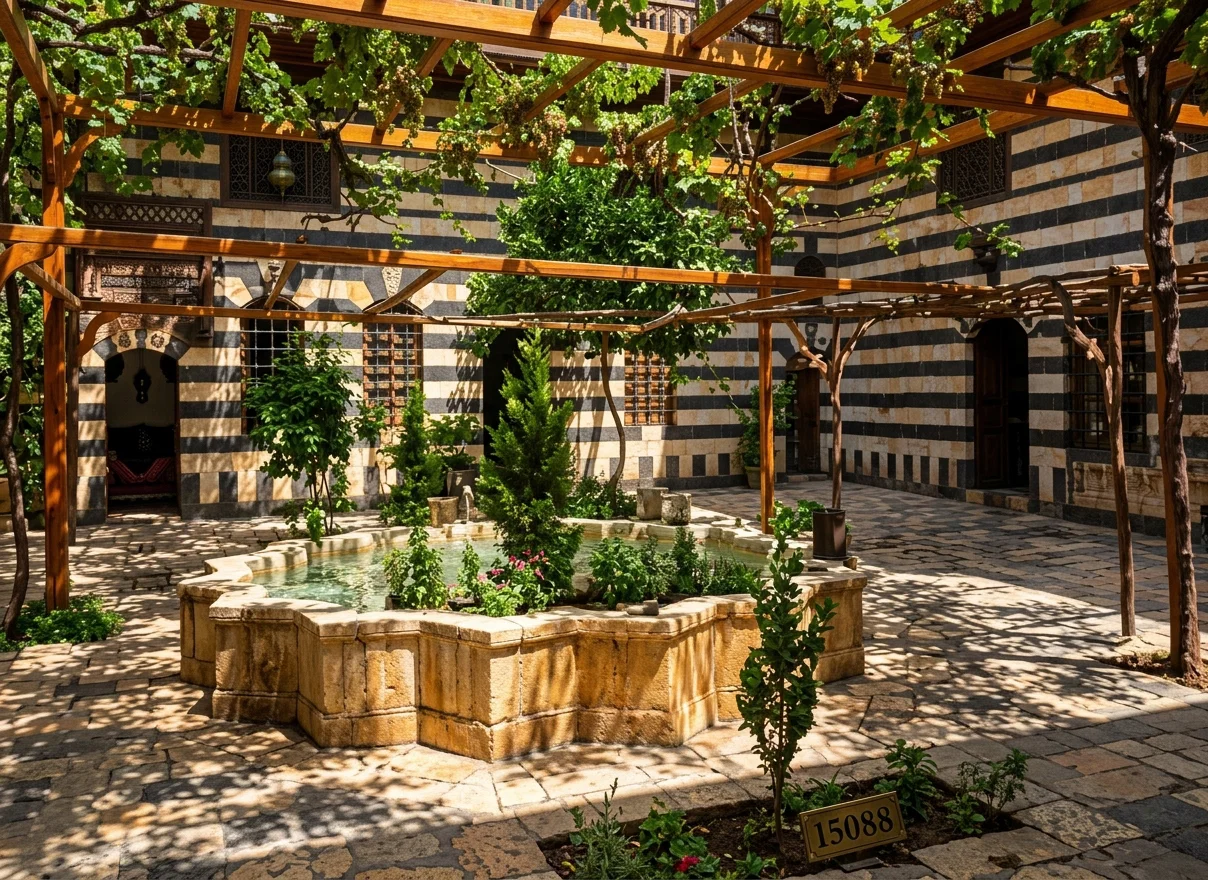
This beautiful picture accords with the reputation of Damascus as being one of the chief garden spots of the Orient. The city has a plentiful water-supply from the river Barada, the Abana of Scripture, which enables vegetation within it to flourish luxuriantly. On this point a writer has said: “The Abana is the life of Damascus, and has made it perennial. By an admirable system of channels and pipes, many of them of high antiquity, its waters are not only conveyed through every quarter, but into almost every house, supplying that first requisite of Eastern life and luxury. The river is also extensively used for irrigation. Canals are led off from it at different elevations above the city, and carried far and wide over the surrounding plain, converting what would otherwise be a parched desert into a paradise. The orchards, gardens, vineyards, and fields of Damascus cover a circuit of at least sixty miles, and they owe their almost unrivaled beauty and luxuriance to the Abana.” Considering the importance and usefulness of this stream, it is perhaps quite natural that Naaman the Syrian, who at first refused to wash in the Jordan to be cleansed of his leprosy, should have considered “Abana and Pharpar, rivers of Damascus,” to be “better than all the waters of Israel.”