Babylon (Continued)

5%

Review and Herald Publishing Association · Washington, D. C. · Sep 21, 1905

FromReview and Herald, Vol. 82, No. 38.

Read the full edition

Babylon (Continued)

M. E. KERN
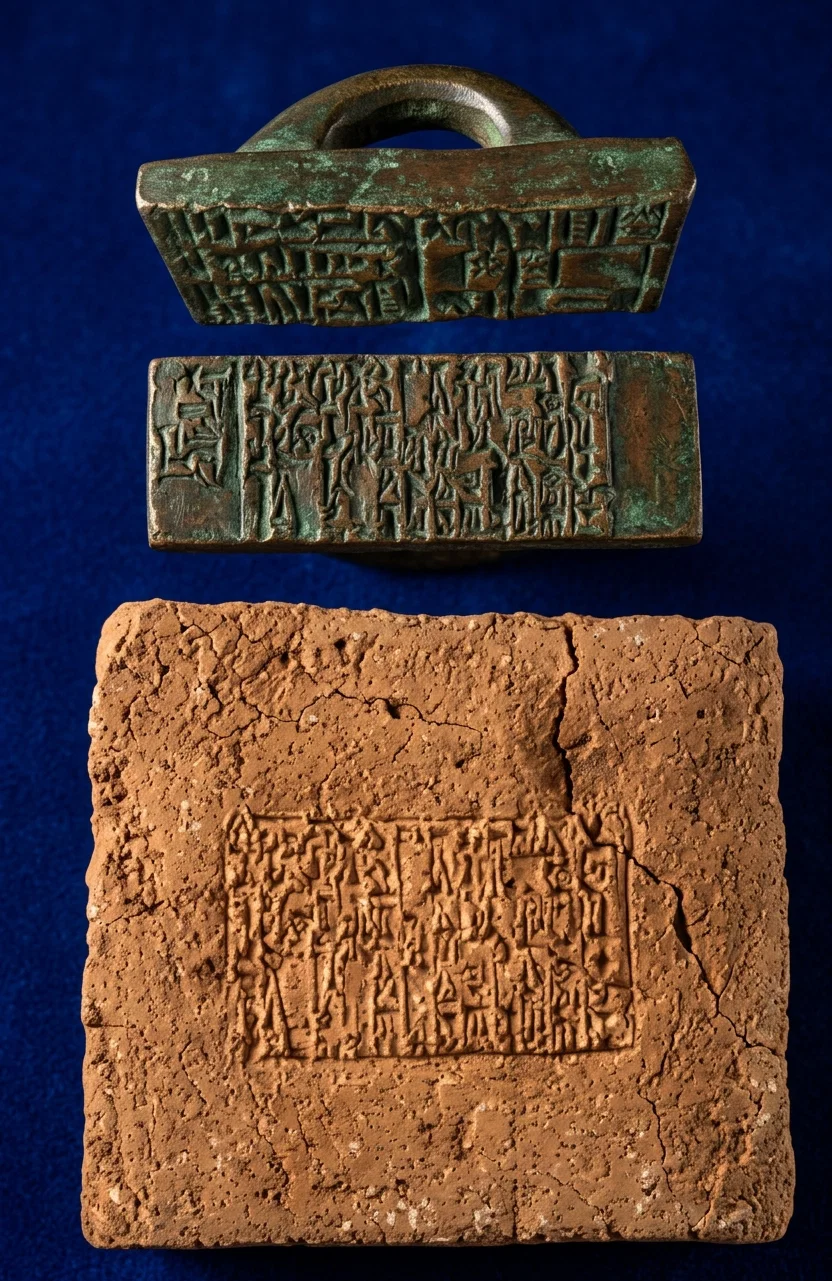
How do we know what kings built these ancient ruins? Inscriptions are usually found such as are often seen on buildings nowadays, telling who built them; but there is another thing that enables us to determine who built the ancient Babylonian structures. The kings usually put their name and title on every brick. The illustration shows a brick of Sargon I of Babylonia (not the Assyrian Sargon), and also the stamp with which the impressions were made. This practise enables us to tell also who repaired the buildings. Thus Nebuchadnezzar was a great builder, and boasts also of having repaired many buildings. This we know to be true; for his bricks are found everywhere. He repaired what is supposed to be the “tower of Babel,” rearing it up, he says,that its top might reach to heaven, almost the same expression used by the original Babel builders.

The Nippur Library

I spoke of the discovery of Assurbanipal’s library at Nineveh over thirty years ago, and the effect it produced on the world. But the library of the temple school at Nippur lately excavated, far surpasses the Assyrian library. On a recent campaign the University of Pennsylvania expedition found a series of rooms twenty-five feet below the surface, containing great piles of clay books, and over sixteen thousand have already been removed, while only one twentieth part of the library has been excavated. Professor Hilprecht estimates that, when fully excavated, this library will yield one hundred and fifty thousand cuneiform tablets. And remember that this library belongs to a period prior to Abraham. The library collapsed under the destructive acts of the Elamites who invaded Babylon, it is thought, about the time that Abraham left Ur of the Chaldees.
Not many of these tablets have been read, but enough have been deciphered to show that they will materially change our ideas of those early times. Knowledge of astronomy, mathematics, jurisprudence, and other sciences little dreamed of heretofore has been brought to light. We shall await with interest the revelations of this wonderful library. We could hardly expect that these tablets will reveal the name of Abraham, who doubtless was little known in Babylon as a nation, and who probably left his wicked surroundings there quietly. We will look with interest, however, to see whether Nimrod’s name will be found; for, though the name of this mighty man lives still in the traditions of the country, it has never been found on the monuments.

The Tower Temple

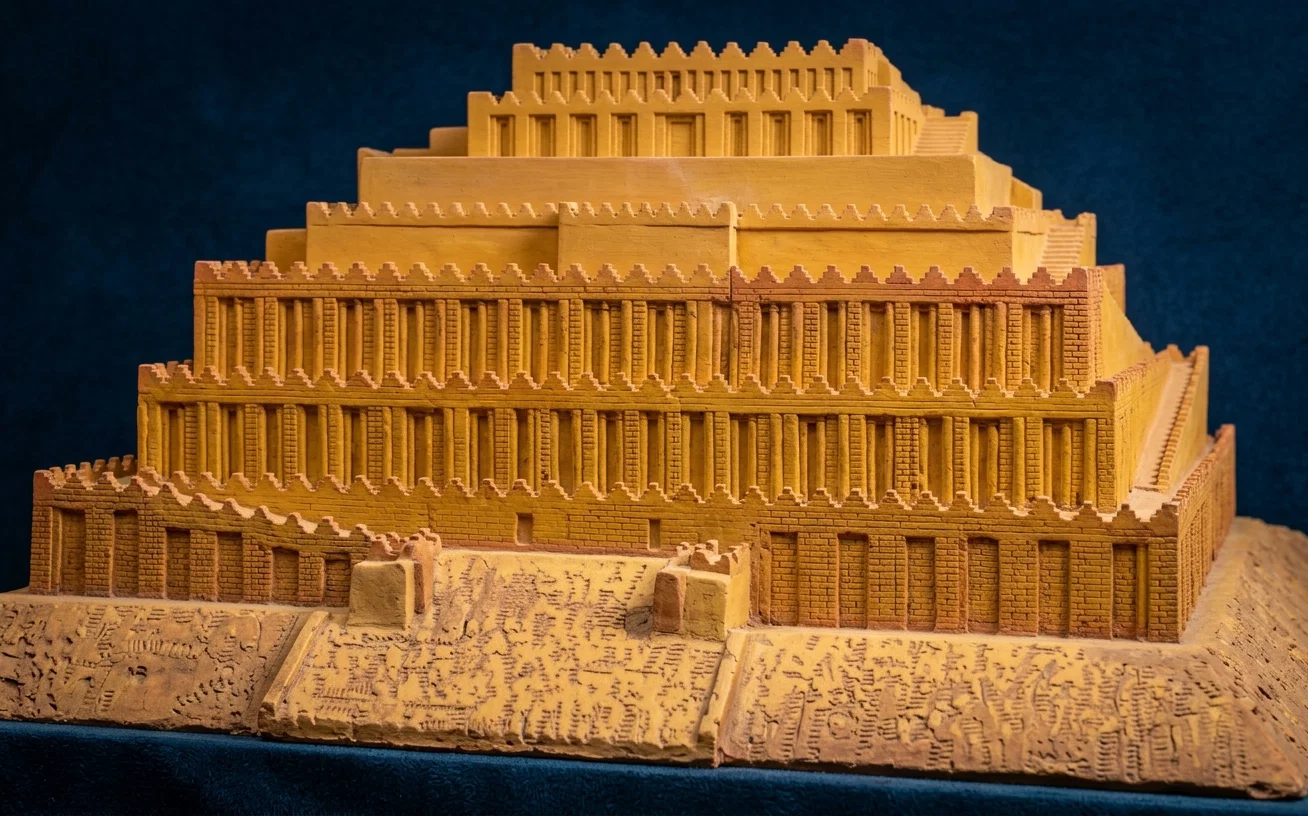
The tower temple, or ziggurat, of the Babylonian cities is an interesting structure. Every city of note contained one dedicated to the local deity. The temple at Nippur which was dedicated to Bel, or Baal, was built in three stages, or platforms, diminishing in size as they rose, and one resting on the other. The one at Babylon, rebuilt by Nebuchadnezzar, which is supposed to be the tower of Babel, was built in seven stages and each stage colored differently. The whole structure was built on a platform of sun-dried bricks raised a few feet above the plain.
“The first stage was black, sacred to Saturn; the second, red, brown, or orange, sacred to Jupiter; the third, red, belonging to Mars; the fourth, gold plates, to the Sun; the fifth, yellowish white, to Venus; the sixth, dark blue to Mercury (Nebo); the seventh, silver plated, to the Moon.”
The accompanying illustration is that of a model prepared by Sir Henry Rawlinson. The shrine of the god was on the very top. The account of the German excavations in the ruins of this old tower temple is a very fascinating story.

The River Chebar

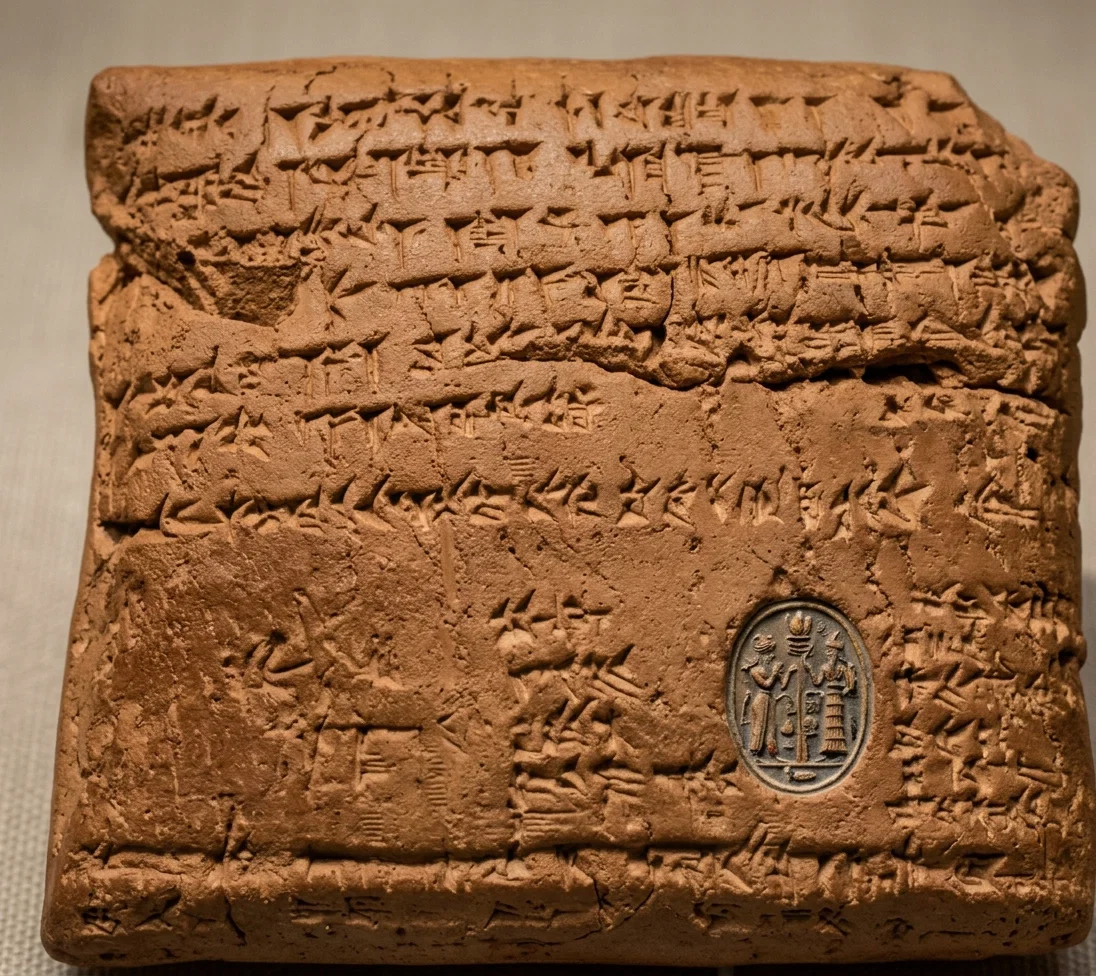
I will speak of another of the many things of interest at Nippur bearing on Bible history. In the course of their excavations they discovered the office and archives of a great firm of bankers and brokers, known as “Murashu Sons,” who flourished in the times of Artaxerxes I and Darius II, 464-405 B. C. (including, as you see, the time of the return of the Jews). In this room were found seven hundred and thirty business and legal documents, such as mortgages, leases, promissory notes, records of debts, surety bonds, guarantees, receipts of sales, payment of taxes, and in fact, almost every kind of business document. The illustration shows one of these business documents with the seal impression upon it. On these documents are found many Jewish names, among which are Nathanael and Jonathan.
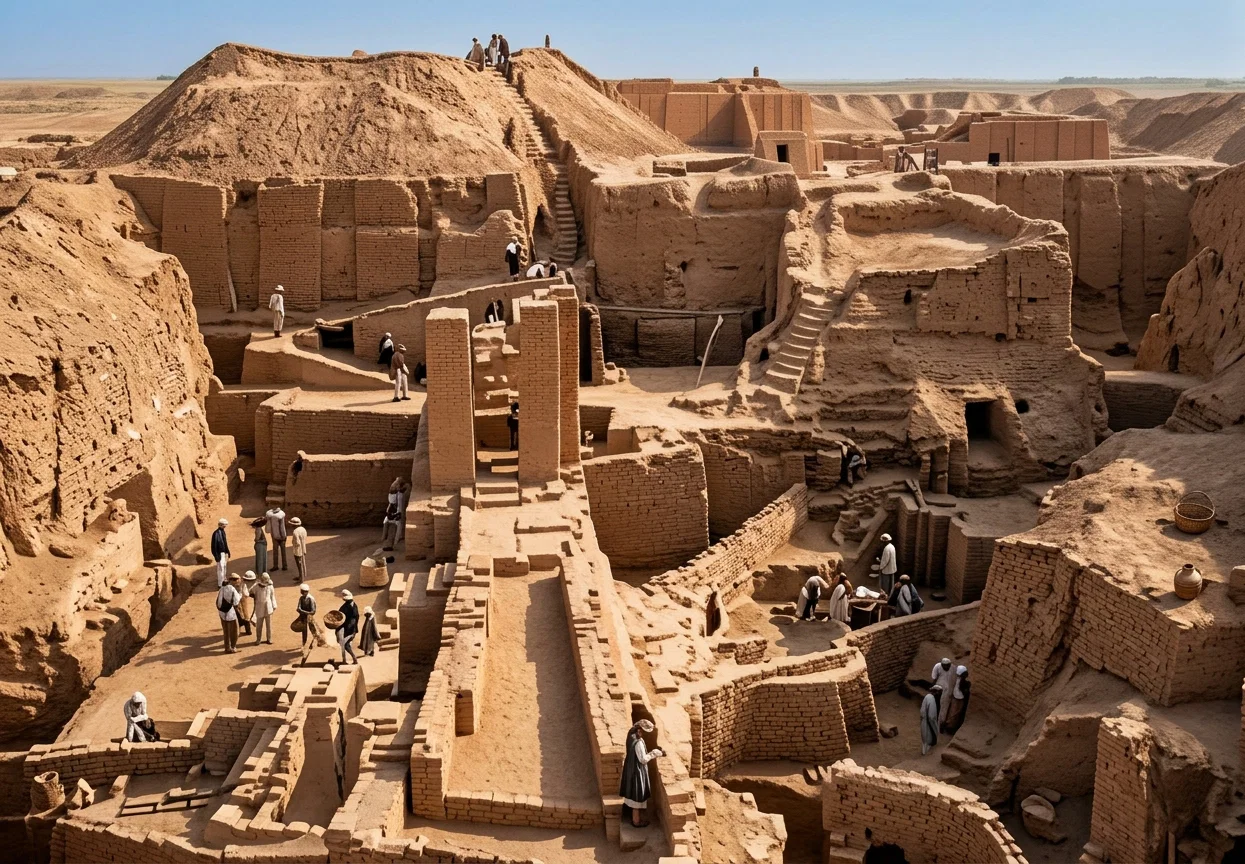
EXCAVATIONS AT NIPPUR (IN BABYLONIA)
This, together with the fact that several Hebrew inscriptions were found here, causes the belief that there was a Jewish colony of exiles here. Professor Hilprecht thinks, too, that he has found the river Chebar mentioned in Ezekiel. On the banks of this river Ezekiel saw visions of the abominations done in Jerusalem, women weeping for Tammuz, and other heathen rites, with which he was doubtless familiar at Nippur; for it was the center of Babylonian worship. The word found on two of these business tablets is “Nar Kabari,” and means “the Euphrates of Nippur.” It was the great canal that ran through Nippur and central Babylonia, turning the desert into a fruitful plain. The bed of the canal has been explored, and interesting things have been found in it.

Ur of the Chaldees

I can not leave Babylon without calling your attention to the old home of Abraham, “Ur of the Chaldees,” known at present as Mugheir. The most that has been done here was by Taylor in 1854. The ruins consist of a series of low mounds, oval in form, a little over one-half mile in diameter. The principal building, the one shown in the picture, is about seventy feet high, and is the tower temple once dedicated to the moon. Two stories remain. In excavating, Mr. Taylor found in one of the corners, in a niche formed by omitting one of the bricks of a layer, a clay cylinder, and on investigation he discovered one of these commemorative cylinders in each of the other corners. A fine barrel cylinder was also found, and from this and inscribed books Rawlinson determines this to be “Ur of the Chaldees.” This temple was built by one of the early kings, and was repaired by Nabonidus, the last king of Babylon. The commemorative cylinders are his, and each one closes with a prayer for the life of the king’s eldest son, Belshar-usur, or the Biblical“Belshazzar,” who was associated with his father on the throne, and of whose death we have an account in the book of Daniel. Other inscriptions have been found which speak of Belshazzar in the most familiar way. Critics have ceased to laugh at the idea that Belshazzar was a real personage.
It has been some time since the identity of this mound was determined, yet it lies unexcavated. An expedition was organized a short time ago in this country for the purpose of excavating this site, but the Ottoman government refused Dr. Banks, the director, the necessary firman, or permission, to excavate, and the expedition has been abandoned. What the uncovering of this mound will reveal is of great interest to all Bible students.
College View, Neb.
MODEL OF BABYLONIAN TEMPLE TOWER
BUSINESS DOCUMENT OF MURASHU SONS AT NIPPUR