WITH longing hearts we have looked forward to the time when reinforcements should come to south China, and you may be sure we were glad to welcome Brother W. C. Hankins and his wife, who arrived in Hongkong, May 3, 1905. They came to Canton, and remained with us two weeks. This gave them an opportunity to rest from their long journey, and to get acquainted with the work and workers here. Our Chinese pastor in Amoy—Brother Keh Nga Pit—came to Canton to meet them. His visit was a source of encouragement to himself, as well as to all of us. He has been studying the Cantonese dialect some since last fall, and it is astonishing how much he can understand. We were glad to speak to him directly, instead of through an interpreter as formerly. I accompanied Brother and Sister Hankins to Amoy, where we arrived on the morning of May 21. Brother Keh and his wife kindly took us into their own home, and did everything possible to make us comfortable. A number of Chinese Christians called to see us, among whom were several pastors and teachers. As they inquired about our work, it gave an opportunity to present the truth to them.
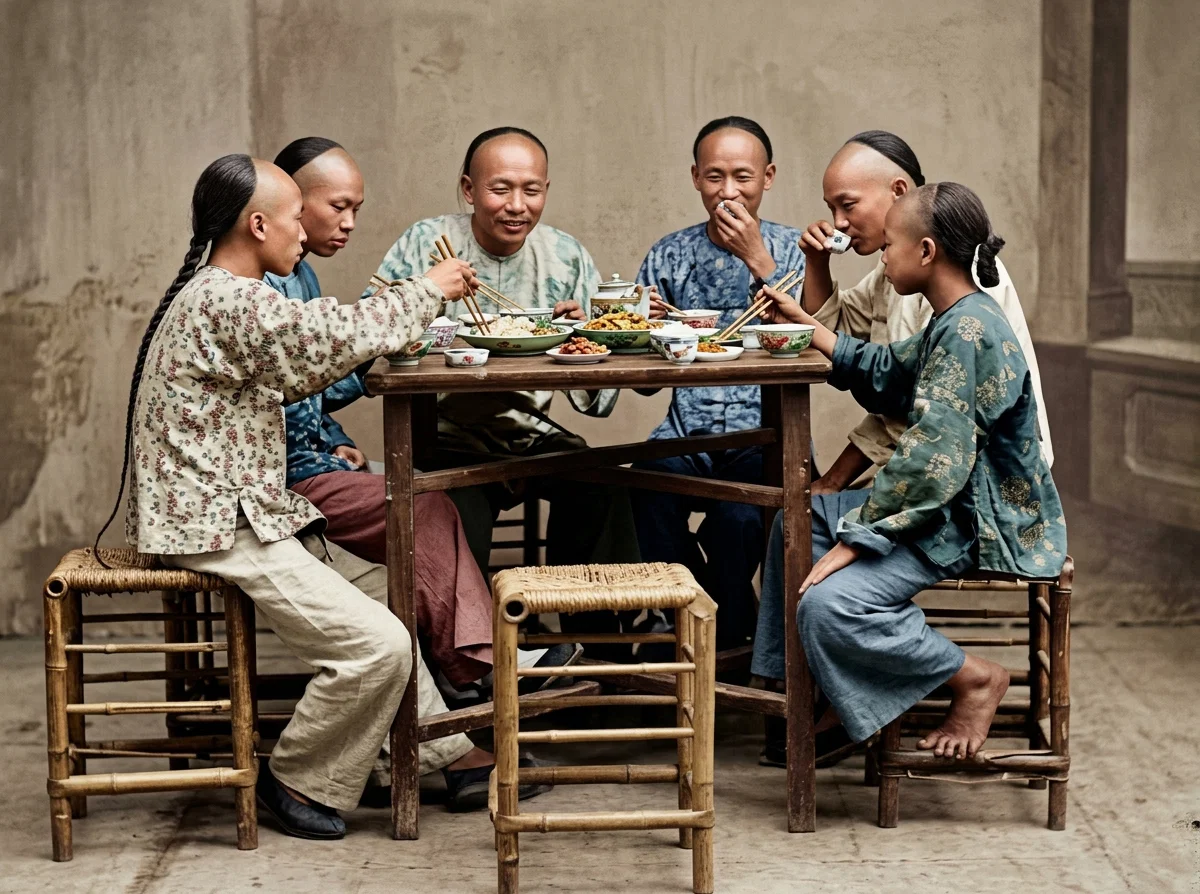
May 24 Brother Keh and I went thirty miles, by steam-launch and sampan, to the village of Do Kong, our first inland mission in Fukien Province. Brother Tin Khi Tsoan, who connected with our work in February, had preceded us one day, so the people knew of our coming, and were waiting to receive us. We went at once to our Lai Pai Tong (“worship house”), a small two-story building fitted up for a chapel. We were given a drink of boiled water, and some fresh arbutus, a fruit resembling strawberries. We then walked out through the rice-fields, and visited some near-by villages, one of which is the home of several men who are interested in the gospel. At the home of one of these men we had supper, eating with chop-sticks. There are about fifty thousand people living in villages in this locality, and our mission is the first to begin gospel work there. Through one of those strange providences by which God puts inquiring souls in touch with his servants, one of these natives had heard of Brother Keh, and came to Amoy with the plea, “Come and teach us the gospel.” Four men, chief of four clans of about ten thousand souls, are favorable to our work. Two of them came to see me, and attended our meeting in the evening. The house was full of attentive listeners,—men and boys,—and I spoke to them for one hour about the true God and his ten commandments, and about Jesus our Saviour. I spoke in Cantonese, and Brother Keh acted as interpreter, addressing them in the Amoy dialect. After meeting we took a small boat, and while we slept were borne down the river with the tide, to the place where we took the steam-launch at six o’clock in the morning. We arrived in Amoy in time for breakfast at nine o’clock.
On Sabbath forenoon we had a service in our chapel in Kulongsu, the foreign settlement of Amoy. About eighteen persons were present, including children. In the forenoon we had another service in Amoy with a young printer, who has been keeping the Sabbath for several months. I asked his mother, who has been a Christian for several years, “Do you keep the Sabbath?” She replied, “I keep two days.” “Why do you do that?” “I am afraid if I do not keep Sunday, there will not be many people to accompany me to the grave when I die.” We told her that we would rather obey God and have eternal life, even if there were no one to accompany our remains to the grave, than to be the emperor of China, and have a multitude at our funerals. A good death is one of the five blessings earnestly sought for by the Chinese, and we can hardly realize how deeply this idea is implanted in their minds.
On the whole, the work in Amoy is most encouraging. Many have learned the Sabbath truth through Brother Timothy, and through Brother Keh and his tract. Now our brother has written a Chinese poem about the Sabbath, which will make this truth very plain to the women and children. One man, a native preacher,—Brother Tin Khi Tsoan,—is keeping the Sabbath with his family. He has not used tobacco for ten years. He is a humble man, and seems to be doing a good work in holding up the light of truth, as far as he knows it. Others seem convinced of the truth, and will undoubtedly step out, now that they see our work is permanent. Some, no doubt, are, as were the parents of the man who was born blind (John 9:22)—fearful lest they should be put out of the synagogue, as a resolution was passed at a recent conference in Kulongsu that if any should be found not observing the “Lord’s day,” but keeping Saturday, they should be promptly dismissed from church fellowship.
On Sabbath, June 3, I again had the privilege of meeting with our people in Canton. The work is moving forward here. We are finding new friends, who manifest an interest in our work, and we know that God has promised that “he that goeth forth and weepeth, bearing precious seed, shall doubtless come again with rejoicing, bringing his sheaves with him.” Ps. 126:6. Pray for us, brethren and sisters, and do not forget your offerings for China. This is a vast field; but if we all do our part faithfully, the Lord will soon finish the work. He has agencies ready for our hand.