THE DEAD SEA

17%

Review and Herald Publishing Association · Washington, D.C. · Sep 28, 1905

FromReview and Herald, Vol. 82, No. 39.

Read the full edition
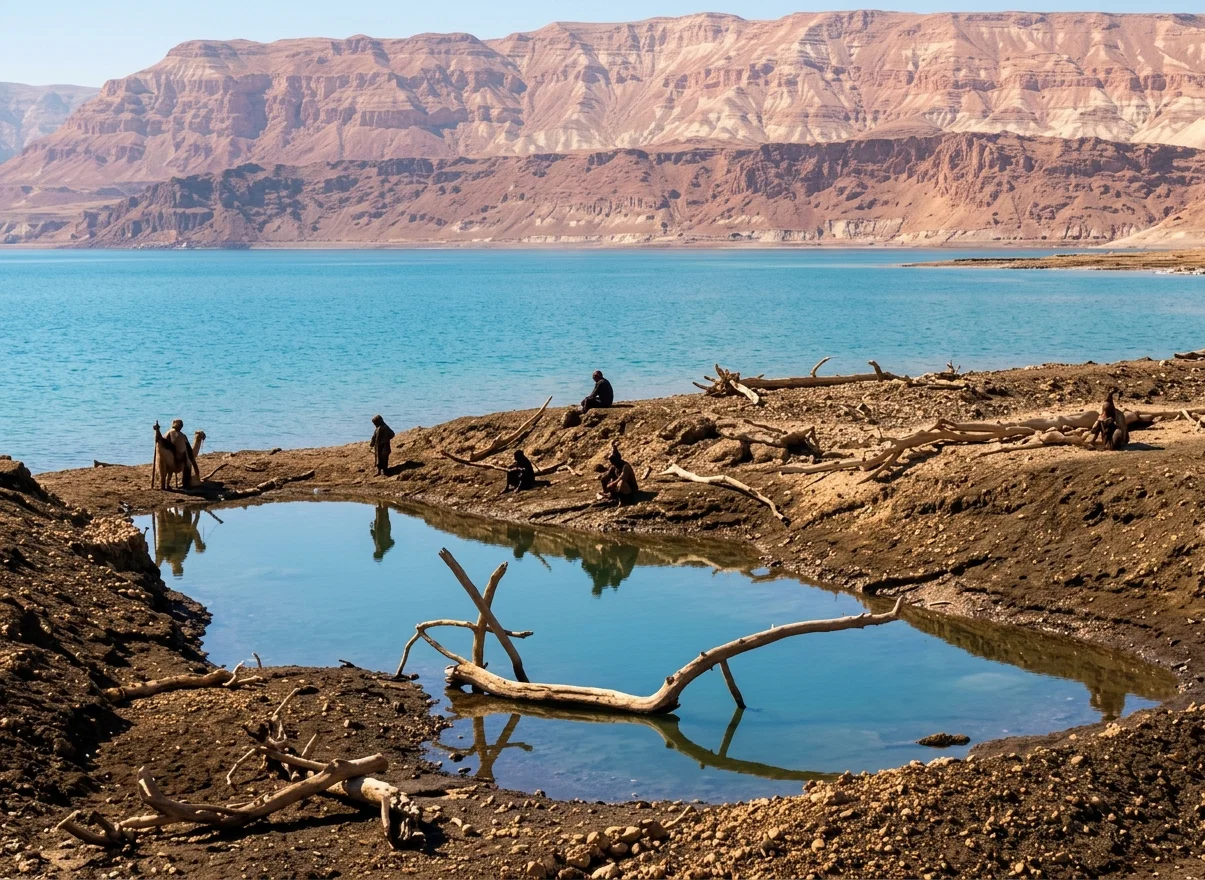
THE DEAD SEA

This sea, variously known as the Salt Sea, sea of the plain, the asphaltic lake, and sea of Sodom, is one of the most remarkable bodies of water in the world. It is forty-six miles in length, and from five to nine miles in width. It is remarkable in its character, its history, and its situation. It is the most saline of any large body of water in the world, its waters containing also large quantities of chlorid of calcium and chlorid of magnesium. No life can exist in it, and the land bordering it will not support vegetation.
Its history takes us back to the destruction of Sodom and Gomorrah by “brimstone and fire from the Lord out of heaven,” as described in Genesis 19. A large tract now covered by the lake was, previous to this destruction, the “vale of Siddim” (Gen. 14:3), which seems to have been a well-watered and fertile plain.
The Dead Sea is situated in the deepest large depression in the earth’s surface, the extreme depth of this depression being 2,608 feet below the level of the sea. The surface of the lake is 1,300 feet below sea-level, and the lake is 1,308 feet in depth.
The water of the Dead Sea, though so impregnated with salt and other minerals, is perfectly clear, and a bath in it is not only harmless, but refreshing. During the summer the sun shines upon the lake from an unclouded sky, and the intense heat produces evaporation from its surface to such an extent that in spite of the large volume of water received from the Jordan and smaller streams, the level of the lake does not rise, except for a short period during the spring freshets. Driftwood is constantly brought down by the Jordan, consisting of canes, branches and trunks of trees, which, strewn along the shores, add to the desolation of the scene. Bordering the lake are marshes which in summer give off, poisonous vapors that are fatal to strangers, and make the inhabitants of the surrounding territory weak and sickly. The saltness of the sea is ascribed to the absence of any outlet, excessive evaporation, washings from the “salt range of Sodom,” and the inflow from numerous brackish springs along the shore.