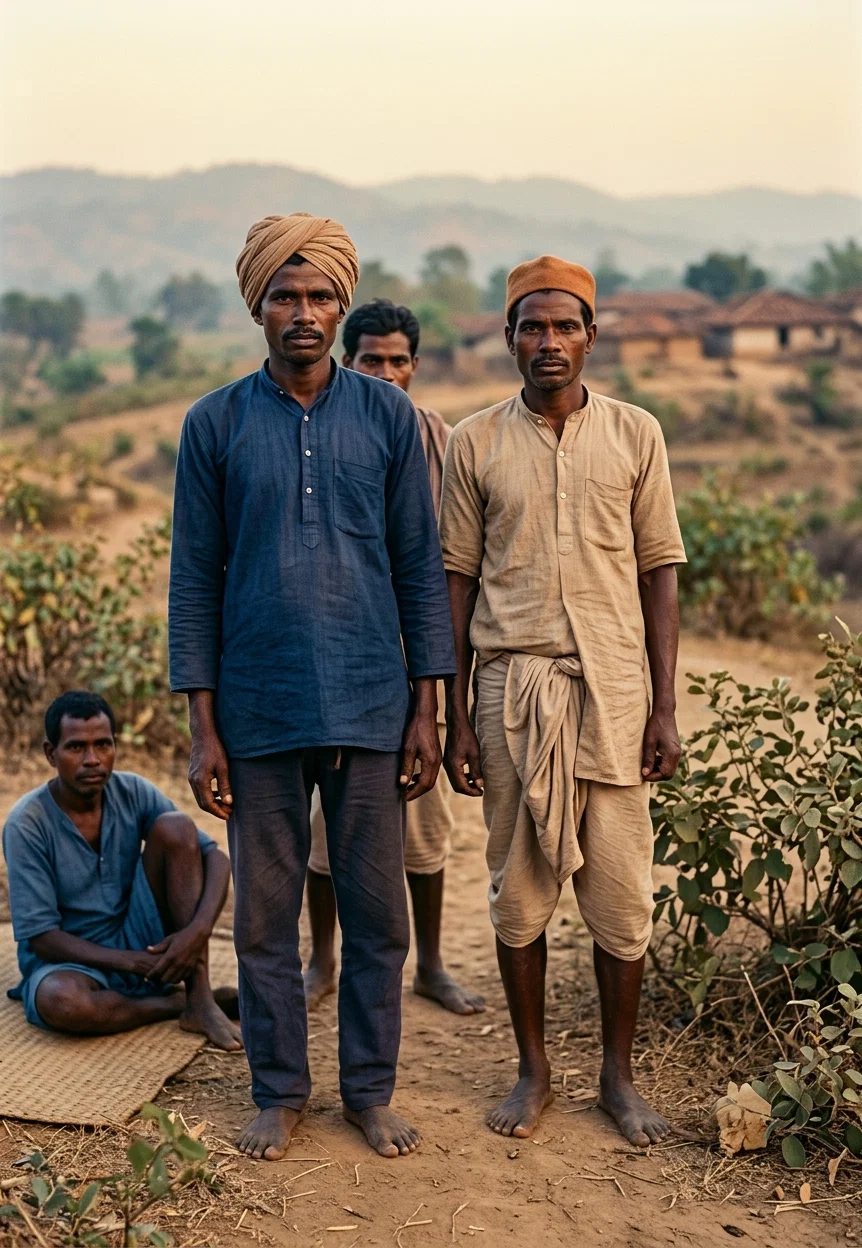
The Santals have their 'home among the hills which abut on the valley of the Ganges in lower Bengal. They dwell in villages of their own, apart from the people of the plains, and number about a million. Although still clinging to many customs of a 'hunting, forest tribe, they have learned to use the plow, and have settled down into skilful husbandmen.
Each hamlet is governed by its own headman, who is supposed to be a descendant of the original founder of the village, and who is assisted by a deputy headman and a watchman. The boys of the hamlet have their separate officers, and are strictly controlled by their own headman and a deputy, till they enter the married state at about sixteen to twenty years of age.
These people know not the cruel distinctions of Hindu caste, but trace their tribes, usually fixed at seven, to the seven sons of the first parents, Adam and Eve. Some give the number of his tribes as twelve. One tribe being lost, these are the names of those remaining: Hembrom, Kisku, Murmu, Hasda, Baske, Marndi, Besra, Soren, Bedya, Paoria, and Tudu. The whole village feasts, hunts, and worships together.
HOUSEHOLD SERVANTS. COOK AND SWEEPER
So strong is the bond of race, that expulsion from the tribe used to be the only Santal punishment. A heinous criminal was cut off from “fire and water” in the village, and sent forth alone into the jungle. Smaller offenses were forgiven upon a public reconciliation with the tribe, to effect which the guilty one had to provide a feast, with much rice-beer, for his clansmen.
Santal Ceremonies
The Santals do not allow child weddings. They marry at from fifteen to seventeen years of age, when the young people choose for themselves. At the end of the ceremony the girl's relatives pound burning charcoal with the household pestle, and extinguish it with water, in token of the breaking-up of her former family ties. The Santals respect their women, and do not take a second wife, except when the first remains childless. They solemnly burn their dead, and float three fragments of the skull down the Damodar River, the sacred stream of the race.
Their Religion
They have no knowledge of bright and friendly gods, such as the Vedic singers worshiped. Still less can they imagine one omnipotent and beneficent deity, who watches over mankind. Hunted and driven back before the Hindus and Mohammedans, the Santal does not understand how a being can be more powerful than himself, without wishing to harm him. “What,” said a Santal to an eloquent missionary who had been discoursing on the Christian's God, “what if that strong One should eat me?” They think that the earth swarms with demons, whose ill-will they try to avert by the sacrifice of goats, cocks, and chickens. There are the ghosts of their forefathers, river-spirits, forest-spirits, well-demons, mountain-demons, and a mighty host of unseen beings, whom they must keep in good humor. These dwell chiefly in the ancient sal-trees, which shade the village or are situated near it, and they are called the Jaher, or sacred grove. In some hamlets the people dance round every tree, so that they may not by evil chance miss the one in which the village-spirits happen to be dwelling.
History
Until near the end of the last century, the Santals lived by plundering the adjacent plains. But under British rule they settled down into peaceful cultivators. To prevent disputes between them and the villages of the lowlands, the officers set up in 1832 a boundary of stone pillars. But the money lender soon came among them, and the simple hillmen plunged into debt. Their strong love of kindred prevented them from running away, and they sank into serfs to the Hindu usurers. The poor Santal gave over his whole crop each year to the money lender, and was allowed just enough food to keep his family at work. When he died, the lifelong burden descended to his children; for the high sense of honor among them compels a son to take upon himself his father's debt.
In 1848 three entire villages threw up their clearing, and fled in despair to the jungles. In 1855 the Santals started in a body of thirty thousand men, with their bows and arrows, to walk to Calcutta, and lay their condition before the governor-general. At first they were orderly. But the way was long, and they had to live, and the hungry ones began to rob. Quarrels broke out between them and the police, and within a week they were in armed rebellion. The rising was put down, not without much bloodshed. Their complaints were carefully inquired into, and a very simple system of government, directly under the eye of a British officer, was granted to them. They are now a prosperous people. But their shyness and superstition make them dread any new thing. A few of them took up arms (bows and arrows) to resist the census of 1881.
Among these people the Seventh-day Adventist mission has been spreading the third angel's message during the past few years, and a training-school was started about two years ago. We will report this work later.
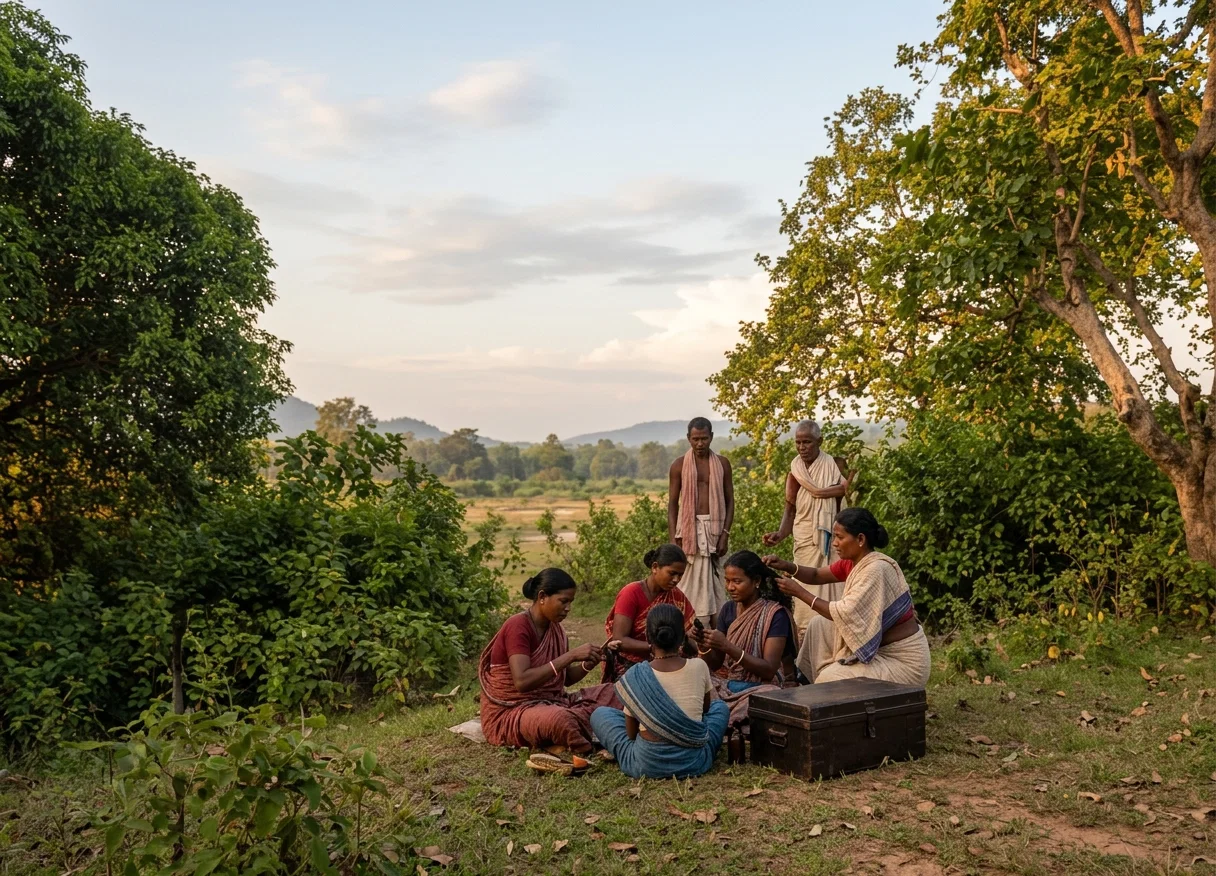
PILGRIMS HAVING HAIR DRESSED BEFORE PRESENT- ING THEMSELVES FOR WORSHIP AT THE TEMPLES AT DEOGHUR, BENGAL, INDIA