New Recruits for China

6%

Review and Herald Publishing Association · Washington, D. C. · Nov 30, 1905

FromReview and Herald, Vol. 82, No. 48.

Read the full edition

New Recruits for China

JOHN J. WESTRUP
THANKS be to God for a safe arrival in China. We have had a very pleasant voyage, and a good time. We bought our tickets for the steamship “Dakota,” which sailed the twenty-fourth of July. After a day’s voyage some of her machinery broke down, and returning to Seattle, she went into dry dock. Her cargo and passengers were transferred to the “Minnesota,” which sailed August 10. I have crossed the Atlantic five times, but have been on no other boat so steady and agreeable as the “Minnesota.” She has very good ventilation, and everything is kept scrupulously clean. I have often thought that it must be providential that these giant steamships of the Great Northern Steamship Company have been built just now, when the closing message must be given to the millions in the East, and our missionaries can cross the great Pacific and the China Sea without much fear of seasickness.
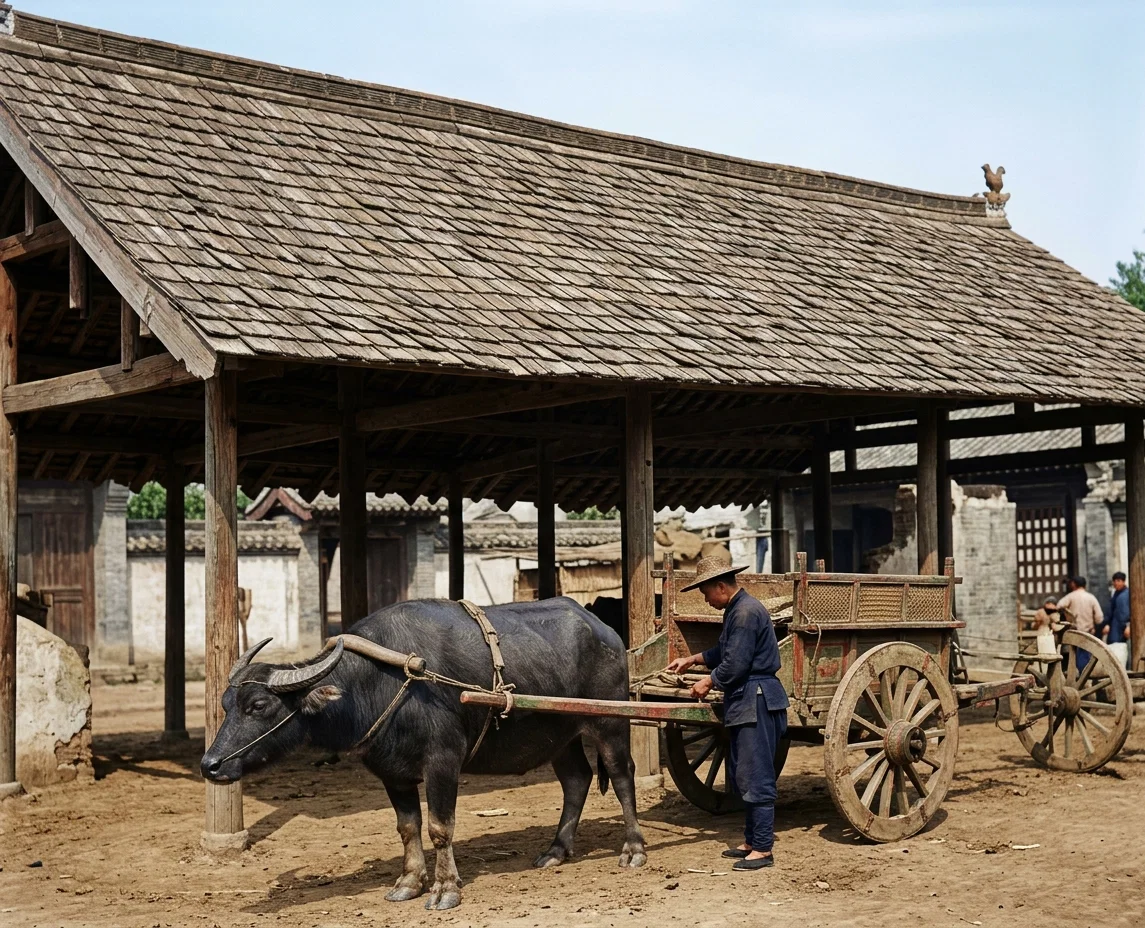
AN OX CART. CENTRAL CHINA
After a day’s voyage from Seattle, we put on our heavy underwear (one of the essential things to avoid seasickness is to keep warm). We walked back and forth on the large deck, covering eight or ten miles a day, in the cold wind, singing to our hearts’ content. There were about twelve other missionaries on the steamer, and nearly all assembled twice a day for Bible study, song, and prayer. Eight of these did not belong to any denomination, but they had been baptized, gave tithe, and had some light on health reform. Their leader—an elder—was very prejudiced in regard to the Sabbath, hence I had no opportunity to speak about it directly, except once. How true the words of Jesus (see Matt. 23: 13) are even to-day. But I had special readings with a young educated Chinese Christian brother. I also handed him the “Bible Readings,” and he read everything in it relating to the Sabbath. He acknowledged the truth, and I believe that some day he will see his way clear, by the grace of God, to live up to it.
And when my wife once had an opportunity to speak to a Norwegian sister about the necessity and blessing of keeping God’s Sabbath, she answered: “I fear no man. When I see it clearly, I will keep the seventh day; for I have done many things that in the eyes of the world seem as strange and foolish as to keep the Lord’s Sabbath.” We believe that she will accept the truth. We have her address, and she said she would come to see us. She and two other young ladies located in China, north of us. What a blessing it is to be a colaborer with God!
On the morning of the twenty-fourth, many were up early—from two to four o’clock—to behold the rocks in the distance, which were so interesting to us, as we had not seen any land for thirteen days. The same day, at eleven o’clock, we cast anchor in the harbor of Yokohama. After dinner we went ashore. We felt like pilgrims and strangers when our feet touched the streets of Japan. As we stopped a minute to inquire for the foreign post-office, we were surrounded by a dozen jinrikisha men, who jabbered away, wanting us to get into their carriages, that they might earn a few cents. The price is ten cents for an hour’s ride. As they followed us perseveringly, we finally took two jinrikishas, and rode around in the city for an hour. It is strange how these men, living mostly on rice and some vegetables, can run on a hot day for miles and miles, like a strong horse.
As we came back to the dock, we met Elders Anderson and Field and their company, who had arrived in the afternoon, on the “Tartar.” The next day Brother Burden came from Tokyo, and invited us to his comfortable home, and did all he could to make our stay both pleasant and profitable. We stayed there four days. On the Sabbath a goodly number came together in Brother Burden’s home. We enjoyed the Sabbath-school and service very much, although we did not understand the Japanese language. I was invited to preach, Elder Okahira interpreting. It was a joy to meet these foreign brethren, new in the faith.
On Sunday afternoon we all went to Elder Field’s home. On the same day and on Monday we visited many interesting places in the large city. Our visit with these brethren, and the good, home-made food acted as a tonic on our systems, and enabled us to endure our boat life again with greater ease.
On Tuesday we went back to the “Minnesota,” as we did not know definitely how long she might remain. She did not leave Yokohama, however, until Friday, at 4 P. M. We had a pleasant voyage to Kobe, where we arrived at half-past seven the next evening. On Sunday morning Dr. Lockwood came to our cabin, and invited us to the sanitarium. How surprised we were to find in Kobe such a large, commodious, and beautiful sanitarium, with nice, cool, spacious rooms, and all the appliances needed to relieve suffering humanity, with a green lawn, beautiful flowers, and shade-trees in the front, making it all very attractive and home-like. Again, it was a pleasant change to be treated to the tasty, wholesome vegetarian diet, instead of the hotel food on the boat.
Our Japanese brethren wished to see and get acquainted with the missionaries who were passing through to China, hence Dr. Lockwood arranged to have a meeting Sunday evening, when I spoke through an interpreter. They have a neat church, which was well filled. There were no Seventh-day Adventistsin Kobe three years ago, and now they have fifty members, and, best of all, they seem happy in the Lord.
After enjoying a good night’s rest, my wife received, next morning, a very beneficial treatment, and Joseph and I were invited to help ourselves to anything we liked in the bath-room, and we took a needle spray. In the afternoon we visited the Japanese sanitarium. It is also nicely located, having several buildings, neatly furnished. This was the busy season for them. There were thirteen patients in the sanitarium, besides those coming daily for treatments. The doctors took us also to several interesting places in the city, as the falls, Mt. Benus, and the Shinti Temple, where several worshipers were offering rice to their idols. May God’s blessing continue to rest upon the work in Japan. May his servants, day by day, be filled with his Holy Spirit, so that he may continue to use them powerfully for the furtherance of his kingdom to the salvation of souls.
On Friday evening at ten o’clock our ship left Kobe. We sailed through the Inland Sea all day; on Sabbath evening arriving at Nagasaki. This was the most delightful part of our voyage. The weather was ideal, and the scenery was grand.
After one day of coaling, we crossed the China Sea, which was also calm, and arrived in Shanghai September 12, at 3 P. M. Here Elder Pilquist had been waiting for us a good while, as we came three weeks late on account of the breakdown of the “Dakota.”
Shanghai is one of the beautiful cities of the empire. We stayed there one day. It was a Chinese festival (Thanksgiving day), hence our German boat could not leave until twelve o’clock the night of the thirteenth, otherwise we should have left for Hankow the same evening.
Steaming up the Yangste River, we saw the country flooded, in some places, for miles inland, all the way. On this pleasant trip we had an opportunity to see the green landscape for four days. We arrived in Hankow September 17, at 6 P. M. Here we had to wait three nights and two days, owing to the inefficiency of the freight service on the railroad. We had to watch our goods day and night, as the railroad company is not responsible for anything they carry. Any one who has any freight must be in the car with it, in order to keep it from being stolen. As we could not make ourselves understood, Elder Pilquist did the watching, and one night, while sleeping in the open car on top of our goods, drove away several thieves. He studied the Bible with the Chinese around him at the same time he watched the goods.
The last part of our journey was the most tiresome, especially that of being carried inland from the railroad. I will not attempt to describe this. One must see Inland China, in order to understand. We arrived in Lo Shan September 22, at 6:30 A. M. The native Christians came to the entrance through the city wall, to meet us. In the yard we met Sister Pilquist and the children, whom we embraced, weeping for joy that we had finally reached the home of these true, noble-hearted, self-sacrificing missionaries, whose stirring appeals had set our hearts aglow for China. We are so thankful that we are not disappointed in these pioneer Seventh-day Adventists of Inland China, but that they really are such loyal, earnest Christians as we expected them to be. Although the outward circumstances are forbidding, yet we are indeed happy and thankful that we are here. The love of God in our hearts, and a real hunger for the salvation of these poor souls, can keep in us a cheerful, buoyant spirit, even in the midst of this gross darkness, gloom, and misery. Brethren at home, let heartfelt prayers ascend to the throne of grace for your missionaries abroad; they need your prayers.
We are now where our dear Heavenly Father wants us to be, and that means also that we are on the way to the heavenly Jerusalem. Thank God, we are here, and we must get to heaven at any cost. Our assurance is this: ‘As the mountains are round about Jerusalem, so the Lord is round about his people from henceforth even forever.’