Africa's Need

13%

Review and Herald Publishing Association · Washington, D. C. · Dec 7, 1905

FromReview and Herald, Vol. 82, No. 49.

Read the full edition

Africa's Need

The term “Dark-Continent” applied to Africa by Stanley, has a threefold application. Africa, until the nineteenth century, was the one continent whose vast interior, as far as geographical certainties are concerned, lay in impenetrated darkness. It is the one continent whose population is composed almost entirely of dark peoples. It is the one continent whose native religion is without sacred writings and definite systems,—a religion whose followers are but wanderers in “the blackness of darkness.”
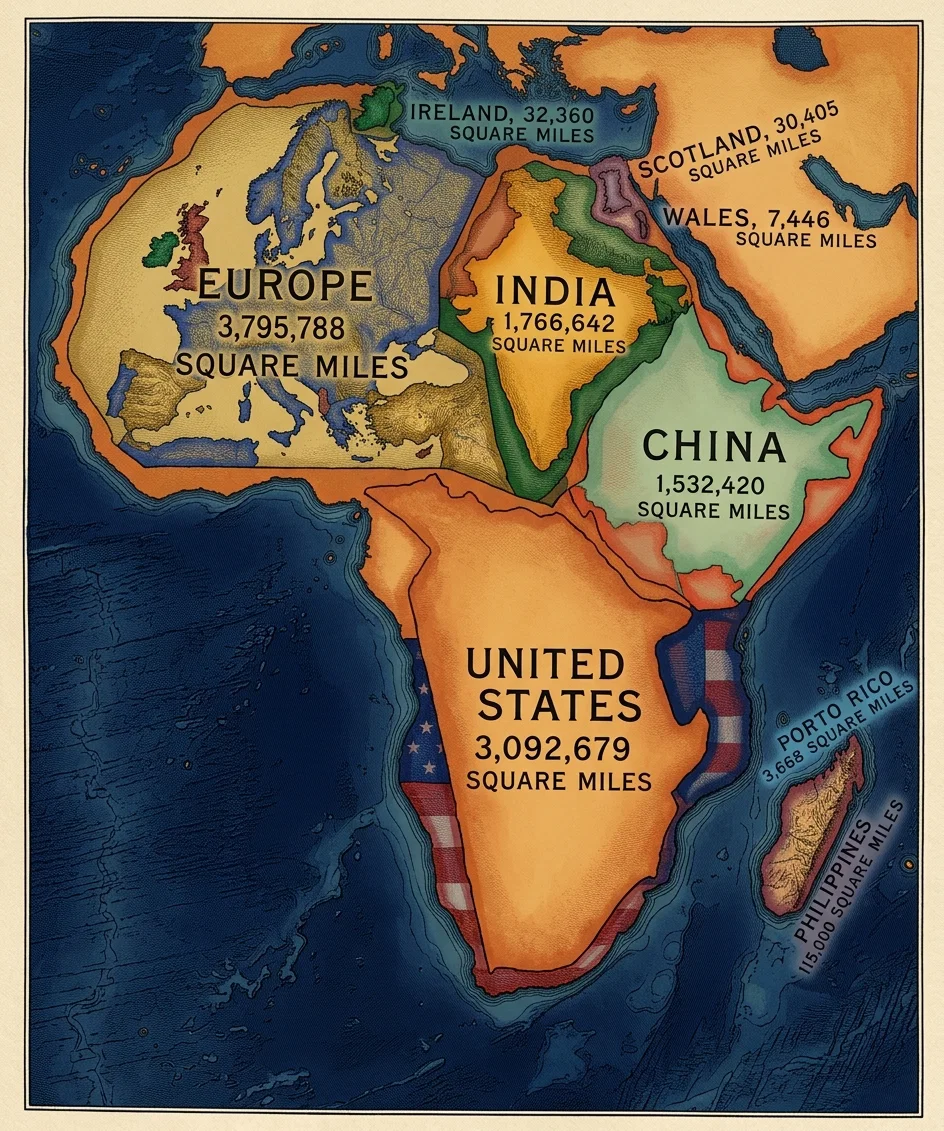
Of all the continents, Africa is second in size to Asia alone. With the islands, Madagascar, the Madeiras, the Canaries, and others, Africa has about 11,500,000 square miles of territory. A striking comparison between the size of Africa and that of other continents has been suggested. “There is room enough in the lower end of the continent for thewhole of the United States, with her eighty-two million people; Europe, with her many states and hundreds of millions, can be placed on one side of Central Africa; China, with her vast population of four hundred million, could be accommodated on the other half, and there is room for all India and Wales, Scotland, and Ireland, in the lower valley of the Nile, and along the coast of the Mediterranean; while there is plenty of room for Porto Rico and the Philippines on the island of Madagascar.”
This vast territory, with her one hundred and ninety million people, waits for the gospel. At a cost beyond all reckoning, the continent has passed from prehistoric darkness to twentieth-century daybreak. It is estimated that over six hundred explorers died as a direct result of the death-dealing climate and the consequent hardships of travel. Of missionaries, the number is unknown. Seven societies, up to 1902, reported one hundred and ninety-five losses by death, in their missionary force, during their operations in Africa. Our own Board has laid upon the altar of Africa a number of our pioneer workers. Scarcely a mission has been opened without loss of life. But the work continues, and the fruits of these lives eternity will reveal. Besides an organized conference in the south, we have mission stations in Egypt, Matabeleland, Nyassaland, Basutoland, Barotseland, Sierra Leone, and German East Africa. It is only a beginning, but Africa is open and ready for the message. The responsibility lies with us. What shall we do? Shall the message be hastened to Ethiopia? or shall we who are here to-day delay it? We may hasten it if we will, by our prayers and our gifts. One of our laborers in Africa sends this message:—
“We earnestly request you to hear the cry of the millions of Africa as it ascends to heaven, pleading for the light of the everlasting gospel, and to place men in training for this work; also that missions be opened as soon as possible in a few great centers, such as Sudan, Uganda, and the Kongo country, in order that the light of present truth may shine into the heart of darkest Africa, and thus assist in giving the bread of life to Ethiopia, as she waits, pleading with outstretched hands.”
AFRICA AS MEASURED BY OTHER COUNTRIES
“They are waiting in the wild, Sick and weary and defiled, And the Saviour’s healing word They have never, never heard; Ever hungry and unfed, Left without the Living Bread— Waiting! waiting!” — Arranged.
NOTE.— One of the young people or older members of the school should present this number. The map may be drawn on the blackboard or a large sheet of paper, before the exercise. Then, as the speaker makes the statements concerning the size of Africa, he can illustrate it with the map. As he mentions the stations where we are working, place a star or some prominent mark on the map so that the long distances between our several stations may be made plain. Also locate the central points mentioned in the message from one of our workers. The one presenting this number need not be confined to what is given here, but can arrange his talk as he chooses. The one point is to show the vast country, to every part of which the message must go before the end, and which we have touched only here and there with our finger-tips.