Many providences of God attended the establishment of our China Mission printing-press. In the first place, we received the press in answer to prayer. In June, 1903, I visited the firm of Barnhart and Spindler, of Chicago, suggesting to them the idea of donating a printing-press for our China Mission. They, wishing a little time to consider the proposition, asked me to return the next day.
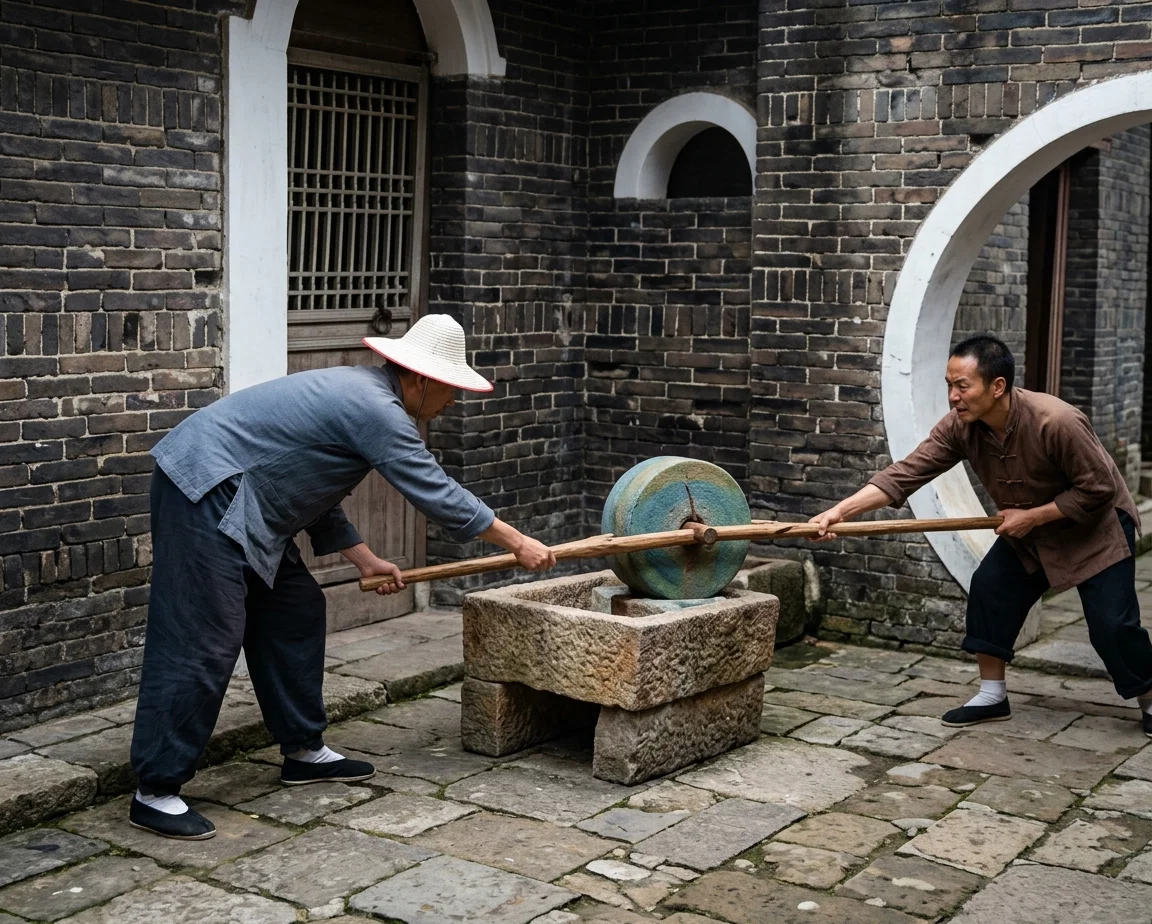
MEN GRINDING STONE TO LEVEL TYPE
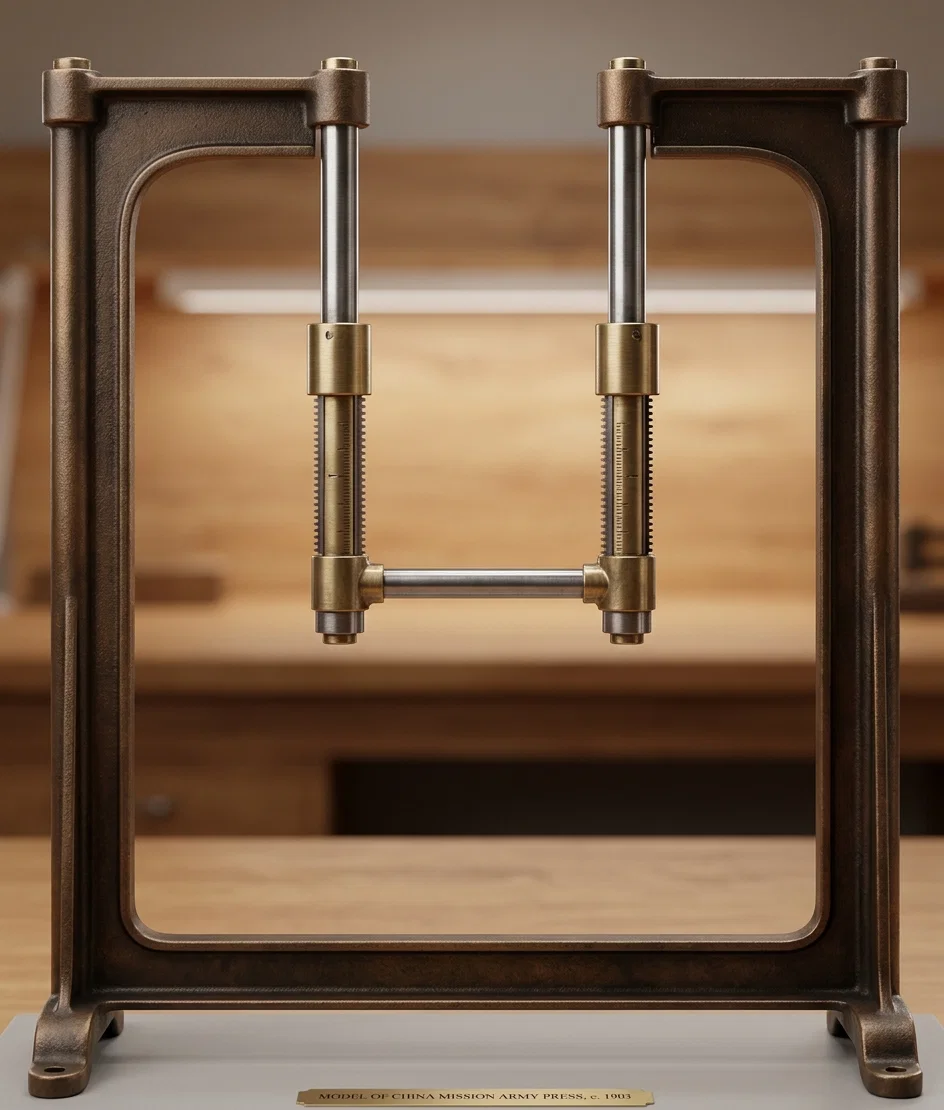
Mrs. Miller and I earnestly sought the Lord that evening to give us a press to take to China. The next morning it was with confidence that I returned to the firm, and was pleased to hear the manager say that they had decided to make us a present of a six-column army press. After telling of the use we intended to make of the press, I gave them shipping directions.
When we reached Hankow, we learned upon inquiry that the press had arrived, and was in the company's warehouse. To see something that had come from our native land, which was to be used in carrying the gospel to China's millions, was a source of great encouragement to us after a long voyage of over four weeks.
Chinese Coolies
We were confronted with many perplexities and difficulties in caring for our baggage from this port to our inland station, as modern conveniences were no longer at our disposal; and as the box containing the printing-press was much heavier than the rest, it became especially burdensome. For the rest of the journey, the Chinese coolie took the place of the drayman. [Coolie is the name applied to the laboring class in China.]
The difficulty is not in finding coolies, as the wharves are covered with them, and they all like to carry a foreigner's baggage, as it means more money. We engaged what we considered a sufficient number; when they took hold of the box, they began to yell, but did very little lifting, finally relaxing their hold, saying, “Tai-puh-tong,” that is, “lift, not able to move.” They called for more men, and so many came that there was not room for all to grasp hold of the box. These men, who before were carrying from sixty to one hundred pounds, now found it very difficult to raise thirty pounds, and it required much yelling to do that. Although Chinese labor is considered cheap, in the end we paid nearly double what a drayman would have charged to convey this box to the railroad station.
Arriving at the depot, there was no freight warehouse to store our baggage. Every man is supposed to look after his own freight; the company takes no responsibility in regard to either freight or passengers. When the train arrived, we either had to put the freight in the cars ourselves or hire coolies to do it. Here we were again at the mercy of the coolies, who always take advantage of an emergency, to enrich their pocketbook. We soon learned that the only way to produce motion in a Chinese coolie was to yell, “Tsien, Tsien” (money) at him.
We reached Sin-Tang-Cheo, the nearest railroad station to our mission, in the evening. Here we found the coolies quite timid about taking hold of the press until a good price was offered for its removal.
Carried by Rafts
There still remained four days' travel on wheelbarrows, to reach the Sin-tsai Mission Station. We well knew that the wheelbarrow could not carry a printing-press, although enormous loads, as much as four to five hundred pounds, can be carried in this way.
As the rivers have been China's railroads for centuries, we were informed that by taking a roundabout route, the freight could reach Sin-tsai in about two weeks. As there was no choice in the matter, we secured rafts for the first half of the journey, and house-boats for the latter half.
Not having a printer at hand, it was not thought advisable to begin the printing work at once, as we all desired to give our time unreservedly to language study.
Removal to Shang-tsai Hsien
In September, 1904, we opened a new mission at Shang-tsai Hsien, which is seventy-five miles north of our Sin-tsai station. This city was at one time a capital of China; and for miles around are to be found the ruins of this ancient metropolis. We believe that its location will be equally advantageous as a center from which our literature can radiate over this empire. Shang-tsai is only a half-day's journey from the Peking-Hankow Railroad, which, in connection with the Hankow-Canton road, and their connecting lines, will enable us to send our literature to every province in China.
Securing a Printer
At a meeting of the China Mission Advisory Committee in February, it was decided to begin the publication of tracts, and a monthly mission paper, also to secure a native printer; but printers in China are few and far between. Finally, a Chinese teacher said he had worked at the trade, and was willing to undertake the work, so we prepared a room in our mission station for a printing-office, but waited in vain for the printer; although his transportation had been paid, we knew nothing of his whereabouts.
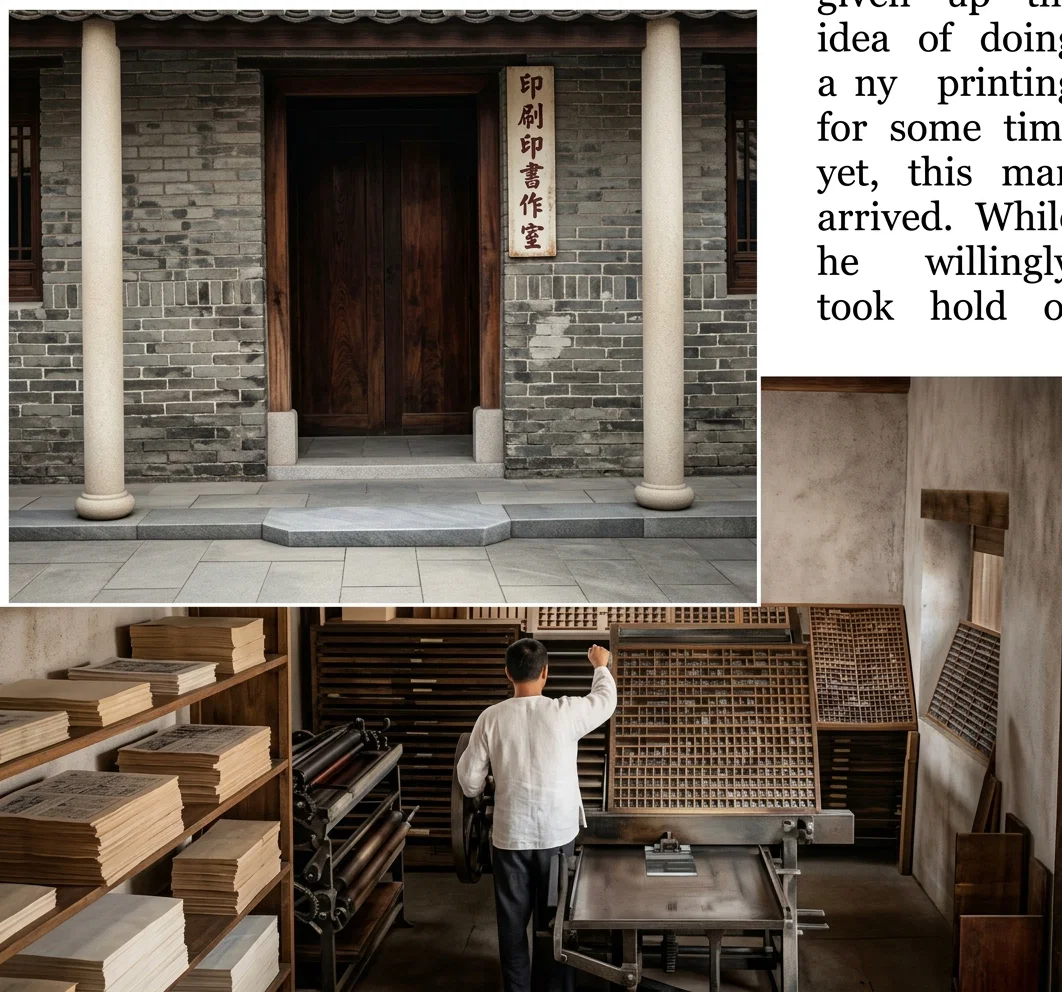
A CHINESE PRINTING-OFFICE. EXTERIOR AND INTERIOR
After two months had passed, and I had almost given up the idea of doing any printing for some time yet, this man arrived. While he willingly took hold of the work, it was quite evident that he had not had much experience at the trade. But, with his help, I decided to go ahead13with the work. We have found many new problems to solve, but the work is progressing. God has helped us in improvising the necessary articles which we did not have.
Printing-Office
The printing-office is a brick building inside our mission compound, just opposite the Gospel Chapel. It is thirty feet long and fourteen feet wide. In one end are the type-cases, and in the other end the press. Along the sides are tables and benches for binding the books and planing the type. On both sides are windows, which give plenty of light.
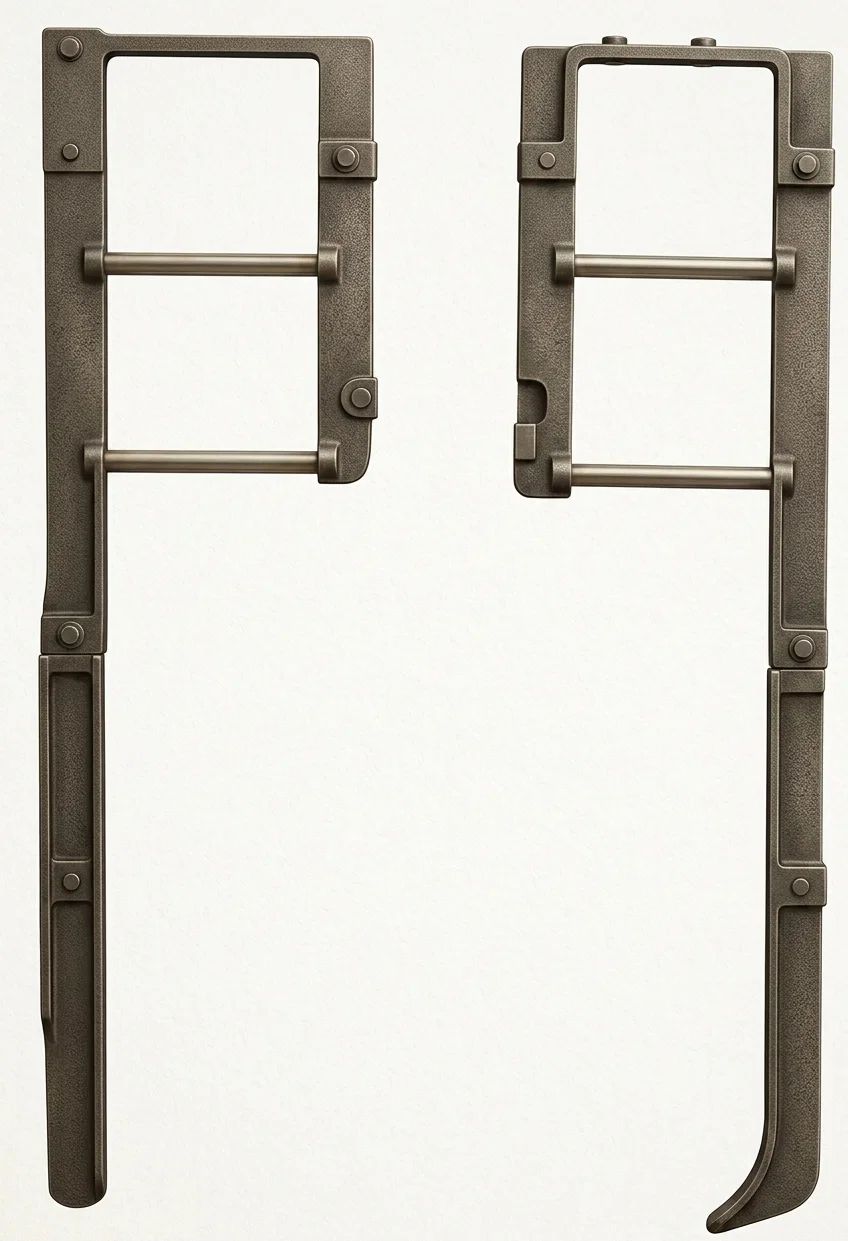
The type-cases were all made by a native carpenter. For a planer we had a native stone mason grind the surface of a stone level, by rubbing a sandstone over it until smooth. By nailing a length of stovepipe on some boards, we were able to ink our roller. A piece of tin, with a right angle made of wood, nailed to its margin, serves to hold the type while it is being set up.
Chinese Type
Most of the space in a Chinese printing-office is occupied by the type-cases. Each class of characters must have a separate compartment. An English word is constructed by collecting the separate letters of which it is composed. In writing Chinese we have lines and dots, called strokes, which, when joined together in a definite order, constitute a word. Some strokes are horizontal, others perpendicular, some short, some long, and still others are curved and angular. If it were possible to separate a Chinese character into its strokes, as we can English words into letters, then it would be possible to arrange a set of long, short, perpendicular, horizontal, curved, and angular lines, with dots and spaces of various sizes, with which to construct characters, the same as the words in the modern languages are formed from letters. We could then reduce the type-cases to the same size as the English. Imagine what a task it would be to collect and properly arrange the different strokes in a character.
Each Type a Word
Each word is cast into a single type, and these words are arranged, in the order of a dictionary, in the type-cases. A Chinese type-setter could find fifty words while he was collecting the component parts of one character.
If you were to take Webster's Dictionary and select four thousand words which are most commonly used in conversation and writing, and have each word cast into a single type, and then arrange these four thousand words in the type-cases in the same order in which they occur in the dictionary, you would have the same proposition in printing English that we have in the Chinese. To set up the sentence, “China has a population of four hundred and twenty-six million,” one must first search for the word “China,” then “has,” and so on, picking up a whole word at a time, instead of separate letters.
Components of a Chinese Word
The characters are composed of two parts; the first is called its “radical,” which usually gives a clue to the meaning, and also serves as a means of classifying it. The second is called the “phonetic,” which serves as a clue to the sound, and by combining with different radicals forms a large variety of words. There are two hundred and fourteen radicals which may be said to constitute the Chinese alphabet. One hundred and sixty of these are characters.
Characters as Images
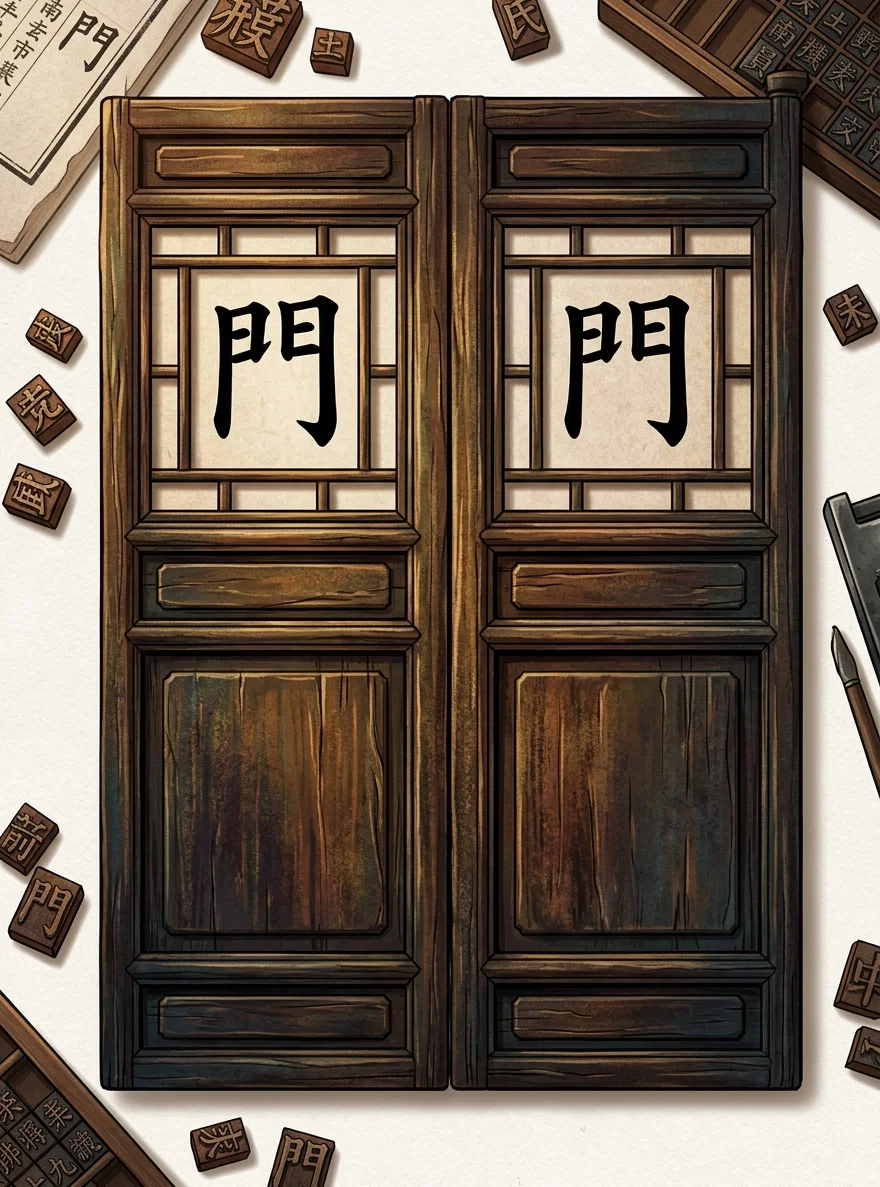
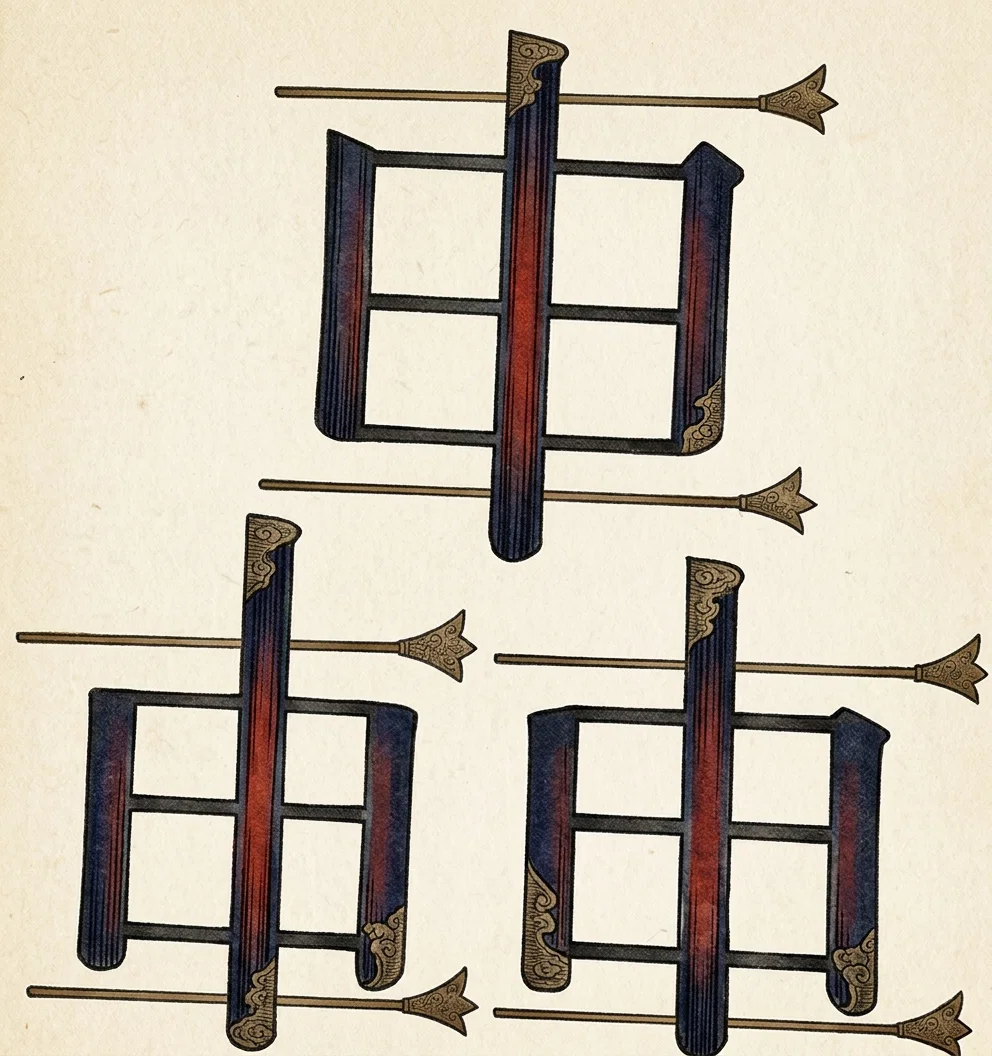
Many characters are so constructed as to illustrate their meaning, as a few examples will point out. The first character in this column, pronounced men, is the word for “door.” Placing the second character in the column, meaning month, inside the character “men,” the word for door, we have the third character in this column, pronounced wen, which means “to ask,” as the man goes and stands in the door to inquire.
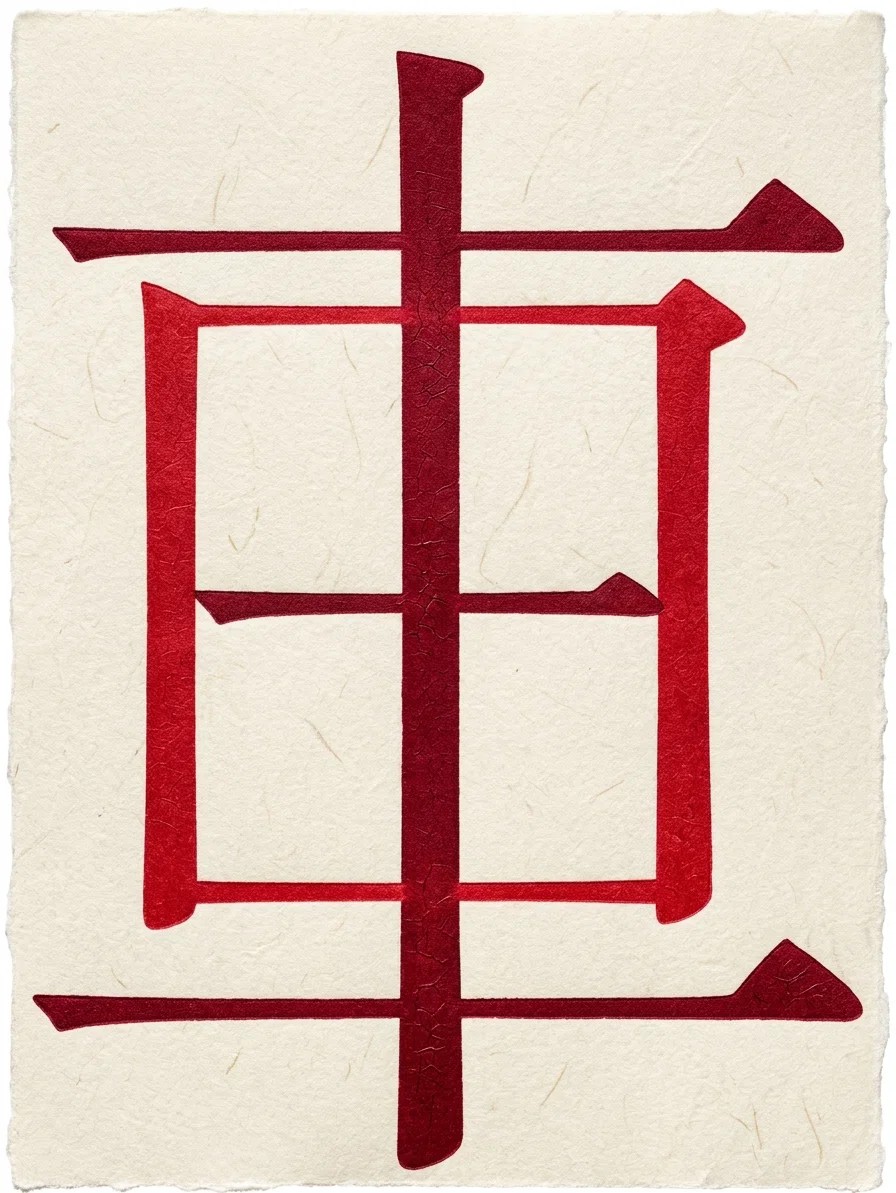
The word represented by the next character in this column means “a cart,” and you can readily see that it has an axle, two wheels, and a bed between the wheels.
When three carts are placed together as represented by the next character, a new word is formed, which means “the rumbling of thunder” or “an explosion.” Three carts running over stone roads will certainly make a great rumbling.
The next character in the margin is the word for “cave;” its meaning is well illustrated. There must be substance before there can be a hole in it.
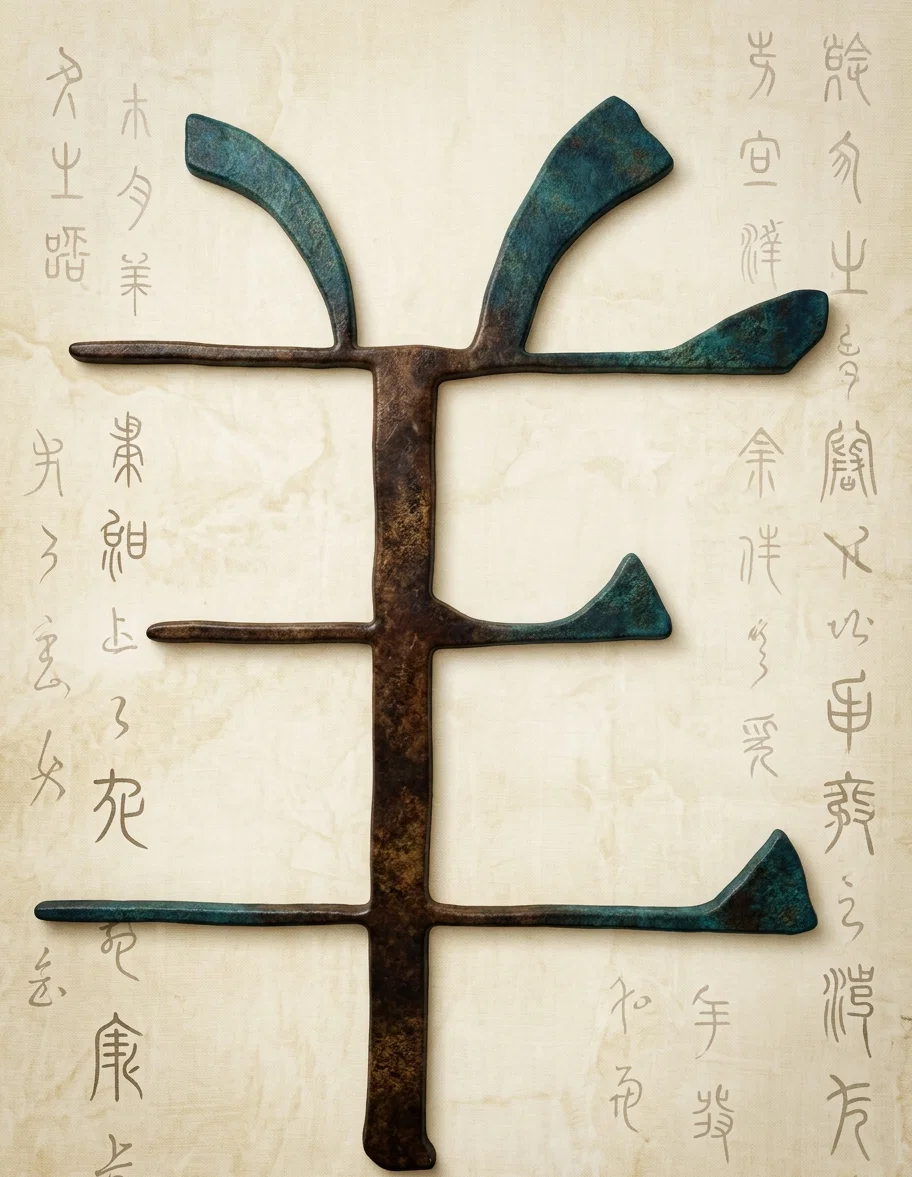
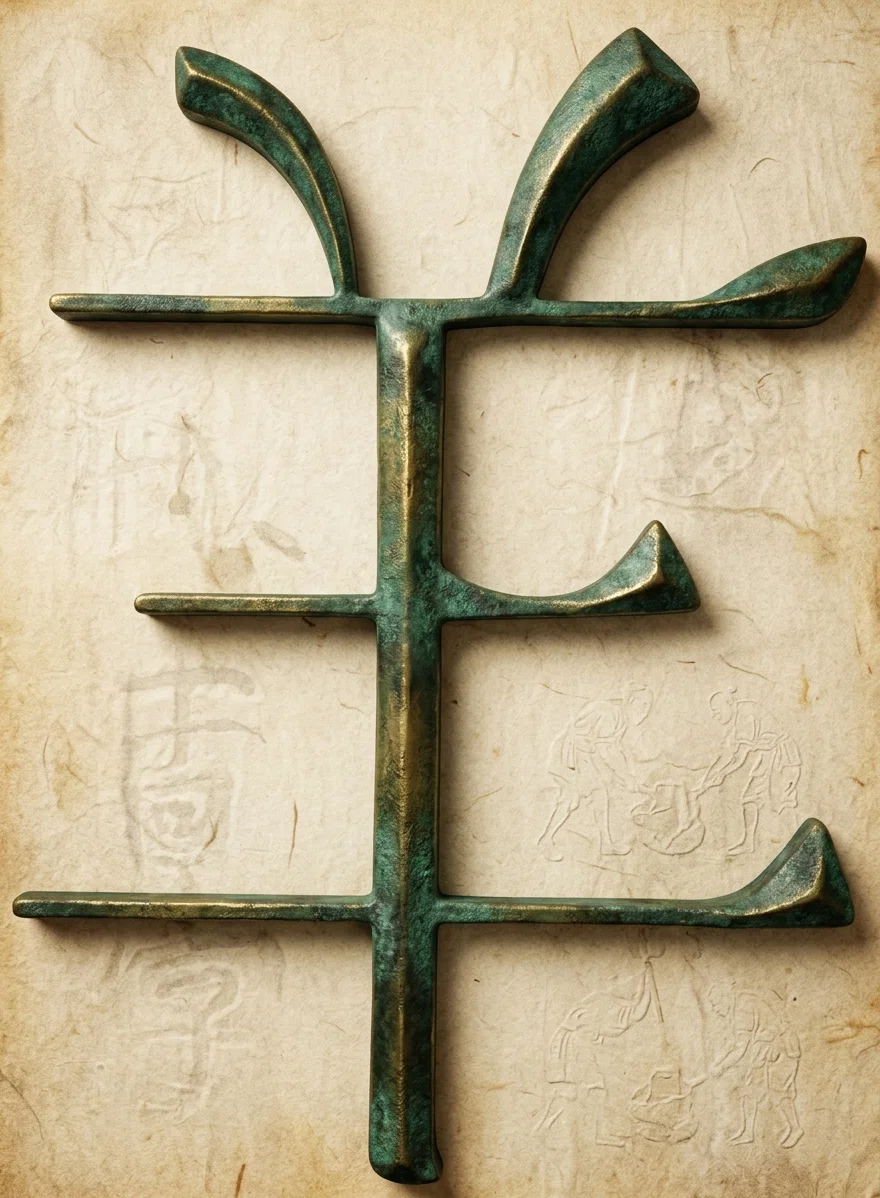
Sheep are designated by the next character shown in this column; the four legs, two horns, and tail, are all visible.
The Chinese dictionaries contain forty-one thousand characters, but there are not more than six thousand in general use, and four thousand will give quite a wide range of expression. The number of different characters used in translating the New Testament is 2,394.
The characters are arranged in vertical lines, and read from top to bottom, and from right to left. Very few punctuation marks are used. The end of a sentence is marked. One paragraph is separated from another. Even if these were omitted, the sense would not be affected. In fact, much literature is printed without any marks whatever.
The literature in China is divided into two classes—the Kuan-Hua and Wen-li. The first class is that most generally used in the northern fifteen provinces. It is easily understood, and is the spoken language of all northern China. However, the dialects vary much in different provinces, and even in adjoining cities there are marked changes.
Wen-li is the literary language, and its principal use is in writing. It is not understood by the common people, and is seldom used in conversation. Tracts and papers printed in Wen-li can be read by the educated class in China, Manchuria, and Korea.
The Gospel Herald
The name of our Chinese paper is Fuh-In-Hsuen-Pao. The two characters Fuh-In is the word for gospel, Hsuen, to proclaim, and Pao a paper. When taken together, they are translated “Gospel Herald.” It is desired to print this paper in language which is everywhere current in China, and as the Korean written language is the same as the Chinese, it can be used by our brethren there. The greater part of the population of the island of Formosa is Chinese, and all the islands of the Pacific are dotted with Chinamen. Besides, there are many in foreign countries who may have no other means of hearing this message, only as it comes to them on the printed page. They will more readily read a paper that comes from their native land than one printed in the land in which they live.
Not only will the Hsuen-Pao serve as the organ of the Seventh-day Adventist China Mission, but each number will contain several articles on present truth. For the benefit of our scattered members it will devote a small portion of its space to current events. The paper will be issued monthly, and will contain sixteen pages of subject-matter.
Importance of Literature in China
There is, perhaps, no other language in which so much error has been inculcated in the translation of the Bible.
It thus becomes necessary for us either to secure a correct translation of the Bible or to publish literature pointing out the errors, and calling attention to the true doctrine and the signs of the times. The latter seems more feasible for the present.
The tract societies in China are printing an abundance of literature propagating these false doctrines and circulating them with energy. It is time for us to “cry aloud and spare not.” One of the most effective ways of doing this is by scattering the printed page.
The publishing work in China has begun on a small scale, but we hope to see it rapidly develop, and be the means of sounding the last message to this fallen race. We ask you to prayerfully remember the work in heathen China.