The General Conference

2%

Review and Herald Publishing Association · Washington, D. C. · Jun 1, 1905

FromReview and Herald, Vol. 82, No. 22.

Read the full edition

The General Conference

THIRTY-SIXTH SESSION MAY 11-30

The Japan Mission

The presentation of present truth to the Japanese people began among the Japanese residents of our own country. For some years before our missionaries came to Japan, systematic mission work was carried on among the Japanese in San Francisco, and, as a result, quite a number of young men were led to accept the truth. Some of these attended Healdsburg College, thus receiving a preparation to work for others; and several have since returned to Japan to labor among their own people.

Pioneer Days

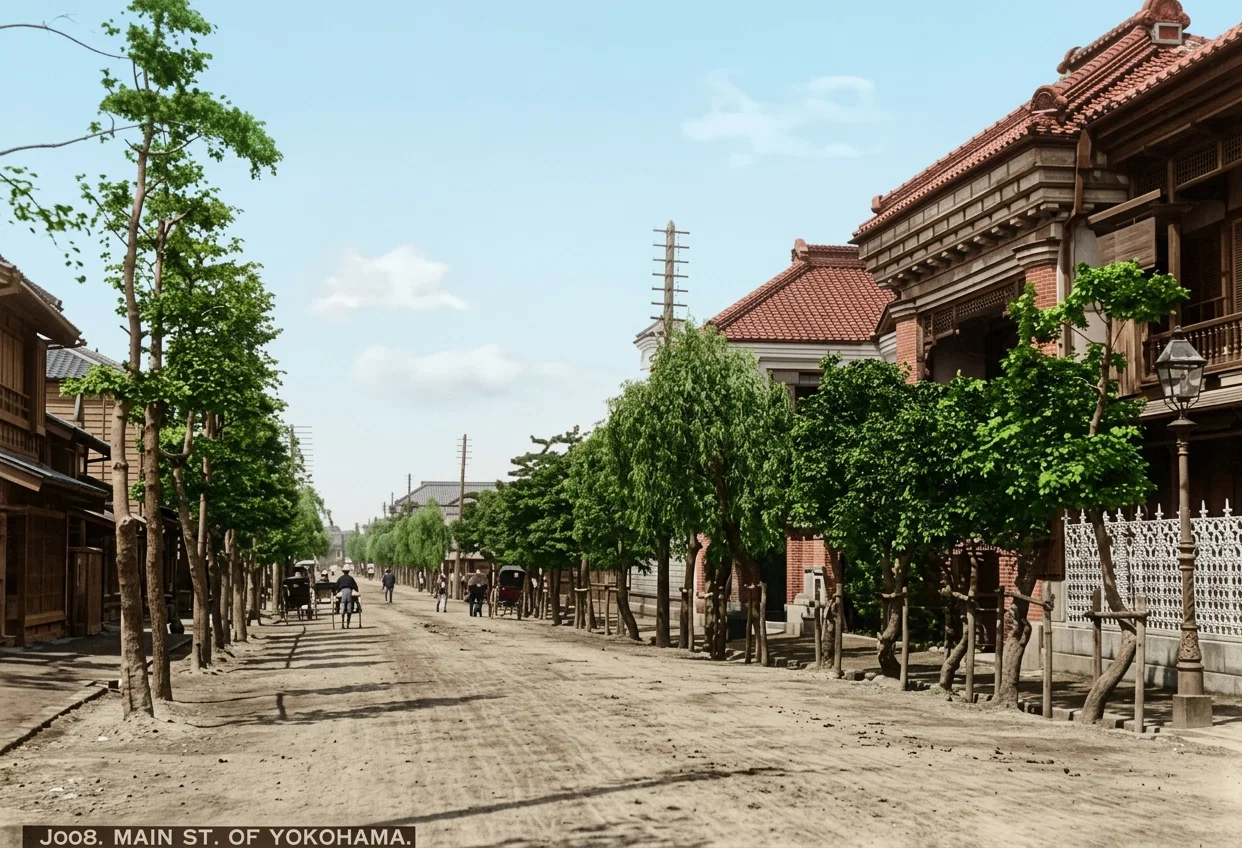
A VIEW IN YOKOHAMA
A VIEW IN YOKOHAMA
Elder W. C. Grainger, of Healdsburg, Cal., was our pioneer missionary to Japan. Laying aside his school work at Healdsburg, he engaged for some time in mission work for the Japanese in San Francisco. Finally, in November, 1896, he sailed for Japan, having for a companion in labor, Brother T. H. Okohira, one of the young men already referred to.
Under the international treaties in force at that time, foreign residents in Japan were subjected to various restrictions that considerably interfered with their freedom of action. Among these restrictions was one which would not permit them to reside outside the prescribed “foreign concessions,” unless connected with some Japanese family as employees, actually or nominally. They were not permitted to engage in regular public instruction, unless connected with some institution that the Japanese authorities would recognize as a school. Under these conditions, the Shiba Bible School was opened. In the rented house where the workers lived, certain rooms were set apart as class rooms. In these rooms, daily classes for the study of English Bible were held at various hours of the day, and were open, free of expense to all who chose to attend. But, very naturally, those who attended were almost exclusively students from the various schools in the city.
About a year after his arrival in Japan, Elder Grainger was joined by his wife and daughter. And a year later, Brother B. O. Wade and his wife and Brother W. D. Burden and his wife came to assist in the work. These workers located in the northern part of the city, near Ueno Park, and opened a Bible school similar to the one in Shiba. Their classes were crowded with students, so that the whole time and energies of the workers were thus occupied.
As results of these early efforts, some earnest souls were led to accept the truth, and several have developed into useful laborers. Besides these visible results, seeds of truth were doubtless sown in hundreds of hearts. Yet experience has taught us that students usually attend such classes for the help they get in English language study, rather than for the Bible instruction. So while we have not entirely given up this method of labor, we have come to recognize the importance of acquiring the Japanese language as a very necessary preparation for really efficient work. And we are agreed that the new laborer's first and most important task is the study of the vernacular. But while pursuing this task, he may give some time to class work in English, with profit to himself and to the students who attend his classes.
From the first, the need of literature was felt, and in July, 1899, the first number of the Owari No Fukuin (Gospel for the Last Days) was issued. This little monthly has been issued regularly since then, first with eight pages, and later with sixteen pages of smaller size. It has been of great value in enabling us to reach people in all parts of the country. Hundreds of copies were sent out monthly, letters written by interested readers were answered, and these interested ones were visited by our laborers. In this way the work has been opened in various places.
From time to time since we have published a number of tracts and pamphlets, of which the following is a list: translations of “Steps to Christ,” “His Glorious Appearing,” “Marshaling of the Nations,” “The Second Advent,” and “The New Testament Sabbath,” and, from original matter, two small tracts, entitled “The Way of Salvation” and “The True God and His Sabbath.” We hope to add several new tracts to our list the present year, and the matter for some of these is already prepared.
In the fall of 1899, after only three years of faithful labor in Japan, Brother Grainger laid down his burdens, and was laid to rest. His loss was sorely felt by the little band, and his place at the head of the work was vacant for two years. His wife and daughter returned to California early in 1901. In November of the same year, the present superintendent, with his family, arrived to take up the work so well begun. The following February, Brother and Sister Wade returned to America, on account of his health. At this time our corps of native laborers numbered four.

Medical Missionary Work

The year 1902 witnessed the opening of the medical missionary work in our field. In October of this year, Dr. S. A. Lockwood, and his wife, Dr. Myrtle S. Lockwood, arrived to engage in this line of work. They spent the first few months of their time in language study, and in careful search for a favorable opening for the work. No such opening presenting itself either in Tokyo or Yokohama, our attention was directed to Kobe, an important port about three hundred and seventy-five miles to the southwest of Tokyo. Here we found several persons who were already acquainted with our sanitarium work in America, and who encouraged us in every way to begin the work there. After some delay, a suitable house was rented, and the place was opened to receive patients, June 1, 1903.
At this time the force of workers was small, and the equipment decidedly meager. But from the first, patients began to come, and without exception received benefit from the treatments given. From this small beginning the work has steadily grown. In October of the same year, the force was increased by the arrival of Brother and Sister B. E. Rees, trained nurses from the Portland (Ore.) Sanitarium. Needed equipment has also been added, as funds have permitted. The number of patients increased till it was found necessary to call for another nurse from the home field, and Sister Maude Harvey arrived last November, in response to this call.
Toward the close of last year it became evident that the sanitarium quarters would soon become inadequate to accommodate the increasing number of patients; so, after careful deliberation, it was decided to build an addition, to contain four patients' rooms and two rooms for nurses and other helpers, with basement for storerooms and laundry. This addition is now practically finished, and most of the rooms have been occupied. The prospects for this branch of ourwork seem very promising. A good practice is being built up among the foreign residents of Kobe, and an increasing number of outside patients are receiving treatments. The house patients have included the late United States consul and other well-known people in Kobe, besides missionaries from different parts of the country. The Kobe Sanitarium is regularly advertised in the Japan Evangelist, a magazine read by practically all the missionaries in Japan; and those who have been its patients recommend the place to their friends. By these means the work is becoming well known, and the patronage is steadily increasing.
In the management of this institution, we have planned carefully, so as not to get beyond our depth financially. The equipment has been increased only as we had funds to pay for it. The cost of the addition, already mentioned, was $875. To meet this, a loan of $425 was made, and the remaining $450 was met, as the expense was incurred, from the receipts of the institution; and the bills receivable are ample to pay the loan when it falls due. It is expected that the institution will be wholly self-supporting this year.
A few months after the opening of the Kobe Sanitarium, a similar work was begun in another part of the city, by our native physicians, M. Kawasaki and K. Kumashiro. Later, Brother Kawano, a graduate from the St. Helena Sanitarium Training-school, having returned to his native country, united with the doctors in this work. These laborers have put their own means into the enterprise, and have struggled along under many difficulties. But the work is growing, and good results have already appeared. Five of their patients and six helpers have accepted the truth, and united with the church. Recently the number of house patients has increased very materially, so that the prospects are truly encouraging.
However, we are sorry to report that recently Dr. Kawasaki has been obliged to retire from the work, on account of his health, also to withdraw his investment, as this is his only means of support during his illness. This leaves the institution in close straits financially. Except for a modest allowance to Dr. Kumashiro for the first three months, these workers have received no financial assistance from mission funds, until recently. But in view of their present straits, we have thought it best to assist them by paying the accrued interest on a loan of one hundred and ninety dollars. Their equipment is far from complete, their most urgent needs being a spray, and an electric-bath apparatus; and we believe it would be good missionary work to supply these. This would require about two hundred dollars. With such assistance, they would be in a fair way to meet their obligations.

Evangelistic Work

The growth of our evangelistic work has been slow, but steady. Elder Grainger organized the Tokyo church, and for some years this was our only organization. Three years ago the membership was about twenty-five. During 1902 the number of baptisms was ten; the next year, fifteen; and last year, over forty. In January of last year, the Kobe church was organized, and in March of the present year we organized the little company at Wakamatsu, with a membership of twelve. Our membership for the whole field is now about ninety.
Last year the believers in Kobe made a strong effort to build a meeting-house; and with the assistance of friends in America, a neat chapel was completed, and dedicated last October. This is our first and only church building in Japan. We have long felt the need of a church building in Tokyo, believing that it would give character to the work in the capital city. And for some time past our members have been systematically contributing to a fund for this purpose. Still, it seems as if it must be some time before we shall be able to build without assistance, or without incurring considerable debt.
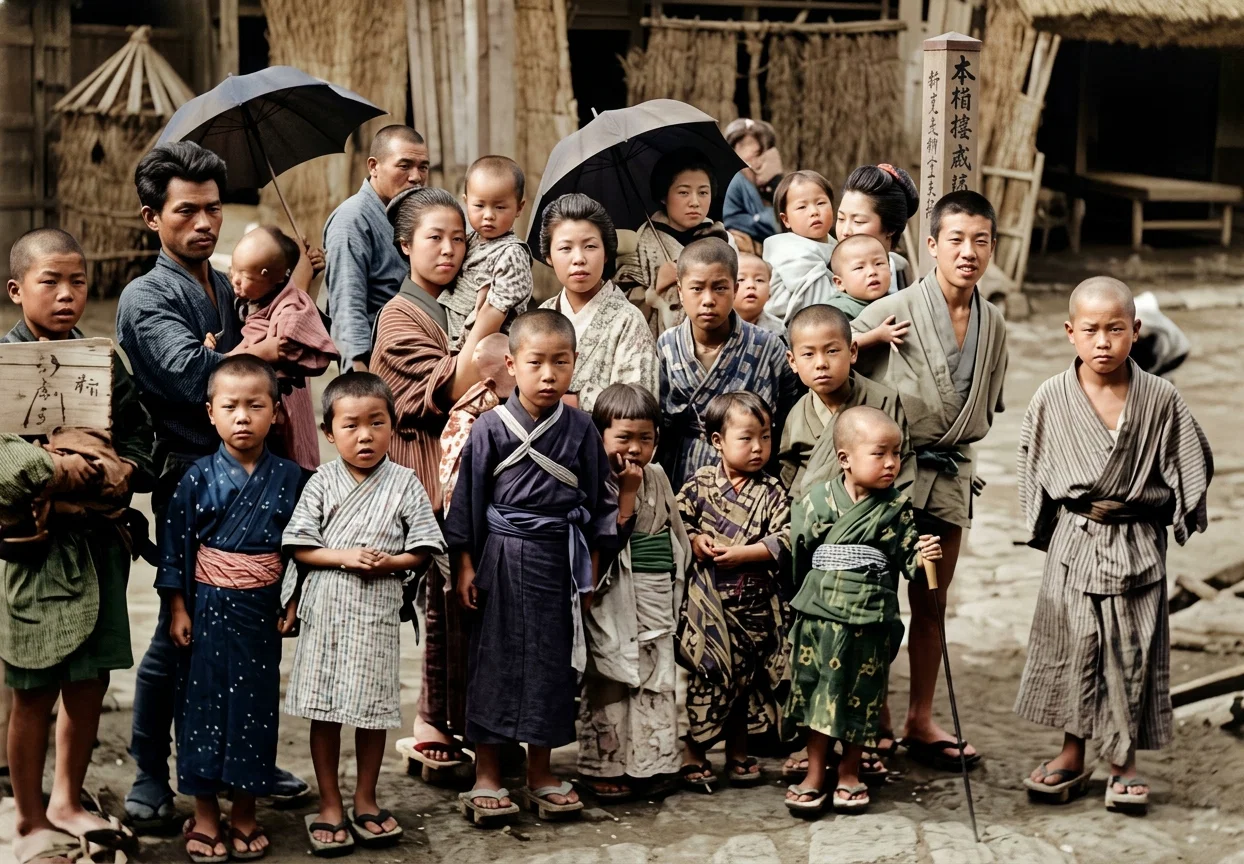
JAPANESE CHILDREN
JAPANESE CHILDREN
At present we have six places where the gospel is regularly preached: two in Kobe, two in Tokyo, one in Wakamatsu, and one in Kitagata. Our regular Sabbath meetings in Tokyo are now held at Brother Burden's house. Sunday-evening service and a daily English Bible class are held in the large class room at my house in Hongo. The other meeting places, except the Kobe church, are rented rooms in Japanese houses.
Our present force of evangelical laborers numbers seven. All but one of these are connected more or less closely with the work in the places just mentioned. During the past year or two, we have made the experiment of sending out a number of our young men to sell our literature, granting them a small monthly allowance to piece out the profits on their sales. But in every case their sales have been so small, and hence the profits so small, that we have been forced to abandon this basis of reckoning with them. The time may come when the canvassing work can be made self-supporting in Japan; but before that time comes, we must at least have more profitable books to sell, and canvassers who have been carefully trained for their work.

Publishing

This leads to the consideration of the publishing work. Thus far we have hired all our printing done; for, while we have had funds donated to start this effort, we have not thought it wise to tie up any of our small force of workers in office work, as long as we can hire the work done so reasonably. In order to be able to print our monthly paper, we should need quite a well-equipped office, and one or more persons quite constantly employed. While this does not seem advisable, yet we have decided that it would be well to have a press and equipment with which we could publish Sabbath-school lessons, small tracts, etc. So, at a recent meeting of our committee, it was decided to procure such an equipment at once. One of our native laborers is a printer, so we shall not need to go outside for workmen.

Educational Work

It will thus appear that in this field we have made beginnings in three departments of our work; namely, the evangelical, medical, and publishing departments. But we can hardly say as much for the educational department. The idea has apparently been very persistent in some minds that we have a well-established educational work in Japan. This idea has doubtless been imbibed from reports of the Bible schools already described. But it must already be plain that these schools, even if they were still being carried on as formerly, are not schools in the sense in which we use that term in our educational work. This kind of work we regard as strictly evangelical; for these students come to us with no knowledge of the special truths committed to us, and the most of them have little or no knowledge of the Bible and of Christianity. They are not our students, but are the regular students from the various schools to be found all over Tokyo. They come to our Bible classes at the appointed hour, then go their way. Some attend quite regularly throughout the school year, and seem much interested. Others come but a few times, then drop out. Many have such a meager knowledge of English that they certainly do not receive much benefit from the instruction. Others, we are glad to say, do understand quite well, and some have been led to accept the truth as a result of the interest begun in the English Bible class. It will thus appear that this work does not differ in character and aim from Bible-reading efforts; and we report such a class hour as a Bible reading.
In all this I would not convey the idea that we have done nothing toward educating and training the young people who have come among us. We have done what we could. Yet under the circumstances, we have not been able to conduct regular, continuous work, such as is done in a regularly organized school. Young men who gave promise of becoming useful workers, we have encouraged to circulate our literature. And while they were thus engaged, we have provided regular class instruction for them, as regular and continuous as the other duties of our workers would allow. This is strictly educational work; and yet it has been done by our evangelical workers at such times and places as circumstances indicated. So we can not say that we have a school or a teacher, as these terms are used in our educational work. As the work advances and our numbers increase, we shall doubtless need a regular school for the education of the young and the training of laborers. Meanwhile, we are of good courage to labor on, doing the best possible with the facilities at hand, trusting God to add his blessing, which alone can give success in his work.

The Sabbath-School Work

This report would not be complete without some mention of our Sabbath-school work. We have three schools—one in each of our three churches. The lessons studied have been specially prepared for use in this field. The first lessons thus written were in the nature of topical studies on the main points of our faith. Following this series, we have been studying the life of Christ, using “The Desire of Ages” as a guide, the explanatory notes being selected from this book. This series is now nearing completion; but beyond this, no provision for lessons has yet been made. All have been published in our monthly paper; but when we get our printing-press in operation, we shall probably print the Sabbath-school lessons separately, thus giving space in the paper for other matter.
Besides our regular Sabbath-schools, our laborers in Tokyo, Kobe, Wakamatsu, and Kitagata have made it a part of their work to gather in the neighboring children, either on Sabbath or on Sunday, and instruct them in Bible truth, after the manner of our “mission Sunday-schools” at home. It is difficult to measure the results of such effort; yet the seed sown will surely bear some fruit.

The Awakening in Korea

Before closing, it seems proper that some reference be made to the wonderful manner in which the truth has gone forth into Korea during the past year. Some of us had been praying for this field for months, and presenting it before the readers of the REVIEW AND HERALD. The Lord was preparing our hearts for the work he was about to do among this people. The facts have already been placed before our people, but a brief recapitulation may not be out of place here.
Ryu Un Hyun, a Korean believer, learned present truth from our workers in Kobe. He brought a fellow countryman, Song Fun Cho, who also accepted the truth. Ryu Un Hyun went on his way to Hawaii, where he has since lived out the truth. Song Fun Cho returned to Korea, and while en route he communicated the truth to a fellow passenger, Lim Ki Pan, who also gladly received the light. Returning to his home near Chinnampo, he began to spread the truth, and very soon a great interest was awakened.
Brother Kuniya received an urgent invitation to visit the believers in Korea, and further instruct and organize them. He reached Chinnampo August 11, and five weeks later I joined him. We remained till September 30, visiting the people in their homes, teaching, baptizing, and organizing. As results, seventy-one were baptized, and four little churches were organized, with nine subject to baptism. Besides all these, there were over fifty who were reported to us as interested, and as having accepted the light as far as they understood it. Brother Lim Ki Pan was left in charge of the work, and we have received frequent letters from him. He reports progress, and new believers being added. The Sondol brethren have built a church, and started a church-school. Tithes have been received from the believers at Pamegi, Kangdemuro, and Chinnampo.
And yet it would seem that there is urgent need that help be sent to this needy field at once. It is perhaps not to be wondered at that fruit which ripened so quickly should show a tendency to blight. Yet it has given us pain and anxiety to learn that the little company at Rondon has become distracted and backslidden. In response to Brother Lim Ki Pan's urgent appeals, Brother Kuniya is planning to visit this field again as soon as possible. We hope that he can go soon, and this may relieve the present urgent need. Yet it must be clear to all that we should have a strong man to take the oversight in the field. And we have been praying for months that the Lord will lay the burden upon some strong heart.
And just now, while this report is being prepared, as if to intensify this call for help, and to add fervor to our prayers, comes news of another great awakening in Korea. Brother Kuniya writes from Kobe that Brother Song Fun Cho, tired of waiting for his coming to Korea, has himself come to Kobe, asking for help in the work he has been doing. Returning home last summer, he began disseminating the light at Hichu and neighboring places. These places are a little inland, about midway between Chemulpo and Chinnampo. He says that about one hundred persons are interested, or have accepted the truth. He went to Chinnampo, expecting that Brother Kuniya would soon come there; but being disappointed in this, he has come all the way to Japan to urge, with broken speech and eloquent signs, that help be sent to further instruct the people. Dead indeed must be the ears that would fail to heed such a call.
Another interesting development among the Koreans remains to be mentioned. Our brother in Chinnampo began to correspond with friends in California, telling them about the truth they had embraced. We have sent the addresses of these young men to our brethren in San Francisco, and efforts are being made there to bring the truth before them. We have no very definite report yet as to results, but understand that some are becoming interested. We are hoping that from among these young men the Lord will raise up a man who may act as interpreter for the workers that we confidently expect will soon be on their way to carry the closing message to the Land of the Morning Radiance.
In closing, let it be said that both Japan and Korea are wide open to receive the gospel for the last days. The Lord's messengers are free to go anywhere and everywhere throughout these domains. Therefore, it is hardly necessary that we should speak particularly of the many openings and opportunities. It is true that the masses of the people sit in darkness, and know not that their light has come. Yet shall we wait till they awake of themselves from their deathly stupor? or shall we go quickly and arouse them?
F. W. FIELD, Supt.