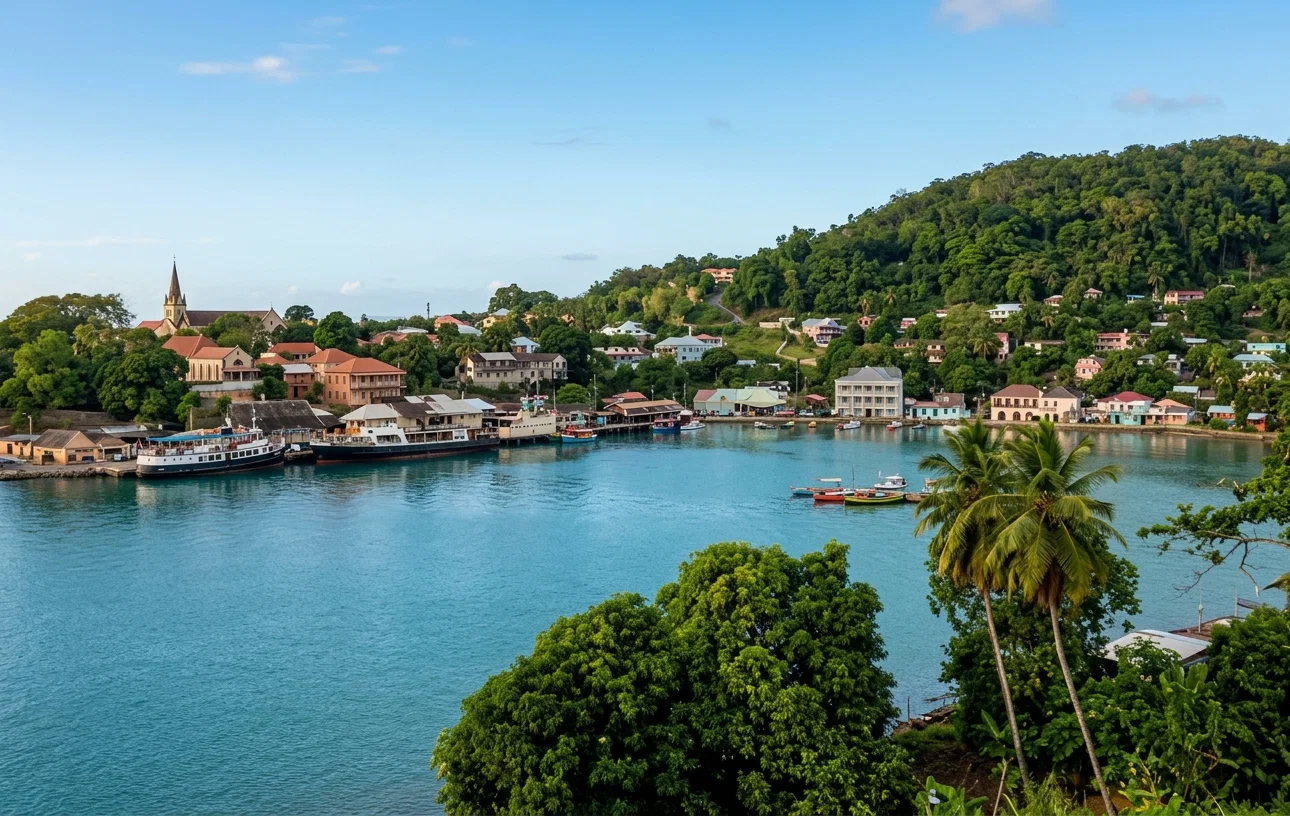
The East Caribbean Conference was organized in February, 1903. Its territory comprises the string of islands that fringe the eastern part of the Caribbean Sea, and a portion of the mainland of South America.
Beginning with the Danish and British Virgin Islands on the north, and extending to and including the Guianas of South America, with Venezuela as a mission field, it covers a territory over one thousand miles in length, including more than a score of islands, and embraces over eight hundred thousand square miles of the South American continent. If the island of St. Thomas were placed in northern Michigan, the southern part of the Guianas would reach as far south as Florida. But this comparison will scarcely help those in the States, who have good communications, to grasp the difficulties encountered by our few workers. The East Caribbean Conference is composed of many islands, separated by hundreds of miles of sea, with poor communication, and subject to frequent quarantines. These conditions are a great hindrance to the speedy proclamation of the message.
We have in our conference one of the most thickly populated spots on the face of the earth, not excluding China or Belgium, Barbados having an average of over eleven hundred people to the square mile. Our field is also cosmopolitan. British Guiana and many of the islands belong to England, and the English language is principally spoken. Several of the larger islands and French Guiana belong to France. French is the prevailing language in those islands. Other islands and Dutch Guiana belong to the Dutch government, and the Dutch language prevails. St. Thomas, St. Croix, and St. Johns belong to Denmark. Venezuela is Spanish. In British Guiana and Trinidad there are about two hundred and fifty thousand East Indians, brought from India to work on the sugar estates. Many of these are educated in English, and are well to do. We look with anxiety upon the problems we have to face as our force of workers is being diminished, owing to the lack of funds.
At the time of our organization, our three mission fields—the Lesser Antilles, Trinidad, and British Guiana—were merged into the East Caribbean Conference, with a membership of about six hundred. At the present time our membership is 907, 142 having been added in 1903, and 165 in 1904.
The finances of our young conference are far below what we wish we might report, yet they have shown a steady increase, for which we are very thankful. The money given for the support of the cause was as follows: tithes for 1903, $1,975.19; for 1904, $2,292.47; total, $4,267.66. Annual offerings for 1903, $117.13; for 1904, $237.54; total, $354.67. Weekly offerings for 1903, $99.95; 1904, $56.04; total, $155.99. Sabbath-school donations for 1903, $178.23, of which $92.82 was given to missions; and for 1904 they were $306.91, $163.59 being sent to missions. Total Sabbath-school collection, $485.14; to missions, $256.41. Miscellaneous donations for 1903, $89.93; for 1904, $193.35; total, $238.28. Raised for Watchman press, $407.63. Grand total, $5,954.37. Per member, $6.56, besides the amount raised for several church buildings.
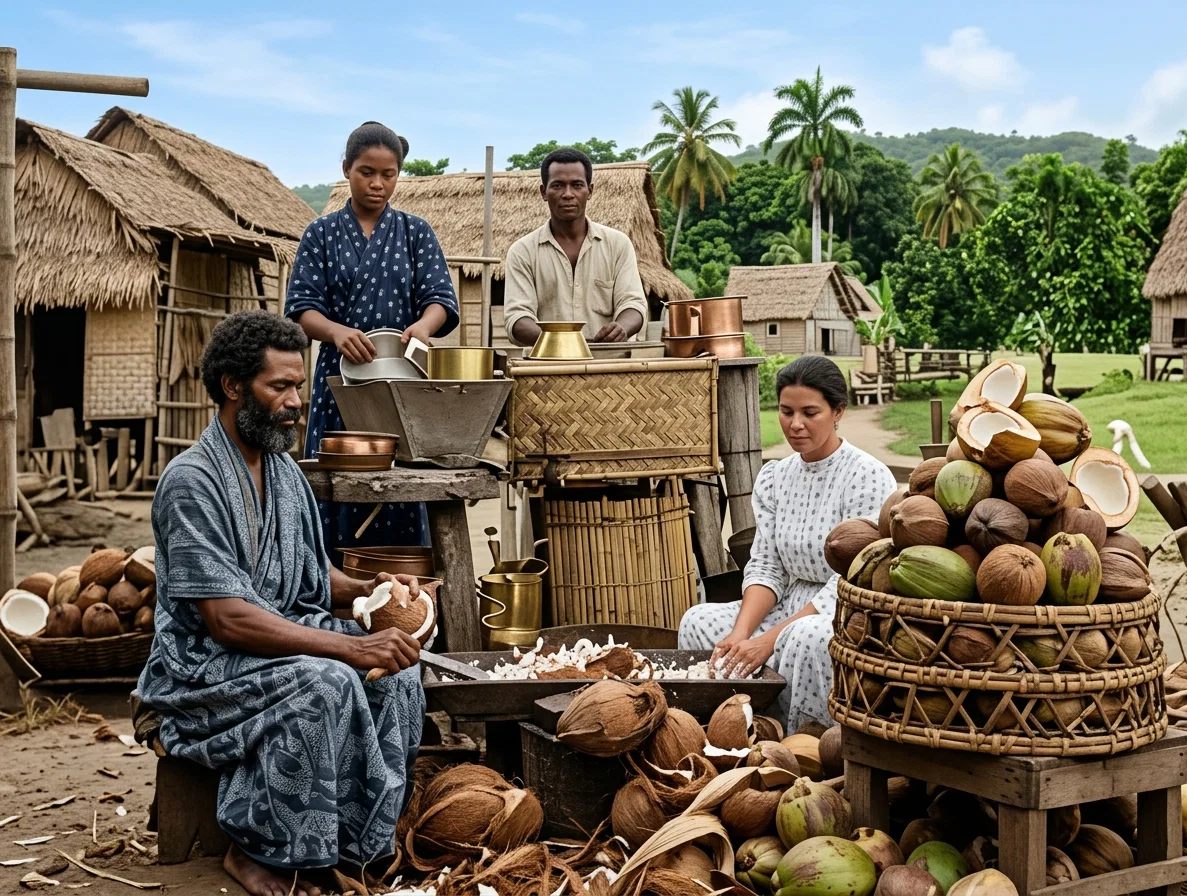
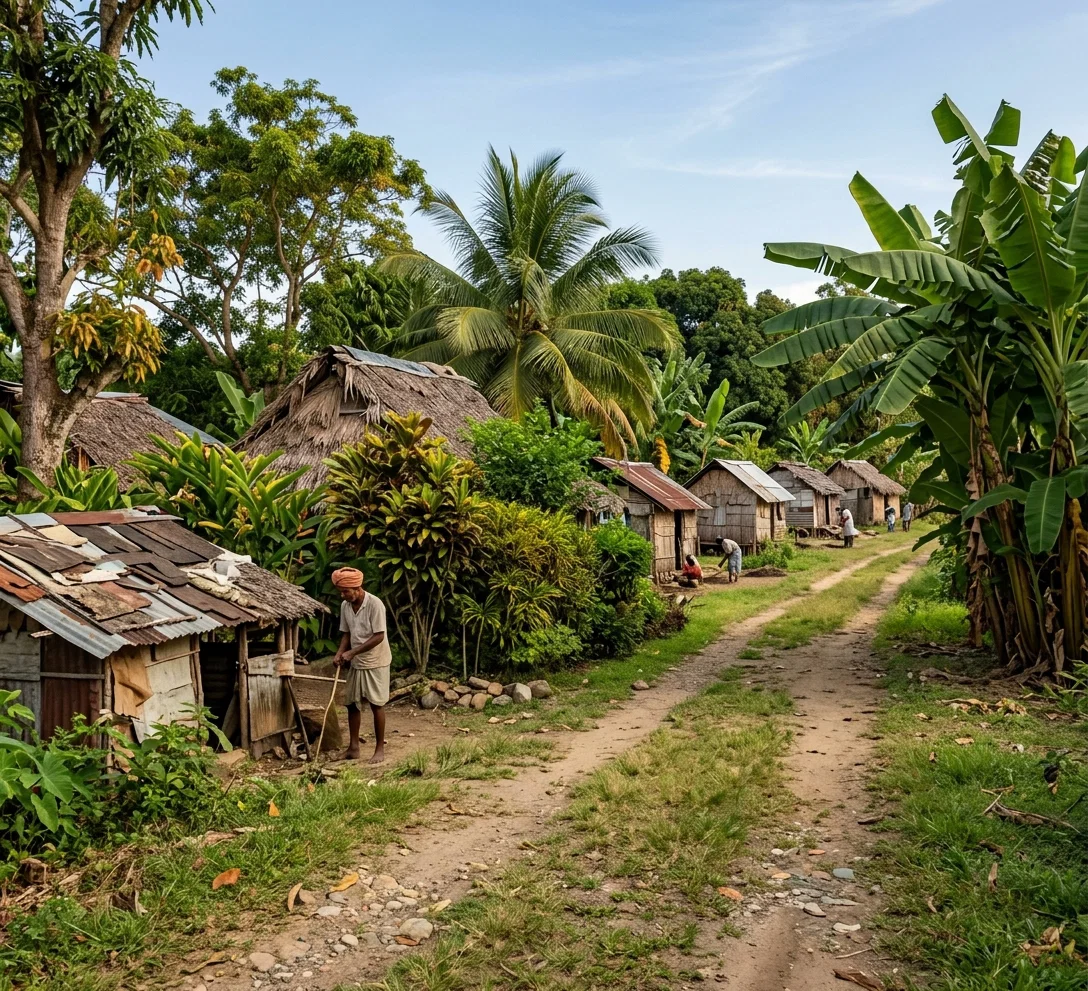
When the low wages, the small amount of money in circulation, and the general poverty prevailing in the West Indies, are taken into consideration, it will be seen that there is evidence of faithfulness on the part of many in these matters. If you could go into the provision shops patronized by the laboring classes, you would see them purchasing for their dinners half a cent's worth each of rice, corn-meal, salt fish, butter, etc. It is no uncommon thing to have tithes and offerings paid in a cent at a time.
Our Work
At the present time we have twenty-nine workers; seven ordained ministers, six licensed ministers, ten missionary licentiates and Bible workers, and six canvassers. Eighteen laborers are on the pay-roll—eight Americans and ten natives. The work is now well established in eight islands and British Guiana. There are also believers in seven other islands and Dutch Guiana. We have twenty-one church buildings—nine in British Guiana, seven in Trinidad,18and one each in Barbados, Antigua, St. Vincent, Tortola, St. Kitts, and one on the island of St. Thomas is now in process of erection, and the foundations for others are being laid in Dominica and Tobago.
Since the organization, fourteen tent and hall campaigns have been actively prosecuted in new fields. Of these, five were in British Guiana, three in Antigua, one each in Trinidad, Tobago, Grenada, Barbados, Tortola, and Dominica. In addition to this, the workers connected with the Caribbean Watchman and office have carried on faithful work in connection with their other duties.
The Caribbean Watchman
Perhaps one of the most interesting and encouraging features connected with our work is that of scattering the Caribbean Watchman. For several reasons, it was difficult for us to rally our people to do periodical work necessary to warn the people, so long as we were wholly dependent upon our American, or even the English, periodicals. At the time of our organization, it was decided to begin the publication of a missionary paper, to be known as the Caribbean Watchman. This seemed a great undertaking. No funds were available for investment in publishing work, yet the brethren were unanimous in the opinion that the matter could not be further delayed. No expensive printing plant was purchased, but our plans were laid before printers in Trinidad, and tenders submitted by them, some of which we considered very reasonable. We launched out by faith, purchased the stock, and began with an edition of three thousand. We have had many bright experiences in this work. The circulation rose quickly to seven thousand copies of each issue, which has been kept up. We have strong hopes that we shall soon have our forces so well organized that we may materially increase our circulation. The circulation has gone far beyond our borders, having a stable list in Jamaica, Central America, Colon, and Bermuda.
Canvassing Work
On account of the financial condition, and a lack of reliable agents, our book work has dropped considerably. But we are laying plans to revive it; the total amount of book sales was $5,457.29.
Sabbath-Schools
The Sabbath-school work is a great factor for good in our field, the Sabbath-school being our only training-school. We are trying to make this work a means by which our people may not only become familiar with present truth, but be fitted to do the work required of them by the Lord. We have a total of thirty-six schools, with a membership of nine hundred and twenty-one.
Our Needs
With such a field before us, and so small a band of workers, it is surely evident that our needs are manifold. But as we look over the great harvest-field, and see more destitute fields, we only desire to mention a few of our greatest needs.
We should have at least three faithful Bible workers. The three largest cities of our conference—Bridgetown, Barbados; Port of Spain, Trinidad; and Georgetown, Demerara—are promising and fruitful fields. There is a demand in each city for a company of Bible workers, but we only ask for one in each city, and we trust that this urgent need may be provided for at an early date, as doors stand open before us among all classes. We know of no more fruitful field in the world, if the right kind of labor is put forth. Are there not three of our more favored conferences that would like to send and support a faithful Bible worker in these three cities?
In the three cities mentioned above there is a great need in the medical line. Treatment rooms should be established, in harmony with British laws. If properly conducted, these would give to the third angel's message the right arm so much needed.
Barbados is the great health resort for this part of the West Indies. Hundreds of people come from unhealthful places each year to recuperate. A small sanitarium started here would doubtless succeed from the beginning. The medical workers would have the hearty co-operation of our conference laborers. There is also a demand for a good agent to sell our health literature.
Finances
We are exceedingly sorry that our conference is such a helpless child, drawing so heavily upon the Mission Board for aid. It is the financial condition, and not a lack of interest among our people, that makes this a necessity. Besides our laborers' wages and expenses, we have two special needs that are confronting us at the present time,—the building of churches and the Watchman press. It is difficult for those who labor in a field where it is easy to obtain halls and schoolhouses suitable for meeting places, to realize the need of church buildings in pioneer fields, where it is almost impossible to get proper meeting places for a reasonable figure. The ministers in the West Indies have a great hold over the people, and use the non-permanent argument continually. To add to this argument, a multitude of so-called “Holiness” missionaries from the Eastern States, have flooded the West Indies, leaving nearly as soon as they have succeeded in getting people to leave their churches. These conditions give color to the ministers' arguments, and cause19people to be suspicious. A church building gives permanence and stability to the work.
We do not mean by this that we erect churches before we get a constituency, but that it is not beneficial to our work for a company of Sabbath-keepers, from twenty to one hundred, to struggle on year after year with no suitable place for public worship.
The building of houses of worship from now on will not occasion much expense, as we have churches already in Bridgetown, Barbados; Port of Spain, Trinidad; and Georgetown, British Guiana, the three largest cities in our conference. But as our people are for the most part very poor, it is impossible for them to raise the money necessary to erect the buildings needed. So far the burden has fallen mostly upon our American workers in the field. But just now they are well drained, and there is a special need for help from more prosperous lands, to assist in this matter in Dominica, Tobago, and Speightstown, Barbados.
By the second year our Watchman work had so grown, and its influence was so far-reaching, that other denominations began to print papers to supply their members with reading-matter, so that they would not read our paper. These circumstances made it necessary for us to make improvements, both in appearance and in the matter put into our paper. In council it was decided to purchase an outfit of type and borders, so that we might get the Watchman out more as we desired to see it. Accordingly, the necessary things were purchased, costing $354.35, and the last December number was set up at our own office, though the press work was still done outside. This has enabled us to make some needed improvements, and the Watchman still leads all periodicals in the West Indies.
We had to borrow money to secure this outfit, but we have raised in the West Indies $407.63, and in the United States $63.25, leaving $383.47 still due. This amount should be raised at once. We trust there are those who would like to help clear this off.
While there are many obstacles to be met, the prospects for gathering in a harvest of precious souls never looked more encouraging. The laborers are of good courage, and feel like pressing the battle forward until the work is closed up, and the rewards are given to the faithful.