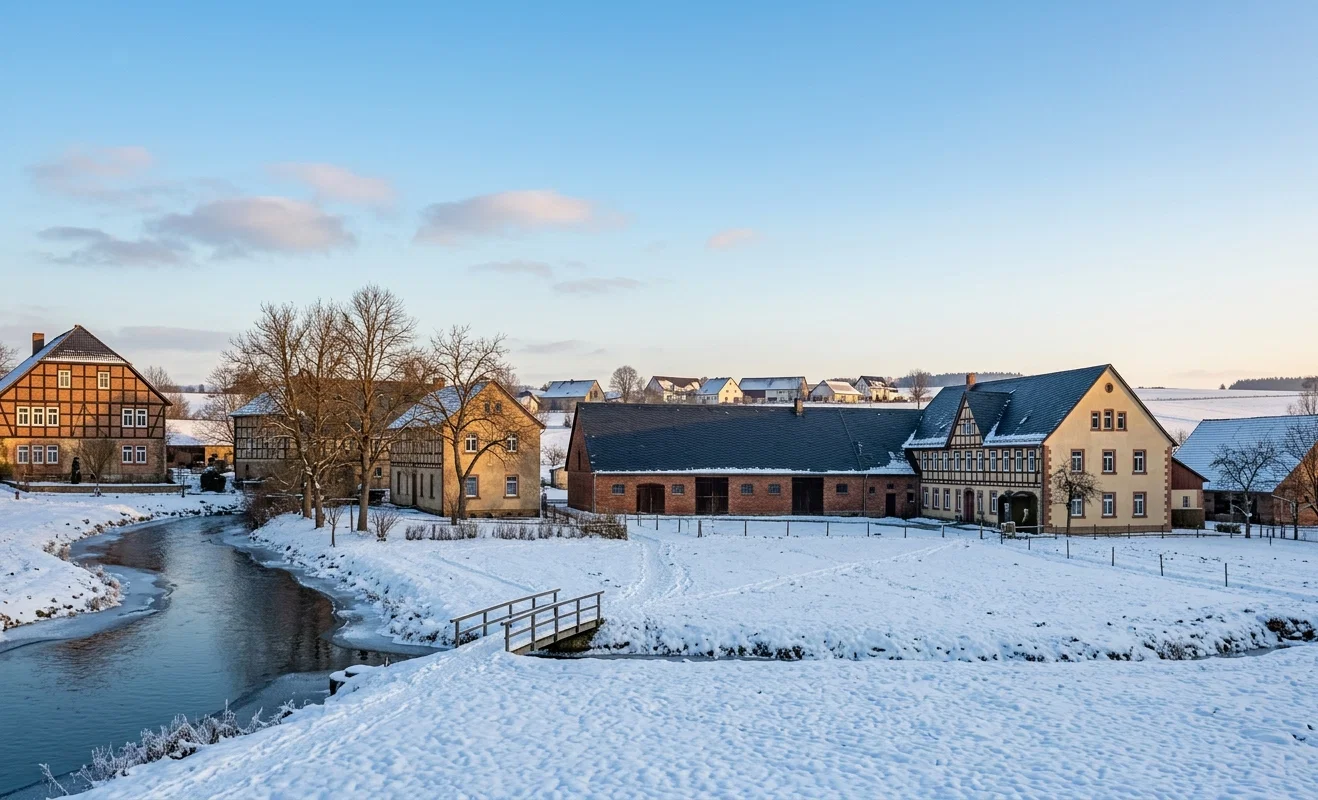
MEANWHILE the progress in other lines did not cease. An addition was built to the sanitarium, which nearly doubled its capacity. A dwelling-house large enough for several families was erected, for the use of the brethren in charge. A new stable for the dairy department, superior in nearly every respect to the original quarters for the students, was completed in September, 1902, and a greenhouse was also established. Later in the same year, a fire, which threatened for a time the whole institution, destroyed one of the old barns, and the managers, taking the lesson to heart, bought a small but thoroughly modern fire-engine, and a suitable house for it was erected.
The different branches of the work flourished, in spite of difficulties. The patronage of the sanitarium, and the16output of the health food factory, increased steadily. The products of farm and garden also increased, and the orchard began to bear fruit. The new school building soon filled, and overflowed, and an addition, considerably larger than the original, was begun, and dedicated in December, 1904.
GENERAL VIEW OF THE ORIGINAL BUILDINGS
With the completion of the new building came improvements in school appliances, and additions to the faculty, and the school began to assume the aspect of an educational institution, albeit an industrial one. But the old simplicity of the school life has been preserved as far as possible. The industrial aspect is as prominent as ever. The students all work on the farm, in the factory, or in the domestic departments. The young men go into the kitchen in the morning, and help the girls peel potatoes, and the young women, as well as the young men, go out into field, park, and garden, in the afternoon, and imbibe health and vigor from the fresh air and sunshine. The bill of fare mentioned above has been but little altered; and as the nearest grocery store is seven miles distant, the students are not often tempted to indulge in forbidden abominations.
As might be expected, the strictest economy has been exercised from the beginning. At a cost of less than forty thousand dollars, a school building has been erected, equipped, and furnished, accommodating nearly two hundred students, and containing, moreover, a chapel with a seating capacity, including the gallery, of five hundred persons, four large class rooms, not including the dining-room, and a large parlor. Of course there is no superfluous furniture or unnecessary ornamentation, but the essential school appliances are not wanting. A physical and chemical laboratory has been equipped, the library is steadily growing, the museum is already nearly filled with an excellent collection of specimens from nearly every part of the earth, and a good grand piano and a chapel organ have recently been added to our musical department. Maps and blackboards, which five years ago were an unthought-of luxury, are now in evidence in every class room; and instead of studying in the twilight until their eyes ache, to save lamp-oil, the teachers and students now turn on the electric light.
The call for workers on this side of the water is so urgent that the course of study here is of necessity short and practical; the principal one being two years in length, with a preparatory course of two years for foreigners and others who have but little general education. There is also a two-years' course for nurses who wish to enter the sanitarium. All students enter the school at the recommendation of their various conference presidents or committees, with the understanding that they are to enter the work at the end of their training. And such is the press for help that the more promising students are often called out into the field before they can finish even this. Although the school is only six years old, it can already count dozens of its missionaries, scattered over at least three continents, and a larger contingent is going out every year.
The organization of the work here is simple but thorough. The different departments co-operate in perfect harmony. The sanitarium, the health food factory, and the farm furnish employment for the students, and their earnings go into the general funds. The printing-house in Hamburg, the German Union Conference, and the mission school in Friedensau, all work together. The institutions here have risen amid difficulties unknown in many other countries. Our people are very poor, wages are not half so high as in America, while land and building materials are much higher, yet in six years a capital of $125,000 has been invested without contracting a debt, and two hundred students have been helped through school from the general funds. The school is conducted on a self-supporting basis, but sufficient work is offered to enable any student to get through at an actual expense of about fifty dollars a year, and even this amount is met for those who afterward prove efficient and faithful.
Any sketch of Friedensau which did not mention the spiritual life of the students, would be incomplete. As all are church-members, the field for missionary work within the school is not so large as in our American schools, so on Sabbaths and Sundays the students go out into the surrounding villages, with tracts and papers. The young men who are finishing the workers' course are sent out to different places to hold meetings, so their efficiency can be tested before they leave the school. Those who expect to enter the Bible work also spend several days each month in the neighboring towns, in real Bible work, during their last year in school. The young women in training for nurses are also sent out to answer calls of persons desiring baby nurses or attendants for their children, or to do other light nursing work. Thus no student receives a diploma without having first proved himself practically efficient.
The most interesting meeting of the week is the missionary meeting, which takes place Friday evening. Letters are read from former students now scattered abroad. Nearly every week we listen to the thrilling experiences of some brother in the army, witnessing for the truth from the prison cell, or before the courts martial of Germany; or to the reports of the workers in Russia, who are traveling from one place to another, holding secret meetings, and baptizing converts in the midst of the terrible revolution now in progress there, in spite of the police, who are constantly on their track. It is impossible to listen to the recital of these wonderful experiences without feeling an inspiration to put forth every effort to prepare for a place in the front rank of the battle.
Improvements are always in progress in Friedensau. New bath-rooms and laboratories have just been added to the sanitarium. A new three-story dwelling-house will soon be finished. During the winter a modern steam laundry and electric power-house have been erected. This was a great boon to the young women. The old laundry was so small, and so poorly equipped, that six or eight persons were compelled to rise at one o'clock on Sunday mornings, and stand over the wash-board all day, some of them outdoors.
Among the further annexations projected, is a printing-office. This will be valuable in our industrial work. Other features will be added as the way opens. We are thankful for what the Lord has done and is doing.