A Visit to the Transcaucasus

4%

Review and Herald Publishing Association · Washington, D. C. · Feb 8, 1906

FromReview and Herald, Vol. 83, No. 6.

Read the full edition

A Visit to the Transcaucasus

L. R. CONRADI
OCTOBER 24 I left Alexandrodar for Tiflis, Transcaucasus. About twelve years ago I made the trip to that city, crossing the range from Vladikavkas by stage. At that time the railway via the Caspian Sea and Baku had not been built. The distance by rail from Alexandrodar to Tiflis is nine hundred and twenty-five miles; it requires forty-eight hours to make the trip on the cars. As I passed through the German colony of Chassaw-jurt, where we have lately raised up a church, I did not dream that a few days later, at that very place the same train I was riding on would be held up by Tartar brigands from the mountains, and the baggage and mail carried off, while twelve persons would be murdered, and a large number wounded, and all the passengers robbed.
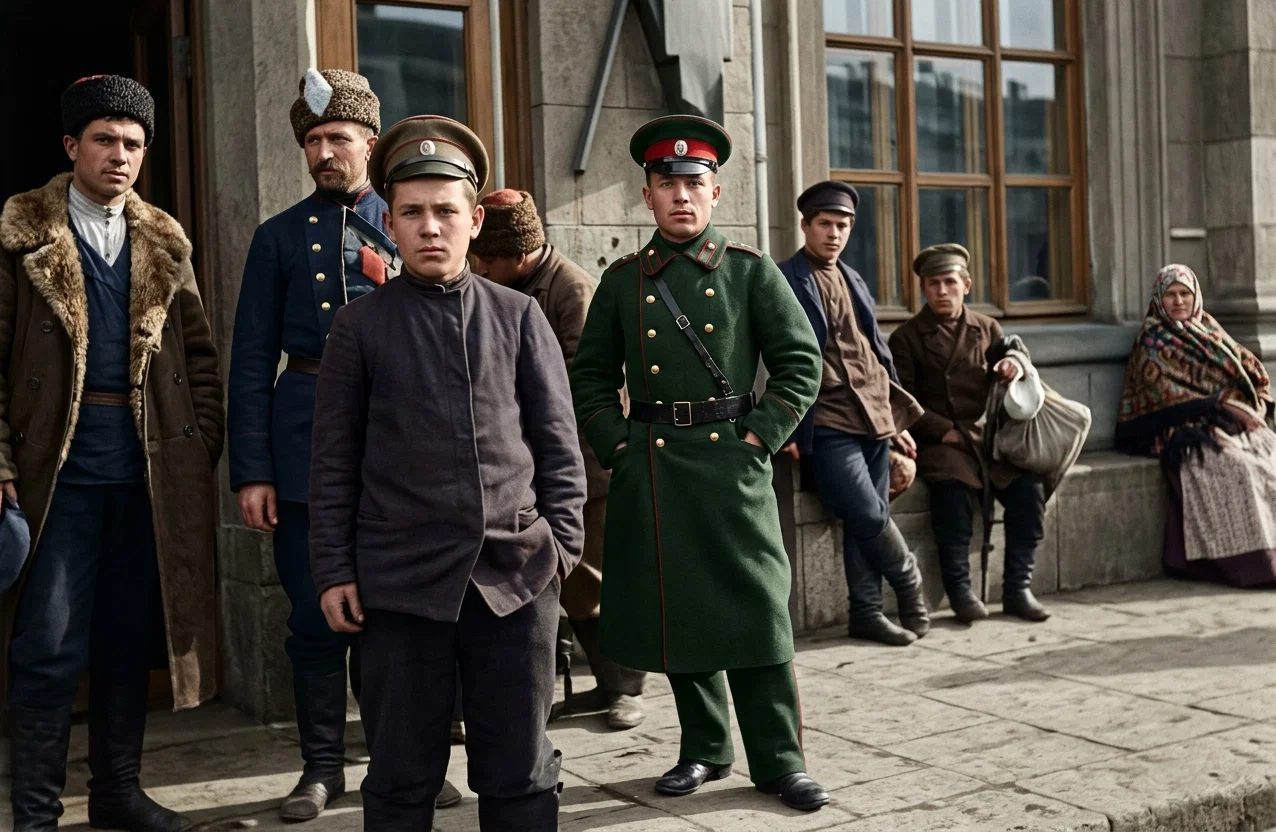
For the first time I now passed along the shores of the Caspian Sea—the greatest inland sea in the world. I tried to get some snap-shot kodak pictures along the way, but was hindered by the police, as everything was under martial law. However, I succeeded in getting one picture anyhow, showing the policeman in his uniform.
THE RUSSIAN POLICEMAN
Upon my arrival at Tiflis the night of the twenty-sixth, I was met at the station by both the Brethren Pampaian. The doctor had lately moved to Etschmiadsin, near Erivan. About twenty-five miles south of Erivan towers Mt. Ararat, 17,000 feet high; beyond that, is Little Ararat. Ararat is on the border of Turkey, Russia, and Persia; thus to-day in the very shade of the mountains where the ark rested, we have a laborer proclaiming present truth.
I found Tiflis in an uproar. A few days before my arrival, the mayor of the city had given permission for a large meeting of the citizens to be held, in which the present situation of Russia was discussed by many very intelligent and enlightened people of the neighborhood; but when this peaceful meeting closed, the Cossacks, who were guarding the exits to the building, began to fire into the defenseless crowd, as they came out. One could still see the marks of the bullets. Blood streamed down the steps of the building. The corpses were buried by the government; it was possible for but one man—he a general—to secure the dead body of a relative or friend. Although the mayor had granted permission to hold the meeting, the government sent the Cossacks.
At noon, next day after my arrival, we learned that the trains in the Transcaucasus district had also stopped running.
We spent Sabbath evening with a German family where the Brethren Pampaian were stopping. They had awakened some interest in the truth here, so we had a Bible study at the house while the soldiers were riding up and down the streets, and heavily guarding the station and all public buildings. Sabbath we went to see some interested readers of our literature; but we found a number of the streets closed by the soldiers. Some officers had been killed, and an investigation was being carried on.
There being no opportunity for me to leave by train, I decided to secure passage over the mountain pass, to Vladikavkas, with the mail coach. I would exchange a thirty-six hours' ride on the railway for a trip taking forty-eight hours by stage. By the time we got back near the railway station, we found that section of the city also closed by soldiers. Just then the station-master came up, and called to an official, who permitted us all to pass, accompanied by armed policemen. From a boarding-house across the street from ours, shots had been fired, and several policemen had been killed, and the soldiers had shot several innocent persons, who, from curiosity, had looked out of their windows. The military and police officials were investigating whence the shots had come. We found all the houses in that district, including our ownboarding-house, closed; so we returned to the family where our brethren stopped; and glad indeed were we that evening, to secure my luggage from the boarding-house. We spent the night with the two Brethren Pampaian.
During our stay we had had ample time to counsel over the work. It was decided that while the doctor would continue work among the Armenians at Erivan, his brother, the nurse, had better go to Bulgaria, and work among the Armenians there. His wife's home is there, and she had gone to that country some weeks before. Although we have still a worker in this part of the German Union District, yet we found there was an urgent demand for a German-Russian worker to labor in this field, where, as stated before, I found about fifty Sabbath-keepers. There are about five millions of people here, and we have something like eight Sabbath-keepers at Tashkend, in Asiatic Turkestan. There are also still some of our brethren in the Russian army, in Manchuria; we have learned positively that five of these were able to have the Sabbath free; and so far as we have been able to ascertain, none of the Sabbath-keepers in the army have even been wounded. Thus the Lord is caring for his truth, and it is extending from the north to the south, and from the west into eastern Asia, where Russian soldiers have been sowing the good seeds of the kingdom, and some have been converted.
Early on Sunday, the twenty-ninth, having previously secured a second-class ticket, we started on the stage-coach trip across the mountains. I was surprised to find that I was the only through second-class passenger, and there were no first-class passengers. The second-class passengers ride on the front seat, under cover, although the body is not very well protected, while those going first-class ride inside, and can be quite comfortable.
In Tiflis, the weather was still rather hot; for the first twenty miles we followed the railroad toward Batum, but we saw no trains of any kind. Then we turned into the mountains, toward Mlety, where we stopped for the night in a pouring rain, after having made about seventy miles during a ride of fifteen hours. We are at an elevation of about five thousand feet.
By daylight next morning, we were again on the way. We crossed a mountain stream, and climbed the mountain side by a road making eighteen sharp turns, then we reached Gudaur nine miles from our last stopping place, and twenty-three hundred feet higher. Some five hundred and seventy-five feet higher up we had to pass under strong snowsheds, built to protect the road against snowslides. As we ascended, we got into a blinding snow-storm. It soon became so cold that the conductor asked me inside with him. As we reached the summit of the pass, we were over eight thousand feet high. We then began a rapid descent, through romantic defiles, viewing here and there small villages perched like swallows' nests among the mountains, in full sight of Mt. Kasbek, that towering 16,800 feet high. Late at night we reached Vladikavkas, where we were again near the railway.
I had been informed that a train would leave early the next morning, so I was driven down to the station, with my baggage. All I could learn here was that the officials knew nothing about when there would be a train,—it might be a week. Finding the journals full of telegrams reporting riots, strikes, murder, and robbery in all parts of the empire, I went up-town to telegraph home that all was well, although I was unable to go farther on account of the night strike. I had secured lodgings, now, near the station, that I might be on hand whenever an opportunity was offered for me to get away. To my surprise, after I came back from the telegraph office, I learned that a train was to go in half an hour, en route to the city of Kawkasskaja, a town about three hundred miles farther north. This was the first train to go for several days. On my way back to the depot, I had seen the telegrams, announcing the czar's manifest, and it was because of this news that trains now would be set in motion once more, as the workmen had determined to remain on a strike until they compelled the government to come to terms, and offer more liberty.
I ticketed only as far as Bogoslawskaia, where I had hoped to meet Brother Ising; but as I found this might be my only opportunity to go farther, I passed right on, and the next morning the train came to a standstill at Armavir. This is a town of about ten thousand inhabitants, mostly Armenians. As I looked out of the car window, I saw Elder J. Perk, one of our brethren, who was only too glad to meet me. We have a German and a Russian church here, and it was at once arranged that our brethren should come to visit us. They came, telling of the terrible riots in the city. Thousands of people were in the marketplace; men got up and made revolutionary speeches, bitterly cursing the government and the officials; the stores and shops were locked; the soldiers and police looked on, and listened, but no one attempted to interfere. During the day the trainmen tried to take the locomotive off from our train, as they wanted to go on home to Rostov, but the station-master would not permit them to go. Then the students tried to get possession of one locomotive, and there was a regular row about that. Our brethren besought us not to leave on that train; even if it did go, it might be ditched. As there was no sign that the train would go that day, toward evening we took our baggage and went to the home of one of our brethren, and we had a meeting that night. Next day the train was still there. So for that night we appointed a meeting for the Russians, and another for the Germans, both of which were successful. Meanwhile, I was glad to learn by telegram that my secretary had safely reached Alexandrodar again. Early Friday morning, Brother Perk informed me that our train had gone during the night, but that another would be ready shortly, so we left without breakfast, and went down to catch the train.
We found there were but few passengers going, as it was so early. As we spoke German, the conductor thought we lived in Rostov, so he said to us: “What are you going to Rostov for? Your merchandise has all been cast into the streets or carried away, and your houses have been burned.” We did not then catch the meaning of his words, but when we reached Rostov late that evening, everything was clear to us. Rostov is a thriving city of about one hundred and twenty thousand inhabitants.
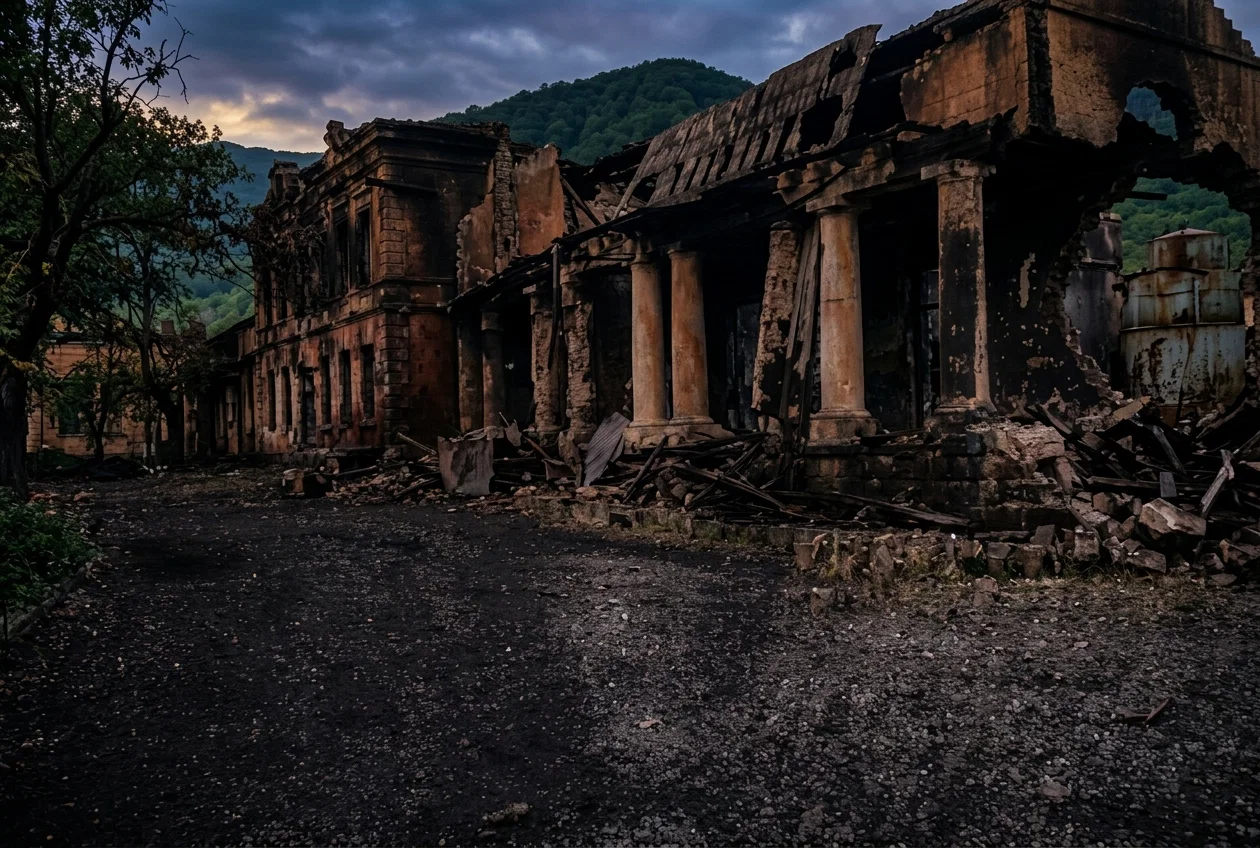
RUINED JEWISH BUSINESS HOUSES, ROSTOV
We found that not only was the station crowded with passengers, some of whom had been detained as much as eleven days, but there were also large trains of thousands of persons who were waiting for an opportunity to continue their journey. They told us that there had been a three days' riot in the city, when everything had been in the hands of the infuriated mob. Whole business blocks of Jewish stores had been burned. Hundreds of people had been killed. The Cossacks and police, instead of stopping this plunder, as they should have done, encouraged and assisted in it. The station-master, fearing for the safety of the passengers, had armed them with heavy clubs. Some had firearms, and the whole station was guarded with Cossacks. As there were no trains going, we took our luggage across the track, to a place near the depot, and early Sabbath morning we walked up-town, that we might be eye-witnesses ofthe terrible devastation that had been wrought.
Passing up the main street, we found store after store with the windows broken in, the iron casings torn out, and the interior mutilated, while many shops had been utterly ruined, plundered, and burned, and smoke was still ascending from the charred mass. One could easily see from the signs painted over the doors, that they were all Jewish houses. That the mob might distinguish between the Jewish and the Christian (?) shops, the latter placed their images in the front part of their houses; but this did not always help, for we found some fine windows smashed in notwithstanding the presence of the images of the saints. The marketplace had the appearance of a plowed field, for the stalls had been torn down, and some people were digging in the debris, if possible to discover money or other valuables. I had but one remaining film in the kodak, and with it I took the accompanying photograph, which will show something of the vandalism that was wrought by the mob. The synagogue was entirely destroyed. The Cossacks were now guarding the public places and important buildings. I noticed one whole company being marched into the corridors of the city bank. Millions of dollars' worth of damage had been done in this ruthless persecution of the Jews.
After the Sabbath we found there was a train going in the direction we wanted to proceed as far as Charcisk; it was the first train going that way for many days. In vain did we attempt to secure a ticket, for the crowds were too great. As we had our luggage in, we pressed our way through the jam, without tickets, and were told that we could secure a ticket at Taganrog; but when we got there, not less than three thousand people were waiting for the train—no thought of securing a ticket there. We quietly rode on. When we reached Charcisk (about one hundred and thirty miles from Rostov), the station-master was so anxious to get rid of such a crowd of people that he asked us whether we were willing to take a freight-train to the next larger town, Jassinowataja, some twenty miles beyond. We gladly consented to ride even in freight-cars, to get that distance, and then we were only twenty miles from our destination. When we reached the station, we found there an old Jew, all covered with blood. He had been beaten by the mob, and some officers were inquiring into the matter. They took him into the next room to wash his wounds, and while some officials were questioning the persons who had committed the outrage, other officers who had just arrived from Yekaterinoslaf, said that this was nothing; while they had been in that city, they had seen the Jews led out upon the high bridge over the Dnieper, and asked whether they had washed themselves that day, and then they were pitched headlong into the river below. Some of the more tenacious Jews, who had still clung to the railings, had had their fingers smashed off, so that they also fell into the water. There had been the same destruction to life and property as in Rostov. The officers told this in a rough, joking way, calculated to incite the mob to still greater excesses.
A few hours later there was a train that would take us the remaining twenty miles to the station nearest Alexanderpol, where we wanted to go, so we were soon en route again. It was about five o'clock in the morning when we got off at the depot, eight miles from where the meeting was to be. It was very muddy. As we started to walk the distance, we turned around, and to our happy surprise, saw a low Russian wagon, drawn by small ponies. We hailed the driver, and were fortunate in securing his services. Although the mud formed by the “black soil” came rolling into the low wagon-bed, where we had only our bundles as seats, yet we were glad that God had cared for us, and was bringing us safely to the place of meeting—only three days late.
We arrived at Alexanderpol Sunday noon, where we found our brethren already assembled. Elders Loebsack and Isaac came out in surprise as they saw the wagon pulling up. All had heard that for days no trains had been running. From many of the churches, no delegation had arrived. But there were those present who had been able to come with teams. The brethren all thanked the Lord for his keeping power, which had preserved his people and messengers in safety. We had a good, though small meeting here.