Central America

10%

Review and Herald Publishing Association · Washington, D. C. · Jan 12, 1911

FromReview and Herald, Vol. 88, No. 2.

Read the full edition

Central America

D. C. ROSS, M. D.
In company with Brother and Sister J. G. Pettey, who were called to teach in the English school in Guatemala city, I sailed from New Orleans, October 18, for Puerto Barrios, the main port on the Atlantic side of the republic of Guatemala.
Our first stop was at Belize, the capital of British Honduras. As that is a part of the Central American Conference, and we were to remain there six hours, Brother Pettey and I hired a gasoline launch, and went ashore to get our first view of a tropical city. On account of shallow water, large vessels do not land at Belize, but anchor out in the bay; and if the passengers wish to go ashore, they must transfer to small boats and launches. Belize is a city of more than ten thousand population, many of whom speak English, and it seems to be quite a progressive place.
We left there at 4 P. M., and anchored at Puerto Barrios that night at midnight. As soon as it was day, we prepared to land. Elder N. V. Willess, the conference president, met us at this place, and assisted us in getting through the custom-house, and arranged for our railroad transportation. We appreciated his help very much. He has been studying hard on the language since he arrived in the field, and is able to get along very well. To the rest of us the language was a mass of sounds that reached our ears, but conveyed no meaning whatever to our minds. One thing that was very troublesome to us at first was the difference in value between the money here and what we had been used to at home. It takes almost seventeen dollars of Guatemalan money to equal one of ours, and it is very easy for a stranger to get the worst end of a bargain. Knowing neither the value of the article nor its equivalent in money, he can easily be taken advantage of.
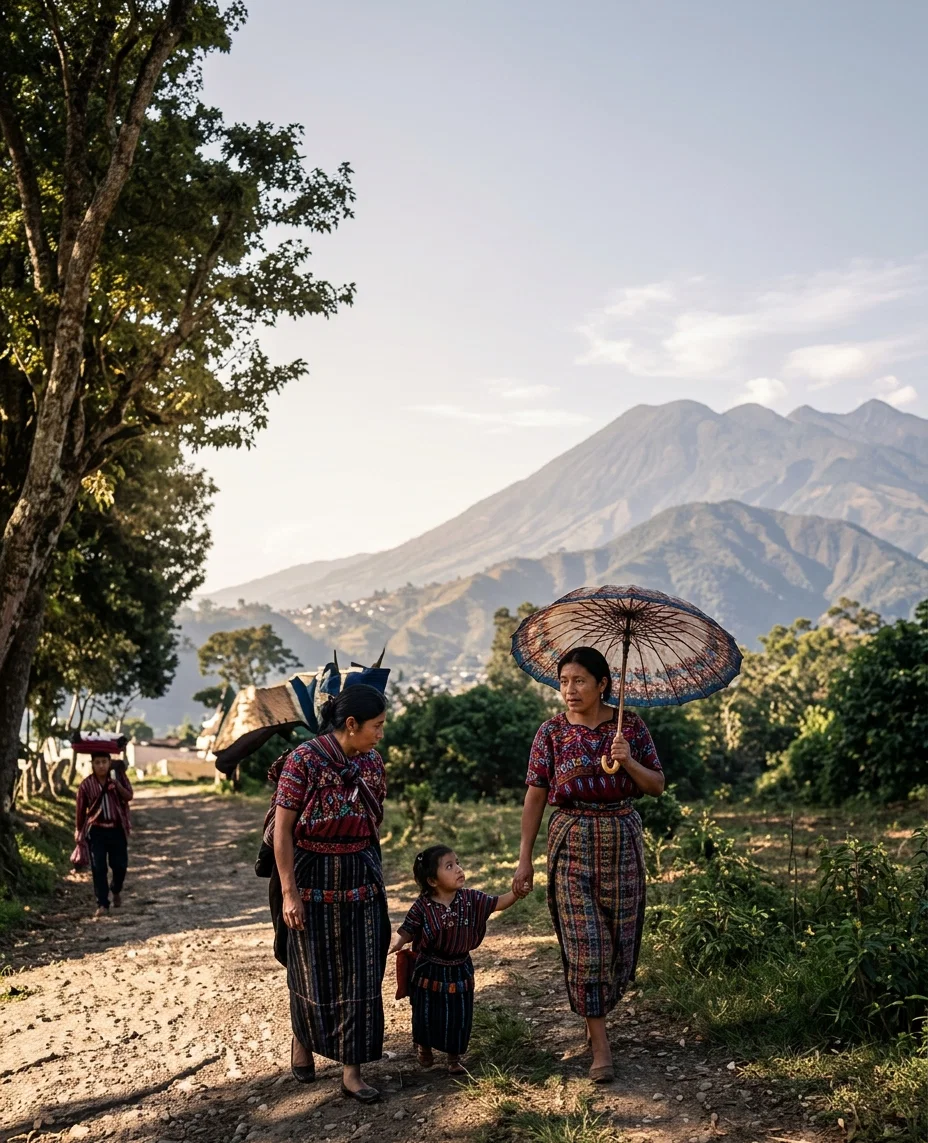
INDIANS TAKING THEIR PRODUCE TO THE GUATEMALA MARKET
We finally passed all the requirements necessary, and started for the capital, one hundred ninety-five miles inland. We passed through beautiful tropical valleys, and then among mountains, climbing up until we reached an elevation of nearly five thousand feet. We had opportunity to see the natives in their homes, and get an idea of how they live, dress, and work.
At Zacapa we stopped thirty minutes for dinner; but instead of going to the hotel, we bought fruit, and ate that with native bread and enjoyed it very much. Fruit is delicious and quite plentiful, although much of it was new to me both in looks and taste. Soon after dark we arrived in Guatemala city, where we were met by all the workers and all the servants who could leave. They had heard we were coming, and it was encouraging to see how glad they were to welcome us. The news that help was on the way, and a determination to do their duty, were all that had kept some of those faithful workers from giving up; for the work had been quite trying, and all had been carrying heavy burdens. Now the work will be easier for all.
Guatemala is a city of one hundred thousand inhabitants, but it is very compact, and to a stranger it does not seem so large. Nearly all the houses are made of adobe, and are seldom more than two stories in height. The streets are nearly all paved; there are street-cars drawn by mules, electric lights, water-works, sewers, and many miles of cement sidewalks. The houses are quite artistic in design, and usually well painted; and though they seem a little odd at first, they are really quite pretty. Inside, many of them are well arranged and handsomely furnished. There are twenty-six Catholic churches in the city, I believe, and they are usually very showy and imposing.
  • (Concluded next week)