The Caucasus

6%

Review and Herald Publishing Association · Tacoma Park Station, Washington, D. C. · Sep 21, 1911

FromReview and Herald, Vol. 88, No. 38.

Read the full edition

The Caucasus

K. A. REIFSCHNEIDER
THE history of the Caucasus dates back to the flood. Mount Ararat and the people living near it are mentioned in the eighth and tenth chapters of Genesis. The prophet Jeremiah (see chapter 51: 27) speaks of the kingdom of Ararat, by which, however, the kingdom of Grusien is meant. When Kores reigned in Persia, Grusien was the center of a number of principalities. The Lord says through Jeremiah, “Set ye up a standard in the land, . . . prepare the nations against her” (the mighty Babylon, the kingdom of Ararat). Present truth has now reached this district, and a standard is being set up.

Geography and Natural Resources

The whole Caucasus territory is divided into fourteen governments and districts. From east to west it is 621 miles, and from north to south 307 miles. The river Aras and Mount Ararat divide this territory from Turkey and Persia. On the east it is bounded by the Caspian Sea, and on the west the Black Sea forms the boundary. The Caucasus is divided into the Zis-Caucasus and Trans-Caucasus by the great mountain chain, which is about 882 miles long and 126 wide. Fruit, vegetables, corn, cotton, rice, and grapes flourish here. The silk industry is also pursued with good results. In the earth are to be found iron, lead, silver, gold, several kinds of precious stones, crystal, salt, coal, etc. The Caucasus naphtha is world-famed. There is hardly another spot on earth which, in comparison to its size, is so blessed by God as the Caucasus. One can count about one hundred fifty mountain peaks, which are all more than 11,480 feet high. The Elburz is the highest mountain, measuring 17,220 feet in height.

The Climate

In spite of its great variety the climate is very cold in winter and very hot in summer, but in general it is quite healthful.

The People and Religions

The original race of people inhabiting the Caucasus is probably the most widely dispersed, and it is quite possible that the original inhabitants were descendants of Japheth, and even more—they trace directly back to Adam. Although they are not acquainted with the Bible, they have a fixed tradition.
Counting the Europeans, there are eleven million inhabitants in the Caucasus, speaking forty different languages; these must all hear the gospel.
We have made but a small beginning among the Germans, Russians, and Armenians. The time has now come when the gospel must be carried to the Caucasian people in their own languages.
At present, we have six workers, consisting of two ordained ministers, one licentiate, and three Bible workers; besides these there are two colporteurs, who canvass as opportunity offers.
We have thirty-eight churches and companies. In the last two years we have baptized 252 persons. Our tithe has risen from $2,286.08 to $3,529.89. We have sold literature to the value of $15,558.96. Our receipts for 1909 and 1910 were $9,448.20. Churches and companies have sprung up everywhere. We baptized 120 this spring, so that our membership has risen from 826 to 946.
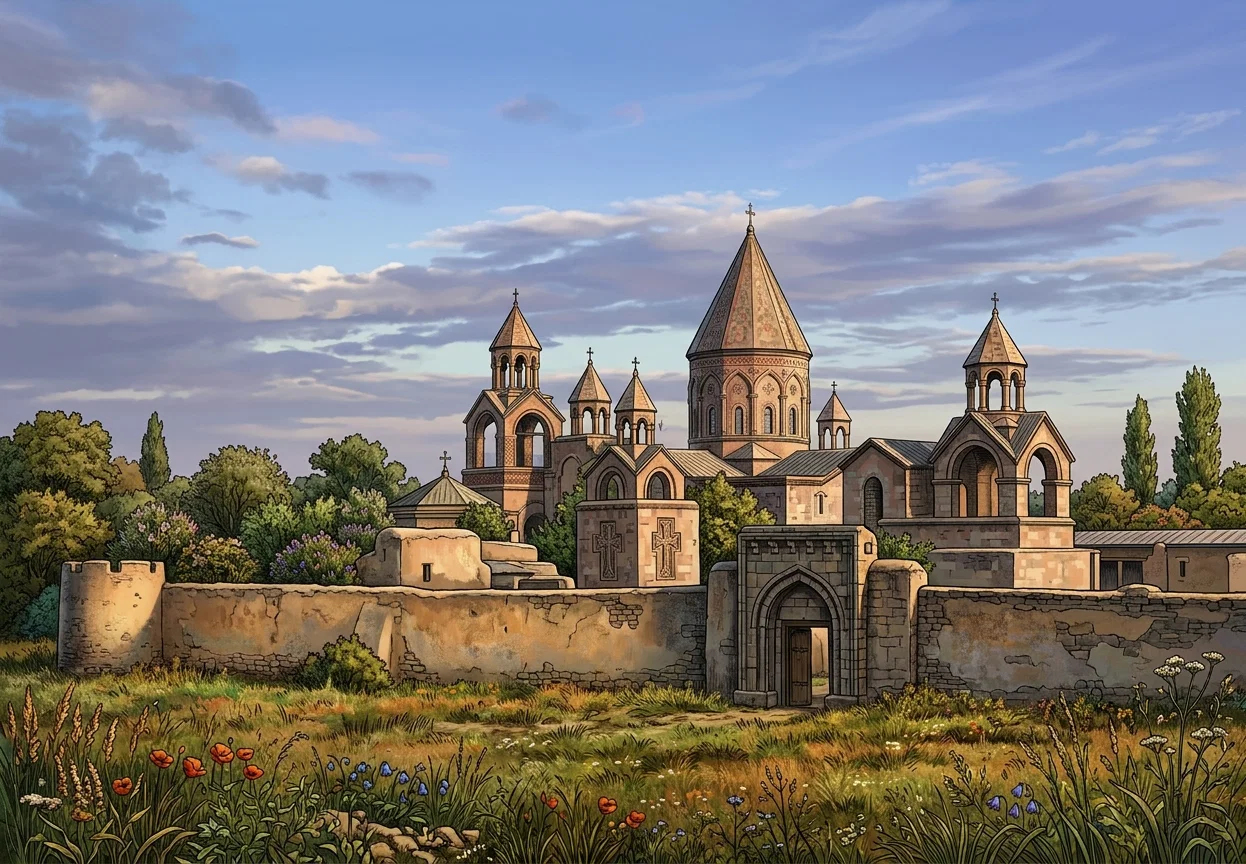
MT. ARARAT, IN THE CAUCASUS

The Difficulties

There are also some difficulties to be encountered in our field. But since they occur practically every day, they have but little influence upon us, and they seem so small to me that I hardly have the courage to speak of them. However, I might mention a few. Tiflis was in a militant state, and it was especially difficult to hold meetings. One Sunday evening when I had scarcely started my meeting, an officer came in with four other men, took the names of all present, relieved me of my passport, and dismissed the meeting. I was a week without a passport. Then I went to the governor and laid the case before him. The Lord touched his heart, and he gave me back my passport. During this week, we gathered secretly in a large room, in the house of one of our sisters. At the end of the week, I baptized twelve persons. At present we have a church of twenty-three members.
We also met much opposition in Otradnaja, from the people and the police, but the Lord let all things work together for good. There is now a company at that place. We also had trouble in Besopasnaja, especially when we were gathered for a baptismal service. Over two thousand persons came to the meeting and threatened to kill us. But as the candidates for baptism had already withdrawn from the state church, it had no claims on them. The Lord helped again, and this time the police acted as our protectors, and we were enabled to perform the ceremony without hindrance.
Before I left for the Friedensau council, our meetings in a Cossack village were closed. Fifty-eight believers are there, who can not assemble for service. We are, however, of good courage, and trust in God; for the Lord will provide, and his resources are unfailing.