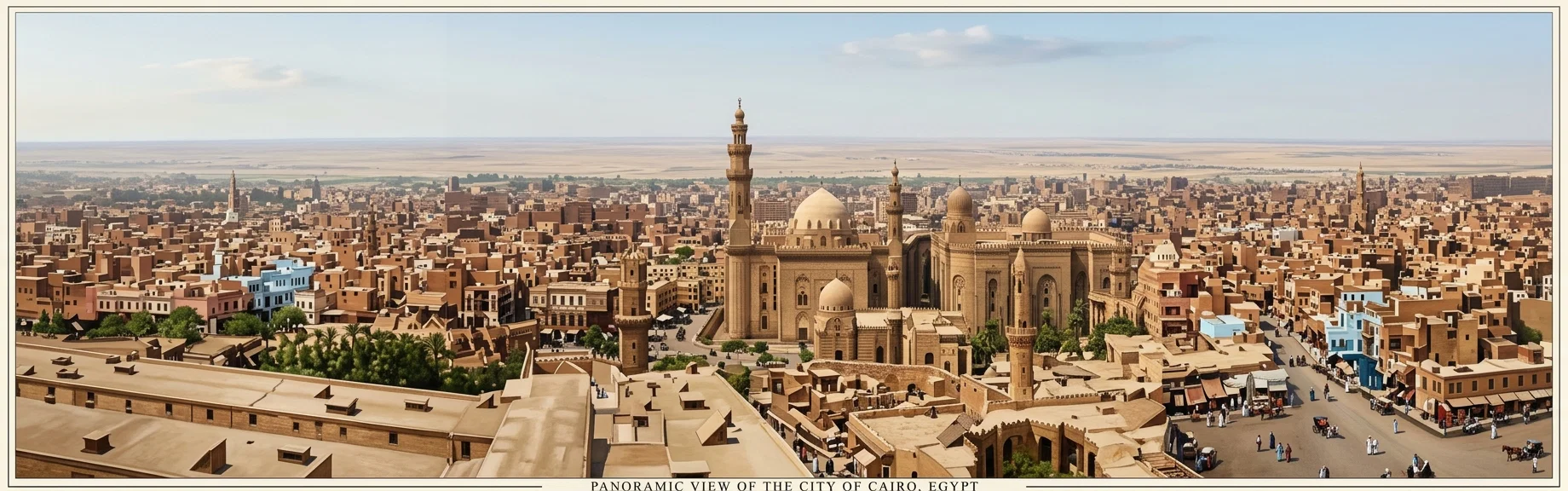
The field which I am supposed to represent is called the Oriental Mission Field; it consists of Turkey, including Asia Minor; Syria and Palestine; and Egypt—the historic field of the “king of the north” and the “king of the south.” Practically, however, my field of labor is Egypt. And, though equally interested in all parts of this most needy field, I shall confine my report chiefly to the valley of the Nile, speaking only in general terms of other parts.
The Oriental Mission field has a population of about thirty million. The languages spoken are Turkish, Arabic, Greek, and Armenian—chiefly Turkish in the north and Arabic in the south. A very large majority of the people in all parts of this field are followers of the Arabian prophet. Since the subjugation of these countries by the Mohammedans in the seventh century, Christianity has made little progress there; and only in comparatively modern times has Protestantism obtained a foothold. The Armenians in Asia Minor, and the Copts in Egypt, are the remnants of the ancient Christian church; but how greatly they have fallen from the faith once delivered to the saints, their daily life, even more than their religious doctrines, sadly testifies.
Roman and Greek Catholic churches are strongly entrenched in all the large cities, and in many of the smaller ones.
Protestant missions have made some progress in various parts of this field, and have done much in the way of education and civilization. The agents of the British and Foreign Bible Society have permeated all parts of this field, and report most gratifying results in the sale of Bibles and portions of the Word. Through all these agencies God is sowing the seed; and we have the assurance that his word will not return to him void.
For several years the truths of the third angel’s message have been preached in various parts of this field, from Constantinople, through Asia Minor to Aleppo; in Beirut and vicinity; in Palestine, at Jaffa and Jerusalem; and in Egypt throughout its entire length, at different points. Two years ago, the total number of Sabbath-keepers in the entire field was two hundred and forty-six. At present there are two hundred and seventy, an increase of twenty-four. The tithe paid during the year 1904 was $1,327.54, or a little over five dollars per capita. When you remember that a very large majority of these Sabbath-keepers are of the tax-ridden, persecuted Armenians of Asia Minor, you will not wonder at the smallness of the amount.
I will now speak more particularly of Egypt. From ancient times, this country has been known as the “Land of Ham,” as it was originally peopled by the descendants of the second son of Ham—Misraim—from which it takes its name, for the natives still call it Misr. This country consists of the valley of the Nile from the Mediterranean Sea on the north to the first cataract of the Nile, a distance of about one thousand kilometres, or six hundred and fifty miles. It is said to be the most densely populated country in the world, having ten million souls packed away in its numerous cities and villages.
Of this number, over nine million are Mohammedans, about seven hundred and twenty thousand Copts, and the remainder divided up among Protestants, Greeks, Roman Catholics, Armenians, and Jews. First among the Protestant churches in Egypt are the United Presbyterians, known there as the “American Mission.” Their converts come almost entirely from the Copts, and number something over six thousand. Then there is the English Church; also a few companies of the Plymouth Brethren, and a few adherents of the Holiness Movement Church.
The fifty or sixty years of Protestant missionary work in Egypt have made but little impression on the Mohammedan, apparently, at least so far as converting him to Christianity is concerned. I have made some inquiry, and believe I am safe in saying that the genuine converts from Islamism to Christianity in Egypt can be counted on the fingers of one’s hand. Very little real, aggressive missionary work is being done for them at present.
The average Egyptian is non-progressive. He has no enterprise. He acknowledges the fact, and while deploring it, makes no effort toward the betterment of his condition. He is a fatalist, has no ambition in the true sense, no independence. His highest goal is a government position, where he can draw a salary, and order about a servant. He does the least amount of work possible. The energetic business man of America will do more in a day than the average Egyptian will do in a week. In business his motto is, “The end justifies the means.” His religion is Utilitarianism of a very low order. It is not wrong to steal from the government, nor from a rich man; because they can afford to lose what is taken. One quite intelligent native, a lawyer by profession, and for many years a member of the Protestant Church, expressed the general idea when he affirmed that it was not wrong to steal from God, as he could not be injured by anything that we could do.
Of the people of Egypt, the Encyclopedia Britannica says: “Their vices are indolence, obstinacy, licentiousness, cupidity, envy, disregard for truth, and petty thieving, coupled with religious pride and hypocrisy.” However, there are many bright exceptions to this dark picture; for the Egyptian has virtues as well as vices. But, on the whole, if judged by Western standards, the case seems almost hopeless. Were it not that God accepts the willing mind, according to that which a man hath, and not that which he hath not; that where little is given, little is required; above all, were it not that the gospel of Christ is a miracle-working, character-transforming power, we might well give up in despair. But we are assured that where sin abounds, grace doth much more abound. And so we still have hope for Egypt, the “basest of nations,” and for the children of Misraim, for centuries groaning under the treble curse of Adam, Cain, and Canaan.
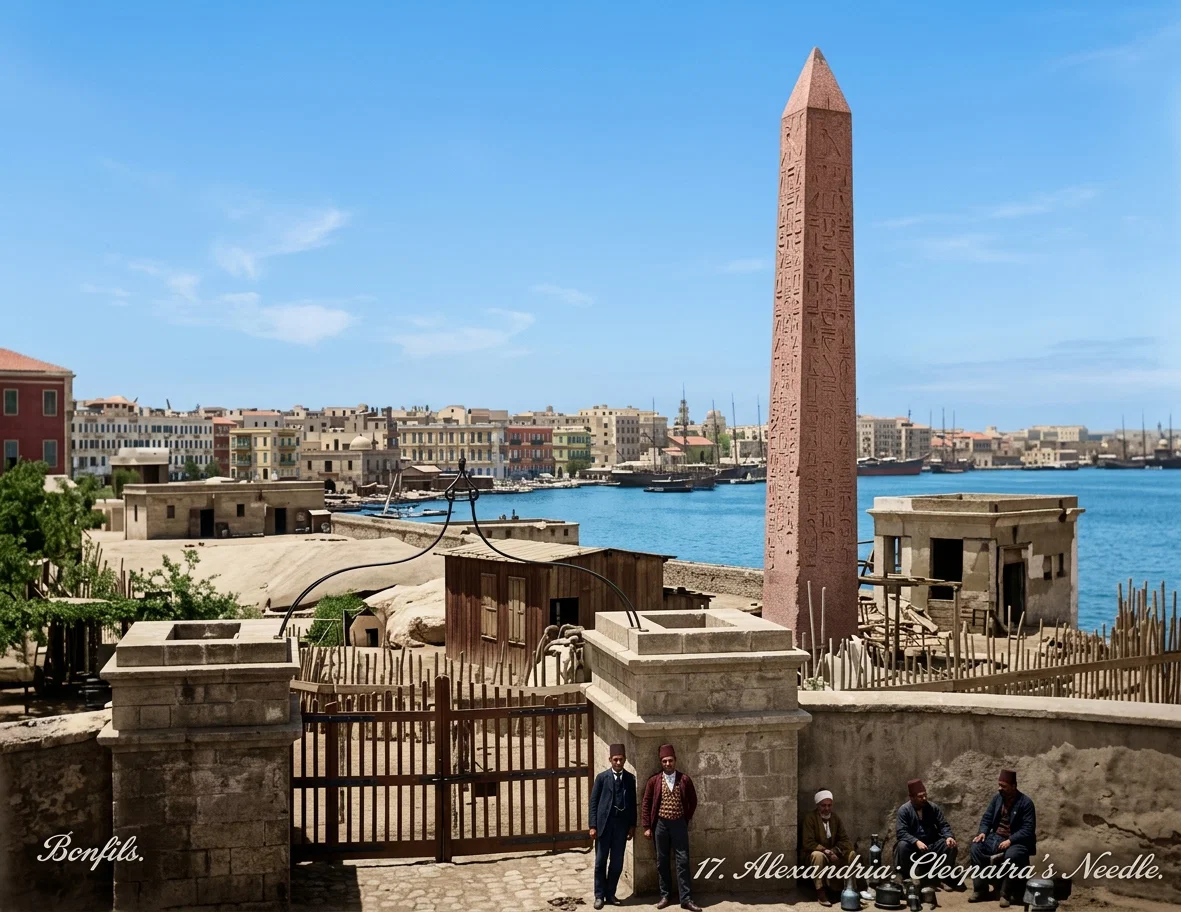
A beginning has been made. A little company of faithful souls at Alexandria, in charge of our Armenian worker, Brother G. K. Ouzonian, are doing what they can to let the light shine in that city, the second in size in Egypt. They are planning a general campaign, to scatter tracts all over the city, and they have promised to give liberally of their slender means in order to secure the necessary publications.
This little company has had some interesting experiences during the last two years. Satan has tried hard to destroy them, through outward persecutions and internal dissensions. But, through the blessing of God on the efforts put forth in their behalf, they are now in a good spiritual condition, are respected by those who before hated them, and are now ready to go to work for others. So there is now a pillar to the Lord in the border of Egypt.
In Cairo, where the most of our workers are located, a good impression has been made. Although prejudice was very marked and bitter when we went there, friendliness and some degree of interest are now manifested. A few, at least, are beginning to believe that we are in Egypt, not so much to start a new sect, as to help people to a higher plane of living—“to raise up the standard of many generations.”
Cairo is the commercial, financial, religious, and educational center of this country. It is the heart, from which influences, like blood-currents, flow to every part, not only of Egypt, but of the19entire Mohammedan world. Our work in this great metropolis must be strengthened, and our facilities enlarged. Few really appreciate what it means to pioneer a great reformatory work in a city like Cairo and a country like Egypt. Our Dr. Keichline has been working under rather discouraging circumstances, not being able to compete, for lack of facilities, with other medical men. But he has been getting a good experience, and has made many friends, both among Moslems and among the Europeans. He is on friendly terms with several of the leading European physicians, and has had a number of wealthy and influential pashas as patients. Good treatment rooms, properly managed, would be a paying investment in the city of Cairo.
When I went to Egypt, I found almost nothing in the Arabic language concerning the vital truths of the message. As soon as possible, I took up this matter, and with the valuable assistance of Elder Awada, our native minister, as translator, I soon had printed five thousand each of three tracts on the Sabbath question. These were followed by five thousand each of two more—one on the coming of Christ, and the other an abbreviation of our English tract, “Fundamental Principles of Seventh-day Adventists.” The printing of the latter seemed to be necessary to meet the persistent reports put in circulation by Christian ministers that we were not evangelical, did not believe in the divinity of Christ, etc. Later on, a tract on the “End of the Wicked” was printed. And shortly before I left Egypt, an edition of one thousand of “The Sure Word of Prophecy” was run off. This little book of one hundred and forty-three pages, with several illustrations of the prophetic symbols of the book of Daniel, is meeting a favorable reception, and I believe the entire edition will soon be sold at a fair profit. I am now at work on a similar brief exposition of the book of Revelation, which I hope to put into print as soon as I return.
Religious tracts, especially those of a doctrinal nature, are difficult to sell in Egypt. But illustrated books on the prophecies, having somewhat of a historical character, also those teaching any question of science, as health books, will, I am persuaded, meet with a ready sale among the reading classes. Many hundreds of our small tracts have been put into circulation in various ways in many cities and villages, from Alexandria to Assuan, until the name “Sabtacen” (the term by which the natives designate us) is quite generally known in the valley of the Nile.
Two years ago the total number of Sabbath-keepers in Egypt was twenty. Now there are thirty-four, besides two on the island of Cyprus, who report to us and send tithes. The total amount of tithes paid last year was $356, or about $10.30 per capita. We have one ordained minister (native), one licensed minister, one Bible worker, and one nurse on the pay-roll; we also have three self-supporting medical workers.
We believe that in due time fruit will appear from the seed sown. Paul may plant, Apollos may water; but God giveth the increase. And the husbandman must sometimes wait long for the precious fruit of the earth.
The following are some of the obstacles in the way of progress: a difficult language, a vacillating and subservient people, an enervating climate, few workers, and meager facilities. Some of the difficulties can be removed, some surmounted. None need prove a real hindrance to the onward march of truth.
A few words as to our needs: Asia Minor needs a good, energetic man to do aggressive evangelical work in that field. A citizen of Germany would be less troubled by Turkish officials than one of any other country. But he should be one who can learn the Turkish language. As soon as possible, treatment rooms should be started in Cairo and Alexandria. From what I have seen and heard, I am satisfied that the educational work is the most efficient means of propagating the faith in Egypt. Small schools should be started in several places at once. This can be done with comparatively little expense, and each school would form the nucleus of a church in the near future. It would at least give us standing-ground. The people care too little for religion, but they will let us educate their children. Here is a great opportunity. About the first question we hear on entering a village, is, “Are you going to start a school?” This work demands our immediate attention. We also need to increase our literature and provide means to get it before the people.
A lady physician is greatly needed in Upper Egypt. One of the right kind would soon be self-supporting.
There is certainly a future for our work in Egypt, and we pray that wisdom may be given those who plan and those who work for this field.