A Trip in Asia Minor

6%

Review and Herald Publishing Association · Tacoma Park Station, Washington, D. C. · Jul 18, 1907

FromReview and Herald, Vol. 84, No. 29.

Read the full edition

A Trip in Asia Minor

CLAUDE D. AC MOODY
SUNDAY morning, April 7, I started on a trip to visit the companies of Sabbath-keepers in the country lying south of the Sea of Marmora. The first place visited was Brusa. The journey was made by steamer from Constantinople, across the Marmora to Moudania, thence by a little narrow-gauge railway to Brusa. It took seven hours. This was my first visit to Brusa. I was met at the little station by a company of our people, who for several weeks had been anxiously looking forward to my coming. I was taken to one of their homes, where, with my interpreter, I was made very comfortable.
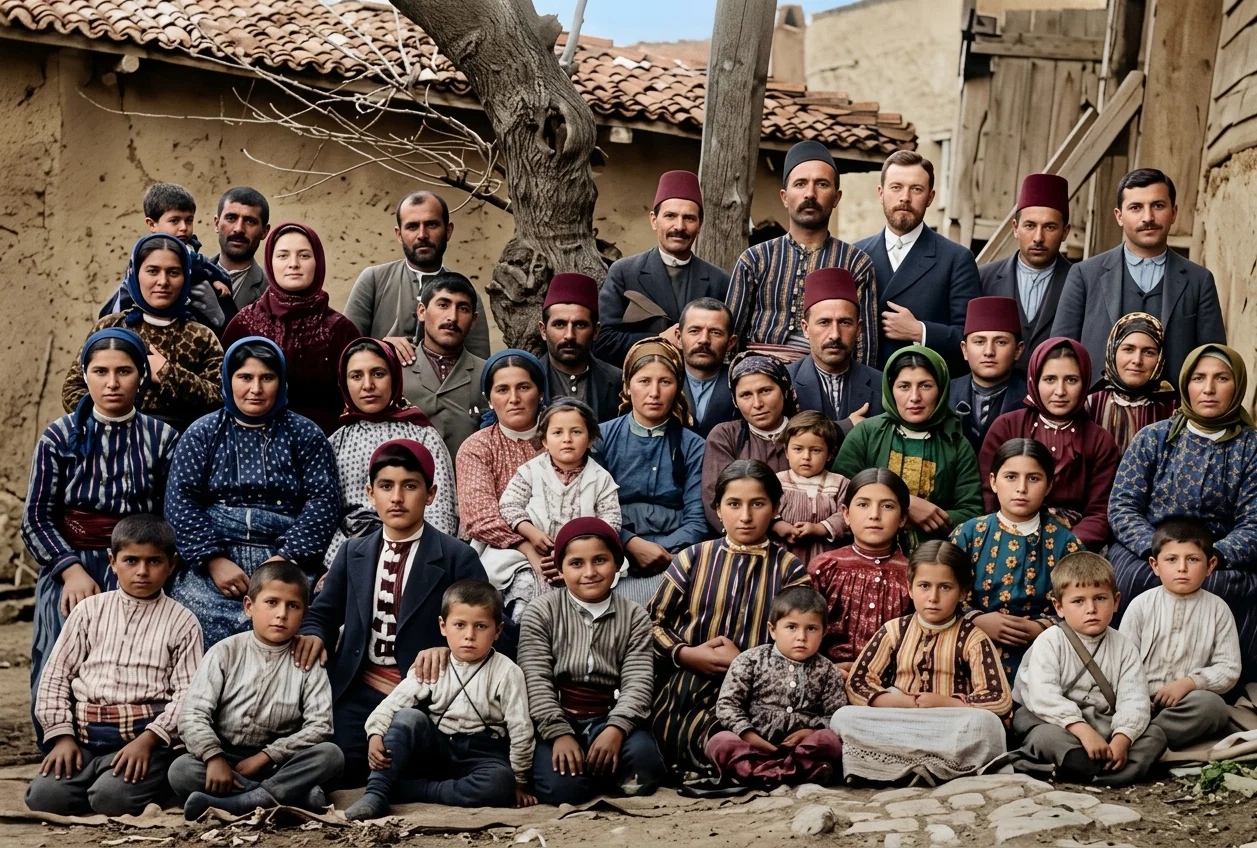
GROUP OF SABBATH-KEEPERS IN ASIA MINOR. ELDER CLAUDE AC MOODY IN BACK ROW
Brusa is an interesting city. It lies at the foot of Mt. Olympus, which towers above the city seven thousand feet. The population is estimated at seventy thousand, half of whom are Turks, and, with the exception of two or three thousand Jews, the rest are Greek and Armenian Christians. The city is chiefly noted for its mineral baths, which are visited much during the summer season by people from Constantinople , European Turkey, and the Balkan States. These mineral baths are also natural thermal baths, as nearly every bath-house is supplied with water from hot mineral springs.
This city was the capital of the Ottoman empire before the Turks captured Constantinople. Ancient Prusa (Brusa) was founded two centuries before Christ, and fell into the hands of the Romans in the year 74 B. C. It then underwent various vicissitudes, until in 1326 A. D. it was taken by the Turks, under Orkhan, and became their capital.
We left Brusa the seventeenth of April. During this time, however, we made a visit to a little village on the opposite side of Mt. Olympus from Brusa, by the wagon road around the mountain, about twenty-five miles distant. In this little village there is an interest to hear the truth. Three days were occupied on this trip. We made the round trip of fifty miles in a Turkish carriage—the araba. Be assured that fifty miles in a Turkish araba is an experience not soon to be forgotten. This is a four-wheeled vehicle, with a body, or box, set high, in which one has to sit Turk fashion, or, if there are not too many occupants, one may recline in a sort of “picnic-dinner” fashion. It is a covered rig, but the top is very low, and unless one sits very humbly, he is likely to receive frequent bumps on the head.
Our stay at that place was interesting. We had not been there more than fifteen minutes when the whole population was apprized of our arrival. We were given very hospitable accommodations, in a village mud house. We held meetings in this house, and were often interrupted by the braying of the owner's asses, which occupied the down-stairs apartment. The people flocked to us from the time we arrived until our departure on the second morning. We had some good services, and the Lord blessed as we answered their simple questions. One soul promised faithfully to keep the Sabbath. This was the first time a Seventh-day Adventist missionary had visited the place.
At Brusa the writer baptized three persons in a rushing stream well back from the city and up in the edge of the mountains. It was a precious occasion, in the stillness of the early evening, just at sunset. The company were left in good courage, and seemed strong in the message we all love.
We were to leave that city two days earlier than we did, but my interpreter had much difficulty with his tezkereh—the Turkish passport. Our brethren in the States, who are privileged to go from one side of the continent to the other at will, can not realize the difficulties to be encountered in moving about in a country like this.
There is an exceptionally good road most of the way from Brusa to Sevleus, our next point. This distance was covered in about eight hours, in an ordinary carriage such as is used in Europe. Excellent meetings were here enjoyed. We remained for a week, and then left for Shakshak, reached by a day and a half of traveling on horseback, over mountain roads and paths, fording creeks, and climbing over rocks. As no other conveyance could be secured, we rode on Turkish pack-saddles. Part of the way the government insisted on sending a mounted soldier for my protection, as I was a foreigner. This offer was, of course, accepted, as it is not best to refuse a soldier guard when the officials insist upon sending one.
Shakshak is a beautiful village, situated upon a mountain overlooking the Sea of Marmora. On a clear day Constantinople can be seen in the distance. There is a goodly number of Sabbath-keepers here, organized into a company, but not as yet into a church. This is also true of the companies at Brusa and Sevleus. The Lord wonderfully blessed in the meetings at this place. Seven were baptized. It is only an hour's distance from the village to the Sea of Marmora, so to the sea we went, and in its waters buried these seven souls in baptism. At Shakshak, as well as at the other places, communion service was held. The accompanying illustration is of this company. All but one of those who were baptized are in the group.
Tuesday morning, April 30, we started for Constantinople. Two-hours' horseback ride brought us to Yalova, a small Marmora seaport, whence we took steamer to Constantinople. The next Sabbath after returning, one person was baptized. Thus eleven souls have received this rite this spring; and there are others to be baptized next month.
The middle of May I visited a company of believers at Ada Bazar. This is the only company that can be reached entirely by rail from Constantinople.
In this Constantinople district of the Turkish Mission there are two organized churches, one of which is in two companies. These, with a few isolated members, have a membership of about one hundred and seventy. This does not include the membership of thesouthern part of the Turkish Mission.
The Lord is blessing the work here; but we need more workers, who are willing to dedicate their lives to this great Mohammedan field, and who are able to master the languages of the country. My closing appeal is, Remember Turkey at the throne of grace.
Constantinople.