Circulation of Our Literature in China

6%

Review and Herald Publishing Association · Takoma Park Station, Washington, D. C. · Jan 6, 1910

FromReview and Herald, Vol. 87, No. 1.

Read the full edition

Circulation of Our Literature in China

MRS. LOUISE H. ROBERTS
IN the attitude of China toward literature, there is much to encourage the Christian printer. In no other missionary country is literature honored as it is in China. While the existence of many dialects may be considered to be a hindrance to the circulation of literature, it is a great blessing that the written character is used in all parts of the empire, so the difficulties to be overcome are not so great as in countries like India, where there are many languages, distinct from one another.
Formerly the ancient classics were all that the average Chinese desired in the way of literature; but the fact that conditions in China are greatly changing is not more manifest in any other thing than in the demand for modern literature. No longer content with being acquainted with only his immediate surroundings, the intelligent Chinese is grasping after a wider knowledge. He wants books on geography, history, science, and books dealing with the problemsthat confront the Chinese empire at this present time, as she is seeking for the secret of the greatness of the Western nations. We believe that the demand for books on general topics is being well met by societies which have the good of the Chinese at heart, and it is not our mission to carry the burden of this kind of work; so we will leave that with them, hoping they may do well their part at this time when the enemies of truth and purity are ever vigilant. These latter are circulating books of questionable morals and atheistic teachings, and it will be only by the missionaries’ circulating sufficient Christian literature that deplorable results can be averted. General knowledge, however good it may be in itself, will not save the Chinese any more than it will us.
One authority on Chinese affairs says: “Though the production of mission presses is very large, yet this is but a foretaste of the demands to be laid upon them and upon authors in the awakening that is now beginning.”
What is our duty as missionaries and representatives of the Sabbath truth in view of these facts? Does China need our literature?—Most assuredly she does. We know that had the true Sabbath always been kept by man, there would never have been an idolater or an atheist. China is a nation without a Sabbath. How important it is, then, that the heavy-laden millions of China should be told of God’s holy rest day! and what a privilege it is for us to be allowed to carry to them the knowledge of the true Sabbath! To the Chinese a spurious sabbath at best can be only a form, and often is not more than a burden.
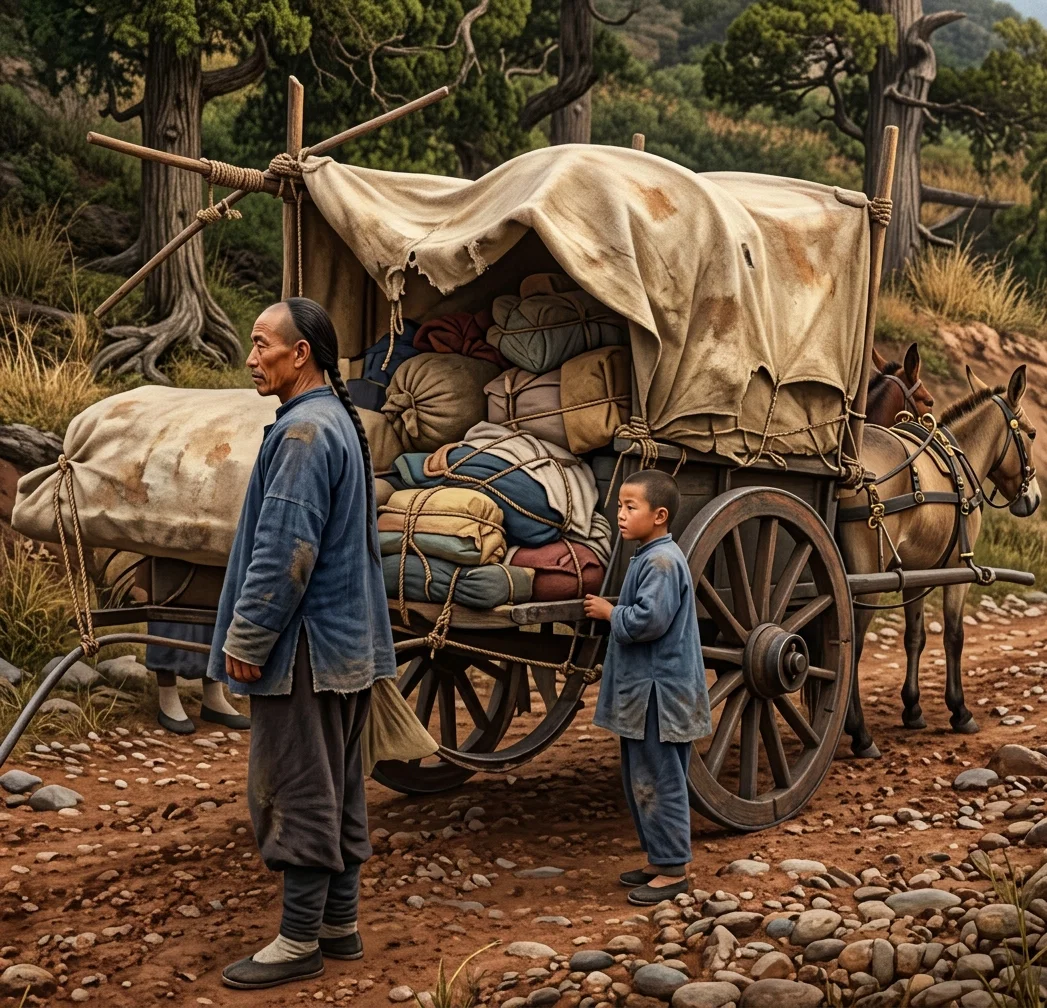
TRAVELING IN INLAND CHINA
China must also receive the warning, “Prepare to meet thy God.” We must have literature dealing with the signs of the times and the second coming of Christ. We can all see the need of health and temperance literature. We must have literature on every phase of our message, and it must be strong and unquestionable in doctrine, and as nearly perfect in regard to Chinese language and idiom as it is possible to make it.
It may be said that the large percentage of illiteracy prevents the circulation of any great amount of literature, and that even many of those who read will not be able to understand the meaning, but we must remember that conditions are rapidly changing in these respects. Education is becoming more general and more practical, and besides, a man who can read is usually the center of a small group of listeners. Then there is nothing that is not properly discussed in China, and I believe that curiosity often helps as much as any other natural means to spread the knowledge of the truth here.
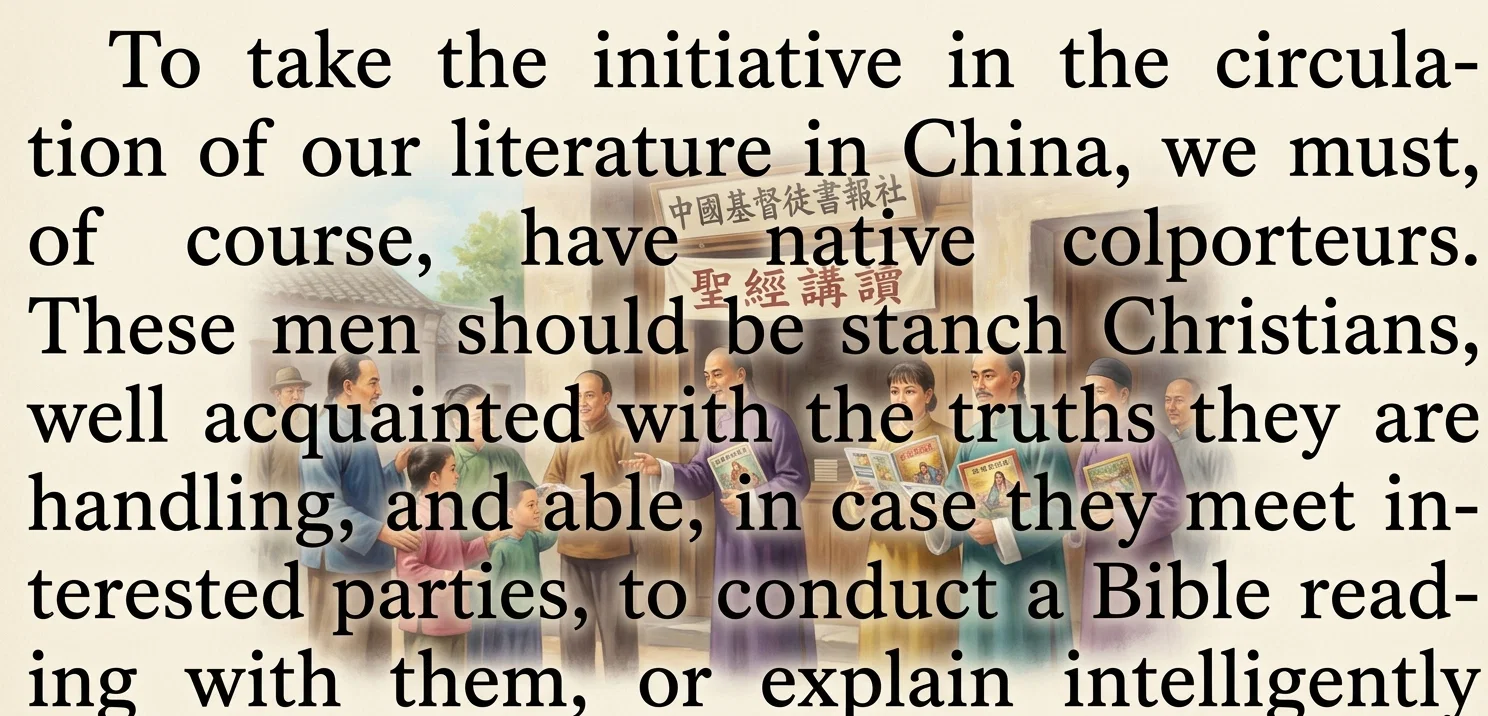
To take the initiative in the circulation of our literature in China, we must, of course, have native colporteurs. These men should be staunch Christians, well acquainted with the truths they are handling, and able, in case they meet interested parties, to conduct a Bible reading with them, or explain intelligently the points of our faith.
The question of the support of these colporteurs is something we should consider. It may be that in some parts of China the colporteurs can not get a living from the proceeds of their sales, and will have to be helped with a small salary; but we must work toward the aim of making this work self-supporting, as that has proved in every field to be the most satisfactory. We are glad that we are to have foreign workers who will become acquainted with the language and act as leaders for the native colporteurs.
I believe that one great mission of our literature in China will be to open up new places to the foreign worker. A colporteur can go into a new district and scatter literature. Soon an interest to hear springs up, and perhaps a call is sent to the foreign worker to come down and teach them. The newly arrived missionary finds in the literature a source of satisfaction, for while he can not speak enough yet to preach, as he is fairly aching to do, he can speak enough to sell and distribute literature, and in this way feels that he, too, is helping to give the gospel.
I quote from the little book, “Dawn on the Hills of T’ang:” —
“Practically every Protestant missionary and native worker in China aids in the distribution of this literature. Inquirers are taught to read through books; schools and training classes can not exist without them; and they are the best and almost only agency through which to reach the gentry and officials of the empire, from local Nicodemuses to the occupant of the Dragon Throne. Missionaries and colporteurs sell books or judiciously loan or give them away in chapels and tea shops, at fairs and near the gates of government examination halls. Books are a legitimate excuse for the foreigners’ presence in a hostile district, and the native book-lending societies of the south gain an entrance for Christian truth by their means into country schools and the homes of grandees.”
Even in the home land, in the conferences that have been most thoroughly worked by our ministers, a large percentage of the church-members first came to a knowledge of the truth through reading-matter. Can we not see that if such is the case there, in China we must regard our literature as one of the most important factors in reaching the people with the message for this time? For even according to our most sanguine hopes, there will undoubtedly be millions who will never hear this message from the lips of the living preacher. The message in printed form does not arouse prejudice so readily as the spoken word may do, and is more likely to be given a thoughtful and careful hearing. God has richly blessed the printed page in all lands, and his Spirit is as ready to bring conviction to hearts who read it in China as in any place. The work with our literature is a live question with us now, and one that must be given our earnest consideration. If we put forth our best efforts in the preparation of our literature, and then send it out with our prayers that God will use it to bring light to many who now sit in darkness, we may safely leave the results in the hands of him who has promised that his word shall not return unto him void.
Shanghai, China.