Among the Eskimos

9%

Review and Herald Publishing Association · Tacoma Park Station, Washington, D. C. · Feb 17, 1910

FromReview and Herald, Vol. 87, No. 7.

Read the full edition

Among the Eskimos

SEVERAL years ago Brother B. Robb, of British Columbia, was in Alaska, and did some work among the Eskimos near Cape Nome. Returning to this country, he felt a burden to see something further done for that people. He has recently received communications from a Seventh-day Adventist sister, formerly of Oakland, Cal., but now residing in Nome, her husband being engaged in business there. Brother Robb has sent us two letters from this sister, the first dated Aug. 14, 1909. She says:—
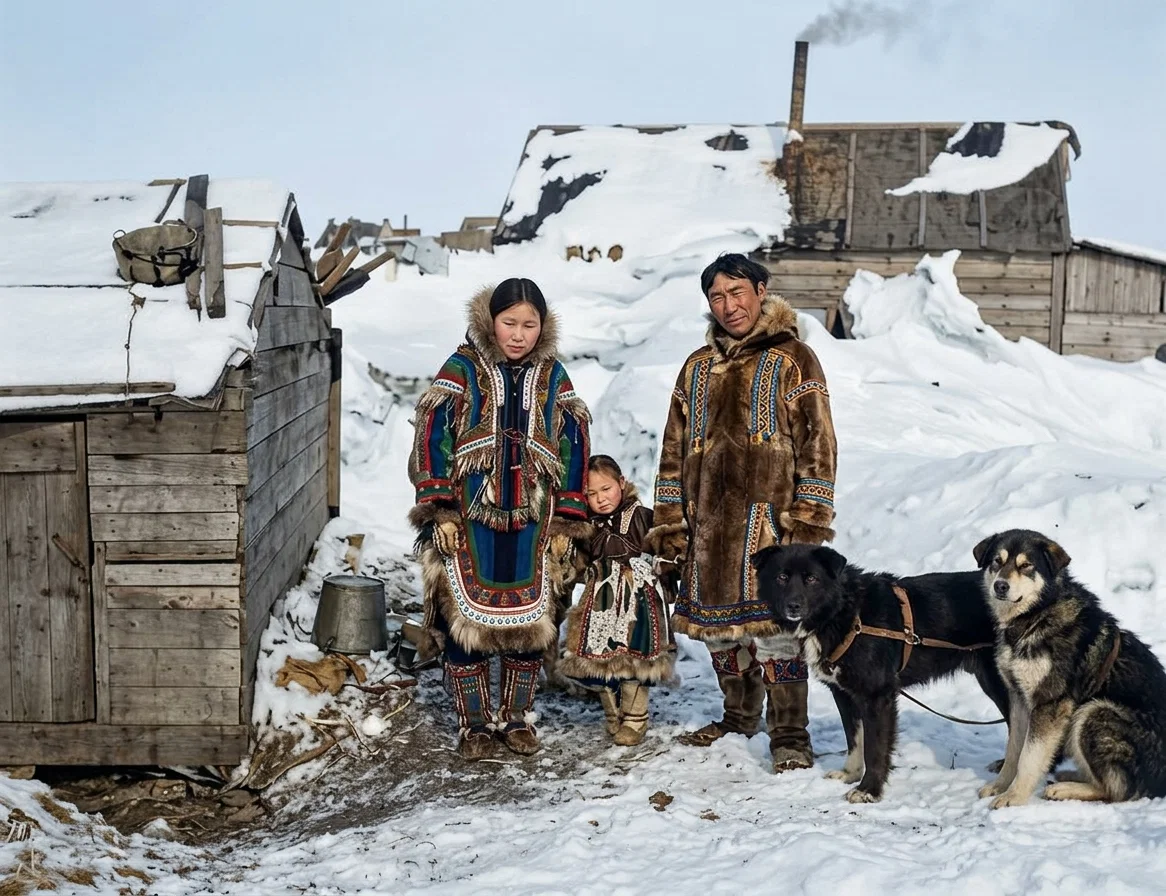
HAPPY JACK, FAMILY, AND DOGS, NOME, ALASKA
“This letter is written on account of the Sabbath truth, which I still hold dear. The hope of our soon-coming Saviour is a great comfort to me, as I am alone in the truth in this place.
“I have found a number of Eskimo men and women who have kept the Sabbath for three snows, as they say, which means three years. One Eskimo man, whom the white people call Happy Jack, is an ivory engraver. He speaks some English, and wishes to be baptized and to learn more of the truths held by Seventh-day Adventists. He wants to work among the Eskimos. He expected to go to the Seattle Fair to do engraving, but his wife is sick, so he can not leave. He says that there are other Eskimos who wish to be baptized.
“As you are the nearest Sabbath-keeper that I know of, I write to you regarding Brother Jack. Do you think he should be baptized? and do you think the Eskimos should have the attention of Seventh-day Adventists? If every nation, kindred, tongue, and people are to be represented in heaven, I think some Eskimos must get to heaven, too.
“I do the best I can, but I think a regular missionary, or at least a man, could do better than I can. These people have come to my cabin home a number of Sabbaths, and I have taught them the best I could from pictures. One has to show them pictures and talk to them as one would to children. Most of them, even Brother Jack, used to go to the Catholic Church. But Brother Jack told the priest that he must ‘go one day back,’ meaning the seventh day. Brother Jack told me, ‘Priest very mad.’ But he seems not to mind that. The Eskimos sing ‘Happy Day’ with me, or ‘Sweet Promise, I Will Come Again,’ and ‘The Home Where Changes Never Come.’”
In another letter, dated October 15, this sister repeats her request in behalf of the Eskimos, and reports that in the meantime she had been pleased to meet Dr. F. E. Braucht and wife, who spent the last summer in Alaska. She was glad indeed to meet with fellow believers. Concerning the Eskimos she says again:—
“I hope I did right in sending word to the Seventh-day Adventists about the Eskimos. Of course you know they are only ignorant natives, yet Jack seemsvery earnest and wants to learn to read, and to know more about the Seventh-day Adventist faith. They are much like Indians in their way of living. They use much seal oil, and dress in furs.
“One Sabbath seventeen squaws, with their husbands and children, came to my little home. I sang with them, and talked to them the best I could, using Bible pictures. Brother Jack translated for the others. It is not convenient to have them come to my cabin, however, as my husband is sometimes away at the mine.
“Nome is quite a town. It has four churches. The Catholics have the only hospital here, the Holy Cross Hospital, a three-story building, managed by Sisters of Charity. The town is quite dull this year. Alaska is like California in having plenty of gold, but just where it is is the puzzle. Some find it, and some spend small fortunes and leave Alaska poor. Mining is expensive sometimes, and that takes the profits. Now and then, when miners come to clean up, they find themselves in debt.”