The Russian Union Conference Meeting

8%

Review and Herald Publishing Association · Takoma Park Station, Washington, D. C. · May 12, 1910

FromReview and Herald, Vol. 87, No. 19.

Read the full edition
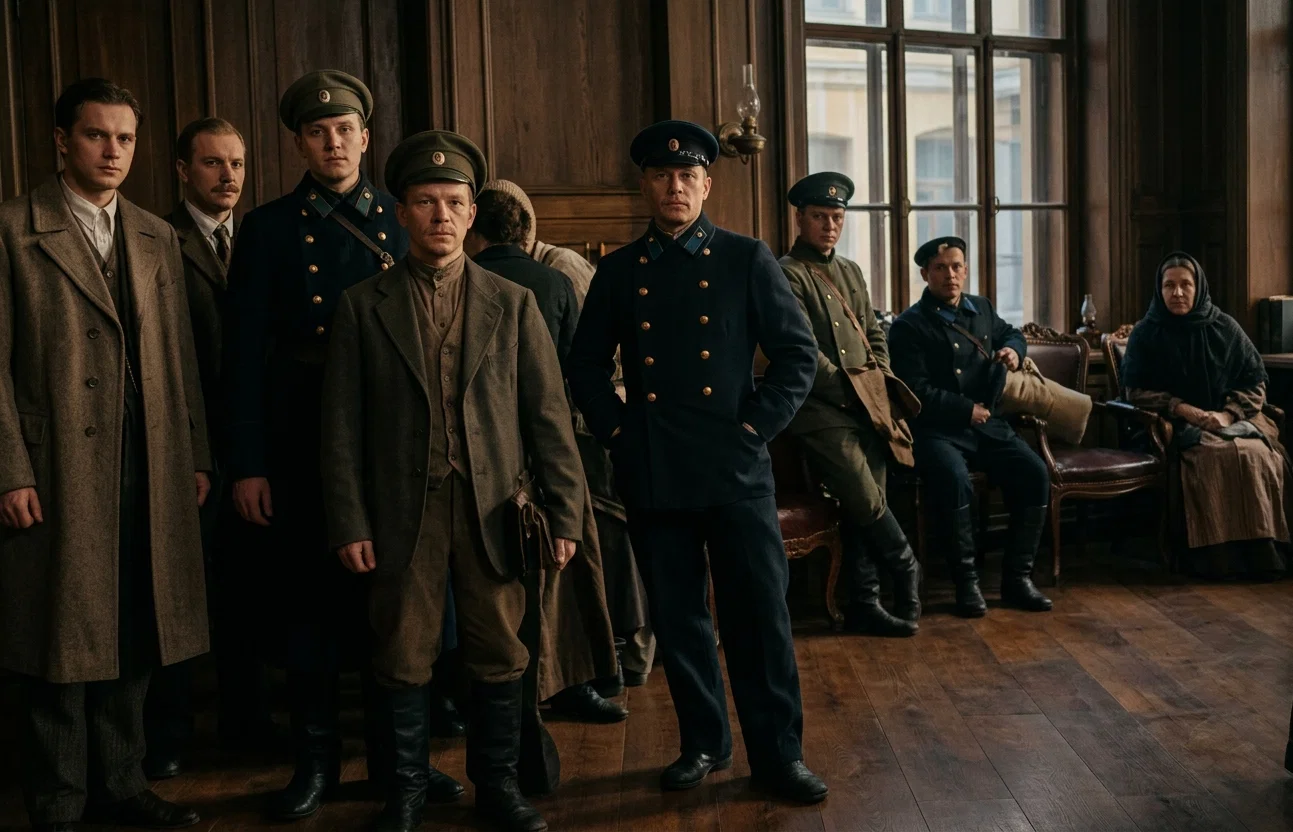
THE RUSSIAN POLICEMAN

The Russian Union Conference Meeting

L. R. CONRADI
AFTER the union conference committee meeting in western Europe, the writer left Hamburg on March 10, and reached Mitau, Russia, March 14. Mitau is a city of about forty thousand inhabitants, and the seat of the governor of Courland, and there the Russian Union Conference meeting was to be held, from the fifteenth to the twenty-first. This city has quite a large German population; the rest are Lettonians, and there are but few Russians. The population being Protestant, everything was quite favorable to the holding of the union conference gathering. The brethren had secured a large empty house in which to care for most of the delegates, but so many came in from abroad that they were obliged to lodge the union conference committee in a hotel, and board them at this house. There is a church here of fifty-four members, and the brethren have fitted up a meeting-hall holding about two hundred people. For the meetings in the evenings and Sabbath and Sunday they had secured one of the best halls in the town, with a seating capacity of about five hundred. The general meeting of the Baltic Conference, which has now a membership of 755, was also to be held, and from the very first it was evident that our small local hall was entirely inadequate to seat the people, and so our meetings had to be transferred to the large hall. The Russian government had sent a special officer from St. Petersburg, and he with one to three of the police officers of the city, attended every meeting, and took careful notes of all our proceedings and sermons.
Elders W. J. Fitzgerald and J. T. Boettcher, who had attended together three of the local gatherings, came from Riga the same night that I arrived. We at once began our auditing, and thus this was fully out of the way before our meeting commenced. Though we were not allowed to advertise, yet there was a large outside attendance at all the services. We had several Bible studies during the day, at 7 P. M. a sermon translated into Lettonian, Esthonian, and Russian, and at 8:30 a straight German sermon. The truth had a telling effect on the many hearers as they came from night to night, though the speakers had to be very careful in what they said. No collection or gathering of funds was allowed in any of the meetings; thus our people were entirely deprived of the privilege of giving. On Thursday night the writer had a well-attended meeting in the city of Riga, which is about an hour's ride from Mitau.
The great size of the present Russian Union Conference is apparent when we say that some of its delegates had to be longer on the cars than it would take to go from Europe to America. Several came from central Asia and central Siberia.And not only the vastness of the territory appeals to us, but also the immense population, of over 150,000,000, which increases faster by natural growth than the United States by all its immigration.
Last year not less than 748 were added to our membership in this union conference, bringing up the membership to 3,668, while the tithe increased from $11,400 to $15,600. The appropriations called for were $5,700, but when we finished the audits, we found that $6,700 was needed; and this need would have been still greater had not the Baltic Conference nobly stepped forward and paid a second tithe of $400. Putting these figures together, we find that $22,000 was spent last year in Russia for gospel work, and the results were over 700 members added: surely a rich harvest for the money spent. There are only 24 ordained ministers and licentiates, and 23 Bible workers employed, making an average of nearly 15 members gained by each worker. These figures speak volumes. Though the Russian Union Conference was organized only two years ago, yet, in view of the vastness of the field and the work to be done, it was evident to every one that a division into two union conferences in the near future would greatly facilitate the carrying on of the work, and aid in the proper supervision.
From the experience gained in holding the seven general meetings in the winter of 1909 and 1910, it was very evident that we could not, under the liberty now granted, make the success of the work that we could under ordinary circumstances. We could not consider our needs—to create suitable institutions, and to provide the necessary means; we could not consider the financial support of the conferences and union conferences; we could not even conduct a good social meeting; so all felt that as the laws concerning such general meetings are still pending, it would be wiser to drop our fall meetings for 1910, and to spend the time in building up the old churches and in raising up new ones.
It was also apparent that our next step must be the securing of a suitable building for the publishing work in Riga, as all were unanimous that Riga was the most convenient place in Russia for such purposes, from every standpoint. Thus the Hamburg house was invited to secure property for its branch office there.
The Russian Union Conference is now composed of three conferences and six mission fields, and if proper attention is given, several new conferences can be organized this year; as the Little Russian Mission field has 500 members, and the East Russian 388. If this is done, the West Russian Union Conference will still have three good conferences and several large mission fields, and include all of European Russia as far as the Caucasus and within 100 miles of the Volga; while the East Russian Union Conference will have the Caucasian and the East Russian conferences, and three or four mission fields in Siberia and central Asia. The first will probably have a population of 100,000,000, with about 2,150 members; the other, of 50,000,000, with over 1,500 members.
As to the institutions: we are glad that there are over thirty students from Russia now in Friedensau, and that the school has a fully equipped Russian department, and that the educational work can thus go on until a suitable place is found and the necessary liberty is obtained to locate the educational and medical work in convenient places for both union conferences.
We had excellent Sabbath services. The Lord indeed came near to his people. Two promising men were ordained to the ministry. Additional workers were also secured for Siberia, and arrangements were made for the union conference president to visit that field during this year. As we heard our German, Russian, and Lettonian choirs singing alternately their beautiful hymns in praise to the Lord; as we listened to the speakers in these tongues, and also in the Esthonian as they gave the message to the people; and as we noted the hundreds of members present from all parts of this vast empire, representing Europe and all of northern and central Asia, the tears in their eyes testifying to the presence of the good Spirit of God, we felt that there was no question but that a strong united work was developing, which had indeed a wonderful future.
The careful supervision of our work by the highest authority, as well as by local officers, secures for the government a better understanding of our work than it would ever have gained if it simply had listened to the distorted reports of some of the priests. Thus we have cause for thankfulness to God in this respect. As our people parted, they not only expressed their thanks to God for all his blessings, but also to the workers who had ministered unto their spiritual wants, and all sent most cordial greetings to our brethren in Europe and America who assisted their work by their prayers and their means.