West Africa

7%

Review and Herald Publishing Association · Takoma Park Station, Washington, D. C. · Feb 15, 1912

FromReview and Herald, Vol. 89, No. 7.

Read the full edition

West Africa

W. H. LEWIS
It is now about two years since we came to West Africa. On Jan. 12, 1910, my wife and I, with our two little girls, sailed from New York, and after a pleasant voyage of about a month, our ship cast anchor in the beautiful harbor of Freetown. We were met by Elder D. C. Babcock, whom we came to assist in the work. My wife and children were taken out to the mission home in a hammock (the mode of traveling here), while Elder Babcock and I walked. The mission home is located on the side of a mountain about one and a half miles from the wharf, and is just outside the city limits. It is the most healthful location in the vicinity, and one of the most beautiful places I have ever seen.
At the time we came here, neither Elder Babcock nor I dreamed of my entering the branch of work in which I am engaged. But the Lord, who has said that our ways are not his ways, seems to have planned it thus. A few days after our arrival, the manager of one of the leading English firms in Freetown, learning of my ability as a mechanic, requested Elder Babcock to allow me to repair a damaged truck, which they were about to ship to England for repairs. I did the work, and several similar requests followed in quick succession.
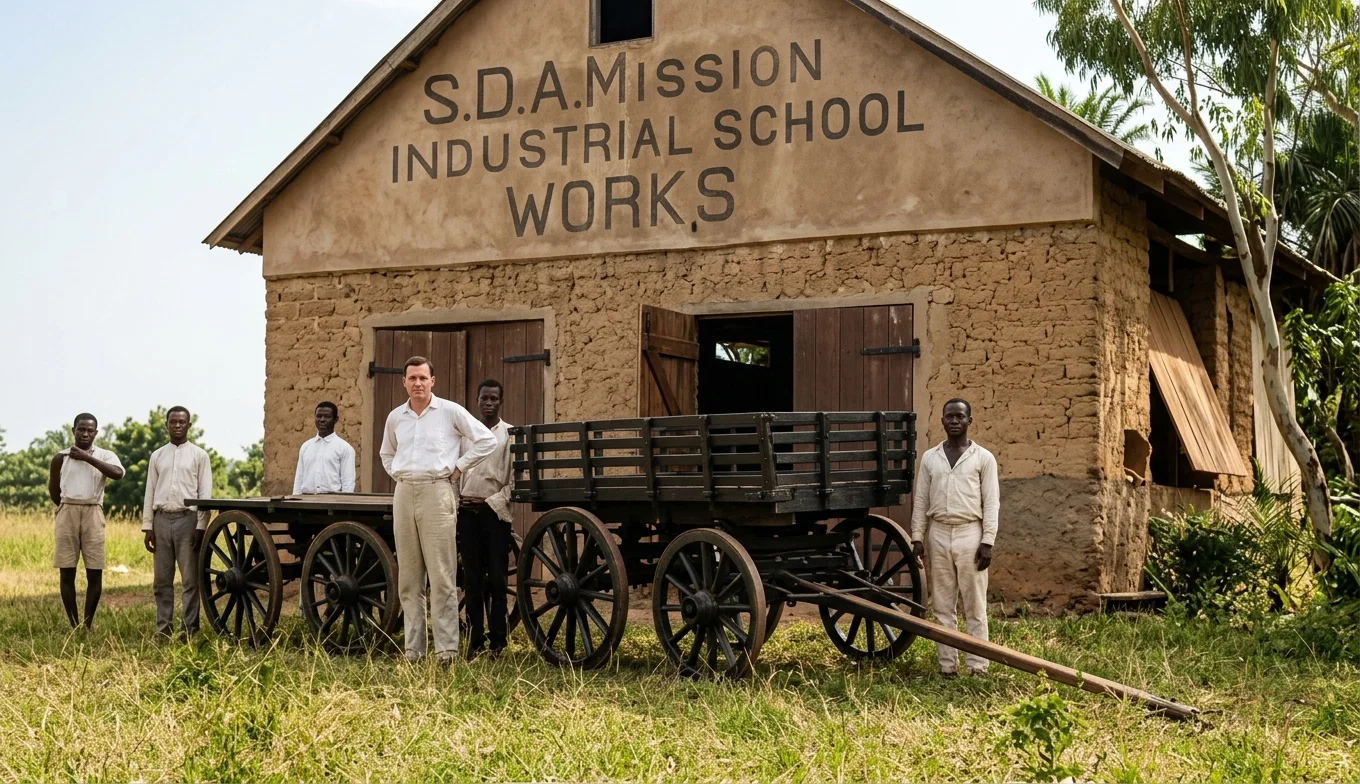
We then began to think of putting up a factory for building and repairing vehicles, employing our schoolboys as assistants. This would give them opportunity to learn a trade in connection with their school work. We began work in a little native shed ten by sixteen feet, and now we have a building twenty-five by fifty feet, and a work of wide-spread influence. I think Elder Babcock does not overstate it when he says that this has done more for the advancement of the work in this field than anything else that has been done, or ever could be done, by breaking down prejudice in the minds and hearts of the people, and in placing us on friendly terms with the government.
The governor, with his staff, visited our factory a few weeks ago, and expressed himself as highly pleased with our work. A few days later he sent the district commissioner to see us, who insisted that we take full possession of a piece of property situated in the interior, on which there are two or three stone and brick buildings, worth several thousand dollars. About three years ago we applied for this property for our school work, and were refused. Now, however, the government raises but little question regarding any application or request that we make of it. We find that in many ways our industrial work here at Waterloo is becoming a great power for good in spreading the message in this dark land.
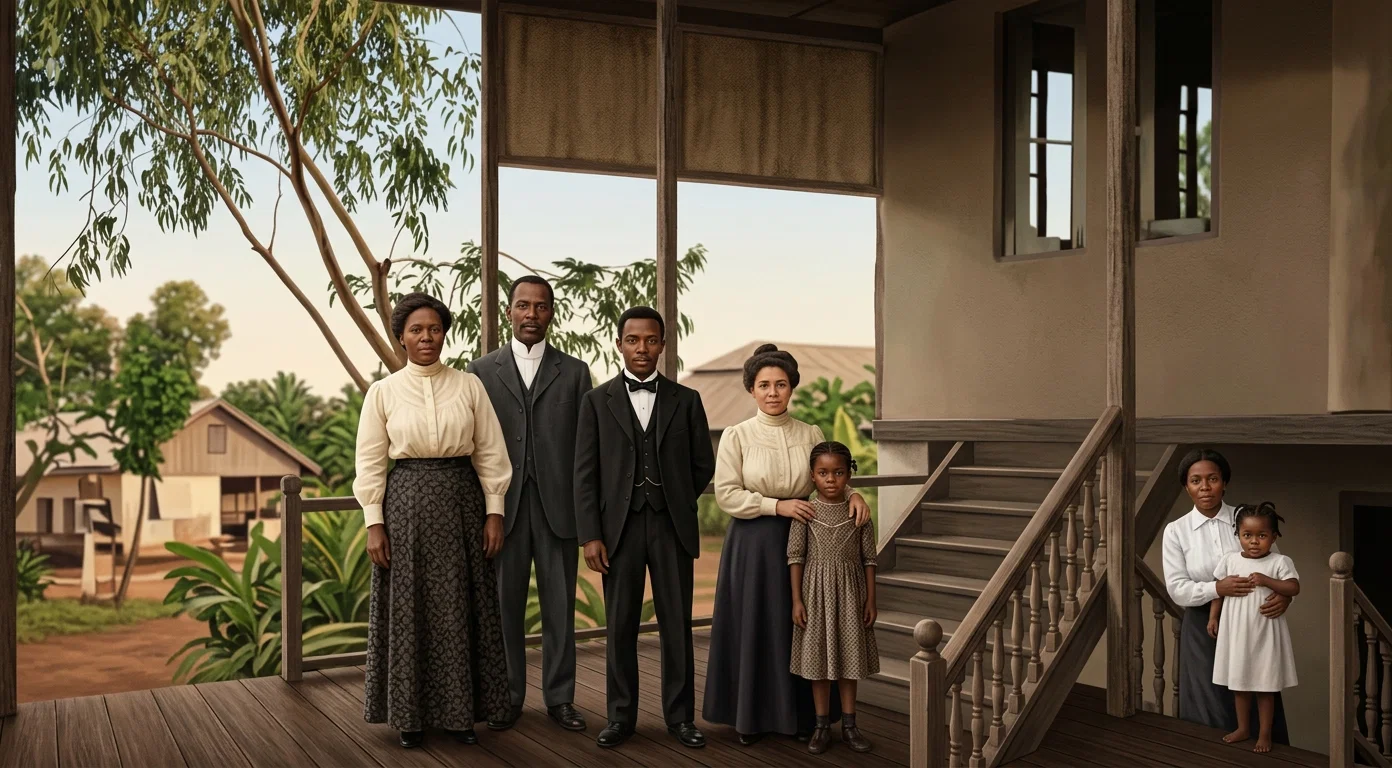
THE WATERLOO MISSION HOME, WITH BROTHER AND SISTER LEWIS AT THE LEFT AND BROTHER AND SISTER BOLTON AT THE RIGHT
There are about fourteen boys in the factory, and some are becoming quite proficient in the work. While the work of training them is a very hard and laborious task, still we enjoy it, and are glad that our Heavenly Father has seen fit to give us a part in carrying this last message of warning to the world, and especially to this dark part of the vineyard, where Satan has such full and complete sway over the people.
THE WATERLOO WAGON-SHOP
During our first year in the field we all enjoyed very good health; but this year, while the two children and I have kept well, Mrs. Lewis has had a hard time, being in bed most of the time.
Taken as a whole, the past year has been a very hard one for the work on the West Coast of Africa. First came the death of our dear Sister French at Axim, and then the removal for a time of Brother French, on account of ill health, besides other discouragements in the work at that point. At Freetown and here we have been handicapped on account of the severe illness of Mrs. Lewis.
Yet despite all the efforts of the enemy, the work is moving onward. We have enrolled in our school twice as many students as we had at the beginning of the year. While we have been compelled to lay away two sisters, still our little church has had an increase of some ten or fifteen members, all of good courage and rejoicing in the light of this precious message.
The way has especially been opened for the pushing forward of our work into the interior. I took a trip into the hinterland in October, for the purpose of finding a location for establishing a mission station in the chiefdom of a paramount chief, who has a son in our school and factory. I had quite an interesting trip, but my heart was touched to see the superstition and heathenism which prevail on every hand. I passed through thirty or forty towns and villages, traveling three days overland. In only one did I find a mission of any kind operating, and on all sides I heard the Macedonian cry, Come over and help us. We would gladly answer all these pleas, but where are the men and means?
Pray the Lord of the harvest that his Spirit may strive with the hearts of many strong young men and women who are enjoying the precious privileges which a knowledge of this truth brings, that they may give themselves and their all for the advancement of the work in this part of dark Africa.
Waterloo.