Through East Africa

6%

Seventh-day Adventist Publishing Association · Battle Creek, Mich. · Aug 4, 1903

FromReview and Herald, Vol. 80, No. 31.

Read the full edition

Through East Africa

JOSEPH BOOTH
For twelve years I have had a longing to see Ugandaland, where less than twenty years ago the natives were sacrificed to the extent of two thousand in a single day, as the result of heathen superstition. To-day, from the coast to Lake Victoria Nyanza and forward to the Lake Albert Nyanza, and thence down the Nile to Khartum, the way is open for the advent message. From Mombasa every stage of the way is intensely full of interest, until this inland sea, Lake Victoria Nyanza, with its two thousand miles of coast line, is reached. Tribe after tribe is waiting for the message, which comes so slowly.
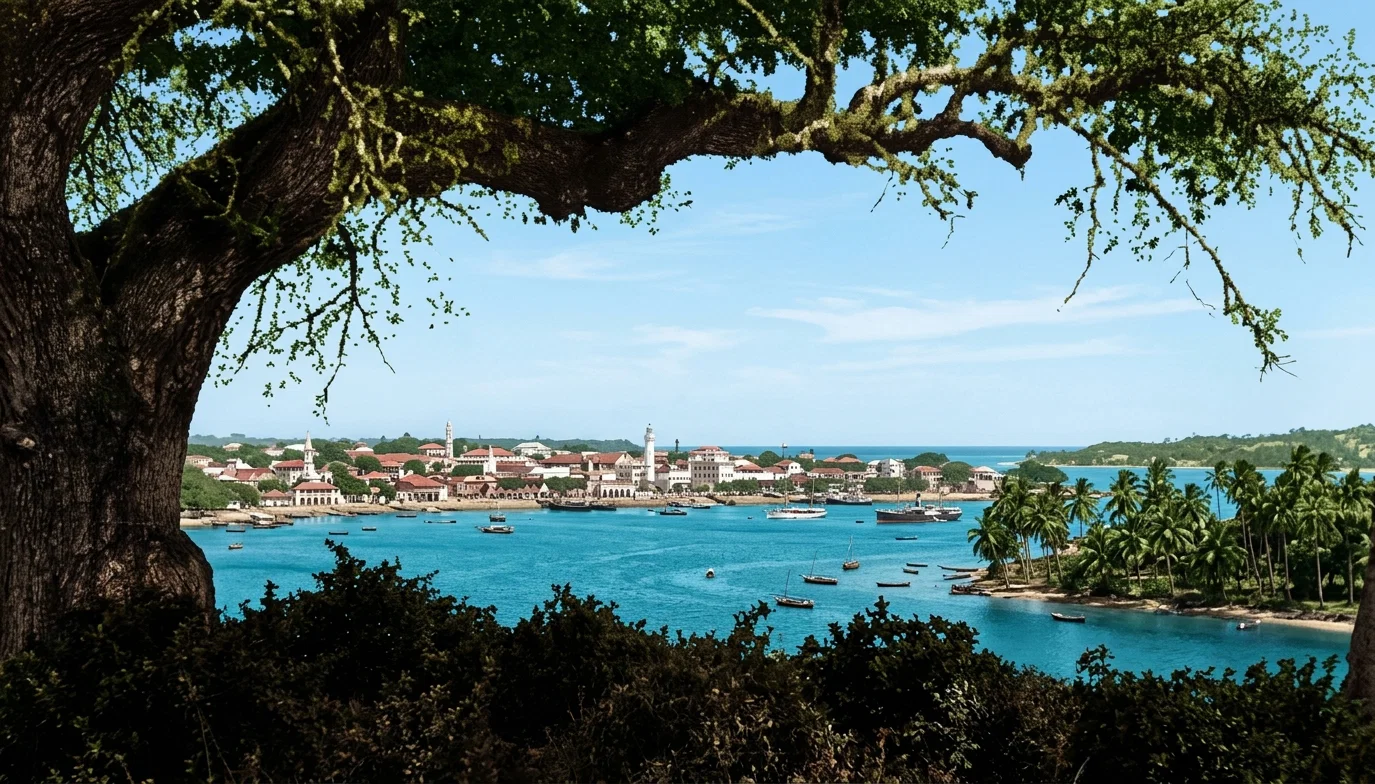
HARBOR VIEW, DAR-ES-SALAAM, BRITISH EAST AFRICA
Their habits, customs, and costumes vary strangely, as also the speech. It is by far the most wonderful picture I have been permitted to see in heathendom. Some are clothed in calico, some in grass, some in tree bark, some with iron and brass ornaments and rings, some with skins, some of the men are naked, and some of the women very scantily clothed, and in some tribes both men and women are absolutely naked, and without any disfigurement on their bodies or faces or ears.
There is one large tribe of the latter,—the Kavirondo people,—numbering, the authorities say, about one million. I am greatly interested in these people; for they bear the universal reputation of being the most moral of any tribe—not meat eaters, and not polygamists. Immorality is rare, and punished with death. I believe these people will welcome the advent message. Let us make haste to give it to them, and thus protect them from harsh contact with the incoming flood of modern life; for the railway cuts through the midst of their country.
As I look upon the enormous task yet to be completed,—“to every nation, and kindred, and tongue, and people.”—I feel sure that we must enlist the productive and evangelistic powers, and the possibilities of the people themselves, as well as double and treble our own efforts and offerings. Let me ask the readers of the REVIEW to consider what it means to convey in its most summarized form the advent message to the following tribes and kindreds, of whom I knew scarcely anything when I left Nyassaland in February last; namely, the Swahili, Somali, Abyssinians, Kikuyu, Massai, Wanandi, Walumbwa, Kavirondo, Waganda, Wataveta, Busoga, Bunyoro, Bukidi, Bukiki, Budu, Buduma, Baziba, Toro, Ankoli, Acese, Sudanese, and Nubians, the last two from Khartum. I have either seen personally or been in the country of the people that have just been mentioned, and besides have obtained information from reliable authority about certain tribes inhabiting the country beyond Ugandaland and bounded by Lakes Albert and Rudolph, the Upper Nile to Gondokoro, Wadelhi, and Namiule, and reaching from this Belgian Nile lake boundary to within two hundred miles of the Abyssinian escarpment, rising abruptly to eight hundred feet altitude.
In these tribes just mentioned four different languages are spoken. In Belgian territory there are twenty-three tribes, of which two are cannibals. In the German territory above Lake Victoria there are three tribes. Among these twenty-six tribes, three languages are spoken. The tribes and subtribes around Lake Victoria Nyanza accessible to Seventh-day Adventists number sixteen, among which three languages are spoken, and all within reach by either a small steamship or sailing vessels. These are all in the British possessions. The German lake coast line is far larger, but the tribes there are mostly unknown, as they have no steamer on their lakes, nor railroad through their territory.
Of some of the people named I can give scanty particulars. Of most, I know nothing but their names and localities. The Swahili and Waganda tribes are the most civilized. The former are mostly Mohammedans. The latter, although so far in the interior, are very intelligent, and largely Christians, either of the Church of England or of the Roman Catholic. The former have over sixty white missionaries in Uganda, Ankoli, and Busoga country, while the French Roman Catholics have nearly the same number.
Both the Uganda people (called Waganda) and the Swahili wear round caps and white gowns—red caps if journeying, and white at home. The Kikuyu are a pleasant, tractable people, with an elevated, healthful, fertile country. They wear a sort of bark-cloth mantle, and terrible ear ornaments. The Massai, Wanandi, and Walumbwa are warlike; the men wear no clothing. They have large herds of cattle and sheep, and carry huge, heavy iron spears, from five to six feet long. A single man will attack a lion or a leopard. In wet or cold weather, which is frequent, their country lying at an altitude of from five to eight thousand feet, they hang an ox skin around the neck, letting it fall over the back, and leaving the front of the body unprotected. Their women wear the most marvelous circles of iron and brass rings, ever widening until they reach the shoulder-blades, and projecting in front and behind the body. The arms above and below the elbow are encased in curiously wrought corrugated sheet-iron armlets of their own making.
The two last-named tribes are even now fighting the British, and they take thousands of their nut bolts from the railway line, and also the rails, for spears, etc.
I agreed with a Massai woman to buy her huge neck rings, brass ear pendants, and shining steel armlets for four rupees, expecting that they could be broken off. But as she left it to me and my Swahili interpreter to get them off, we succeeded in getting only the earrings, and so paid accordingly.
The Massai, Walumbwa, and Wanandi form a keen contrast to the Kavirondo. The latter live upon plantains, bananas, cassava, sweet potatoes, beans, and nuts, and are chaste, sober, and peaceful; while the three former, who live upon the hills and mountain plateaus from three to four thousand feet above the Kavirondo plains, cultivate nothing, wandering wherever there is food for their cattle, living on a flesh diet, drinking blood,—frequently by opening the veins of their cattle, and closing them afterward,—are immoral, and of a fierce and bloodthirsty character, yet of a somewhat haughty and handsome presence. They are very similar to my Yao friends, who until recently ate the hearts of their conquered foes, in order to possess their strength. Even in Plainfield station we have converts who have done this thing. So Iam quite satisfied that these highland people are thoroughly redeemable by the Word of God.
Among the Nubian-speaking tribes the men are naked, the women somewhat clothed. The Shilowk, Dinkas, and Baris are highly moral. The Baris are very tall, courageous, and fine people, mostly over six feet six inches in height. They learn to write quickly, my informant having taught them. The Madi are timid and retiring. They wear long skewers of white glass, pendant from their lower lips, also treasure the hair of their ancestors, and make helmets of their own hair, covered with white beads. The Lutuka wear hanging, fringe-like grass around the loins. The Sudanese and Nubians wear their hair in little ringlets. The women are clothed with gay calicoes, and are noted for their immorality. The only Abyssinian I have met was a subject of King Menelek, and he seemed to be serving in the British army, learning all he could, especially the English language. He was a very intelligent and superior African. He knew the way by land to Abyssinia, and said it was three weeks' journey from Mount Kenia, the snow-crowned. Both Kenia and Kilimanjaro are massively visible in their glistening majesty from Nairobi, Kikuku country, where I stayed three days.
In the Kavirondo country there is one high mountain, Mt. Elgon, with an altitude of fourteen thousand feet; but it is not visible from Lake Victoria, surprising to say. The lake itself is a glorious, Paradise-like sheet of fresh water, beautifully studded with islands, large and small, of every contour and rugged outline, yet with abundance of fertile land. The water is pleasantly cool,—about seventy degrees Fahrenheit,—and the air, or wind, is of an agreeable temperature when in motion. Altogether, this has been a most enjoyable trip. I feel rather ashamed to be doing pioneer missionary work in such a holiday, excursion-like fashion, no kind of comparison with the trying, roundabout early days in Nyassaland. Then, we traveled in a canoe, slowly if not wearily; now, by rail, and enjoy comfortable arrangements for food and sleeping. The astonishing herds of game seen from a train are a great surprise. There are zebra, guzza, ostrich, wildebeest, antelope, and water buck of varieties known to the hunter, but not to such as I, who never hunt game.
Strange to say, the Massai and their related tribes do not touch game, only of their own food flocks. So from the train, which they have now ceased to fear, one often sees a herd of gazelle browsing unconcernedly near a herd of Massai cattle, with the headman and his prodigious spear plainly visible; for, strange to say, only one man is usually with a herd of two or three thousand cattle.
This country, from five to eight thousand feet in altitude, is simply charming, and makes one's heart sing with praise to God; while an undercurrent of sorrow and compassion surges up for the beings in God's image who are still sitting in gross darkness, waiting for the light, which is withheld through the slothfulness of the messengers to whom it is entrusted. As I look upon the range and problem of these waiting tribes, with the resources of the country, I experience a glow of conviction that within the next few years there is nothing to hinder every one of these tribes from having the third angel's message made known to them, but what the stay-at-home class of Seventh-day Adventists can with modest extra effort supply.