At the present time both the Sabbath question and the agitation in favor of Sunday legislation are receiving considerable attention in Rome. In this article we shall say a few words concerning the Sabbath question, while the Sunday legislation will be treated in a future article.
We concluded a series of sermons on the Sabbath question at our hall last Friday evening. As is customary in a presentation of this question, we showed that the Bible teaches the observance of the seventh day of the week as the Sabbath. Furthermore, we adduced the proofs that Christ and his apostles never kept any other day than the seventh day as the Sabbath. And consequently in the Bible we do not find the least intimation of a change of the Sabbath from the seventh to the first day of the week. Having demonstrated that the Bible makes no mention of any change of the Sabbath, we then showed that the Church of Rome, according to Biblical prediction and its own claims, substituted Sunday observance for that of the Sabbath.
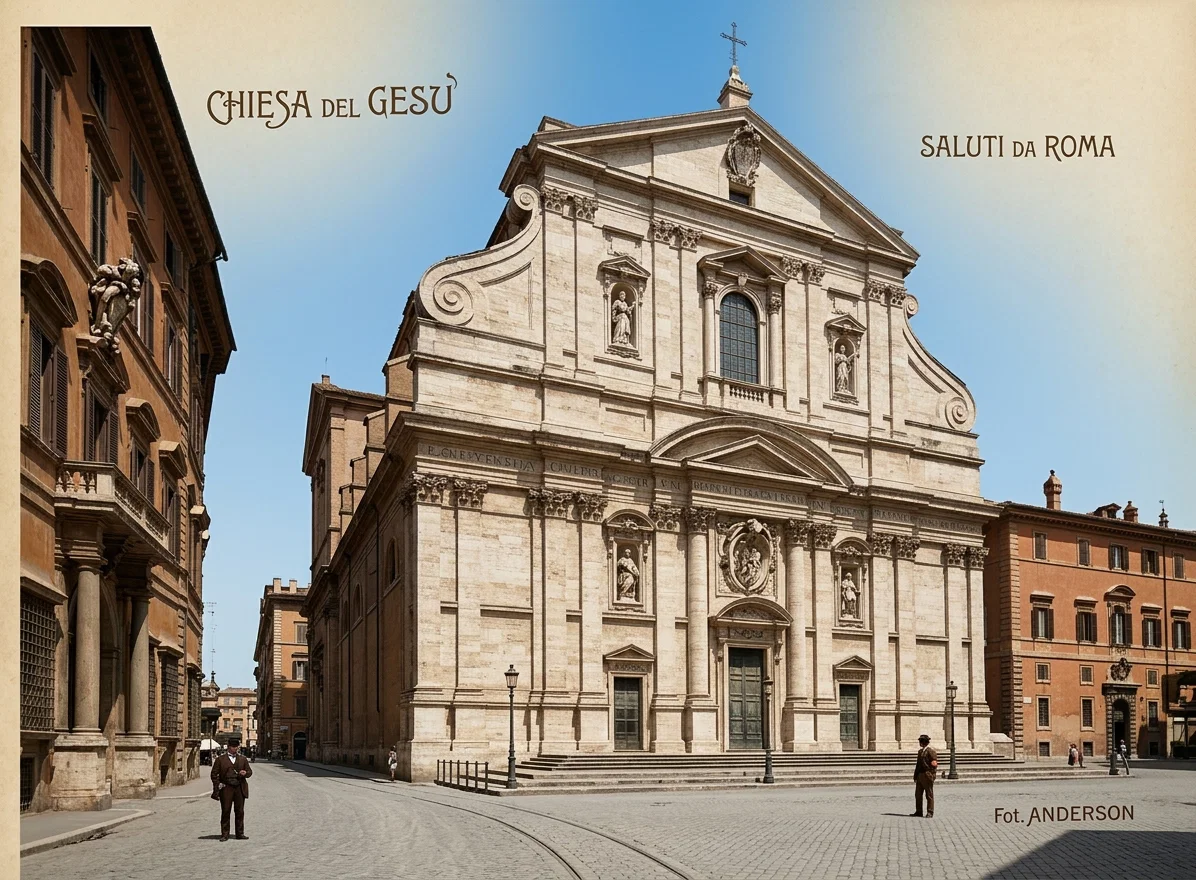
And the very next Sunday after we had concluded our series of sermons on the Sabbath question, a meeting was held, in which one of the leading priests of the city spoke on the Sabbath question. This meeting was held in the largest Jesuit church in the world. It is richly embellished, and is the largest of the churches of Rome where preaching services are held. It is especially noted because of the fact that under its altar is buried Ignatius Loyola, the founder of the Jesuits. The priest that delivered the sermon on the Sabbath question is a leading Jesuit. He chose for his text the words, “Remember the Sabbath day that thou keep it holy.” He began his discourse by showing the benefits that accrue from Sabbath observance. Then he called the attention of the people to the fact that the Bible teaches that the seventh day of the week is the Sabbath, and that Christ and his apostles never observed any other day but the seventh. He demonstrated that there is not the slightest authority in the Bible for the observance of Sunday, nor any attempt made on the part of either Christ or his apostles to change the Sabbath from the first to the seventh day of the week. He then raised the question as to how this change of the Sabbath came about, and proceeded to show that the Catholic Church had effected the change of the Sabbath from the seventh to the first day of the week. He explained that it was the prerogative of the Church of Rome to change the commandments of the Bible when the church deemed it necessary. The church had this right, he said, because she is infallible, having derived her authority directly from Christ through the apostle Peter. Therefore it is the duty of all Catholics to observe Sunday, since it is commanded by the church. In conclusion he spoke concerning the practise of Sunday observance by the Protestants, and showed their inconsistency in professing to follow the Bible as their sole guide, and at the same time keeping Sunday. For if they would be consistent in following the Bible, and the Bible only, they must keep the seventh day as the Sabbath, as that is the only day commanded by the Bible; but in keeping Sunday they obey a commandment of the Church of Rome, for Sunday observance rests entirely upon a precept of the Catholic Church for its authority.
JESUIT CHURCH, ROME
So we see that right here in the seat of the “beast” the truths that we as a people are preaching all over the world concerning the change of the Sabbath, are being verified as true. Some may have thought that it is only in Protestant America that the Catholic Church proclaims that she has changed the Sabbath. But we notice that here also in Catholic Italy, and, in fact, in Rome itself, she preaches the very same doctrine. As soon as we presented the Sabbath question in Rome, and showed that the Catholic Church changed the Sabbath, the Church of Rome stepped right forward and substantiated our claims.
An ex-canon of the Catholic Church was present at this service, and heard this priest make substantially the same declarations, as we have noted, that he had heard presented by us at our hall, and it made a great impression upon him. This ex-canon attends our meetings regularly, and seems deeply interested in the truth. We hope that he will unite with us. He would be a valuable worker should he become wholly convinced of the truth; for he is well educated and has great ability, having been a professor and a canon in the Church of Rome. A canon ranks next in the priesthood of the Catholic Church to a bishop. He has also been an editor of a journal in Rome. As far as he has heard, I believe that he is convinced.
The meetings at the hall are progressing with good interest and attendance. Next Sabbath we shall begin our Sabbath-school and Sabbath service at the hall for the interested ones.
Brother Lattoni, the young man whom I mentioned in my last article as the first convert as the result of our work here, is making splendid progress in the truth, and is working faithfully in interesting others in this message that is so dear to him. He is presenting these truths in a remarkable manner for his short acquaintance with the message. Thus we see that the last message of mercy is finding its way into honest hearts right within the shadow of the Vatican.