When Jesus was upon the earth, his great heart of love was moved with compassion because the multitude “fainted [“were tired and lay down,” margin], and were scattered abroad, as sheep having no shepherd. Then saith he unto his disciples, The harvest truly is plenteous, but the laborers are few; pray ye therefore the Lord of the harvest, that he will send forth laborers into his harvest.”
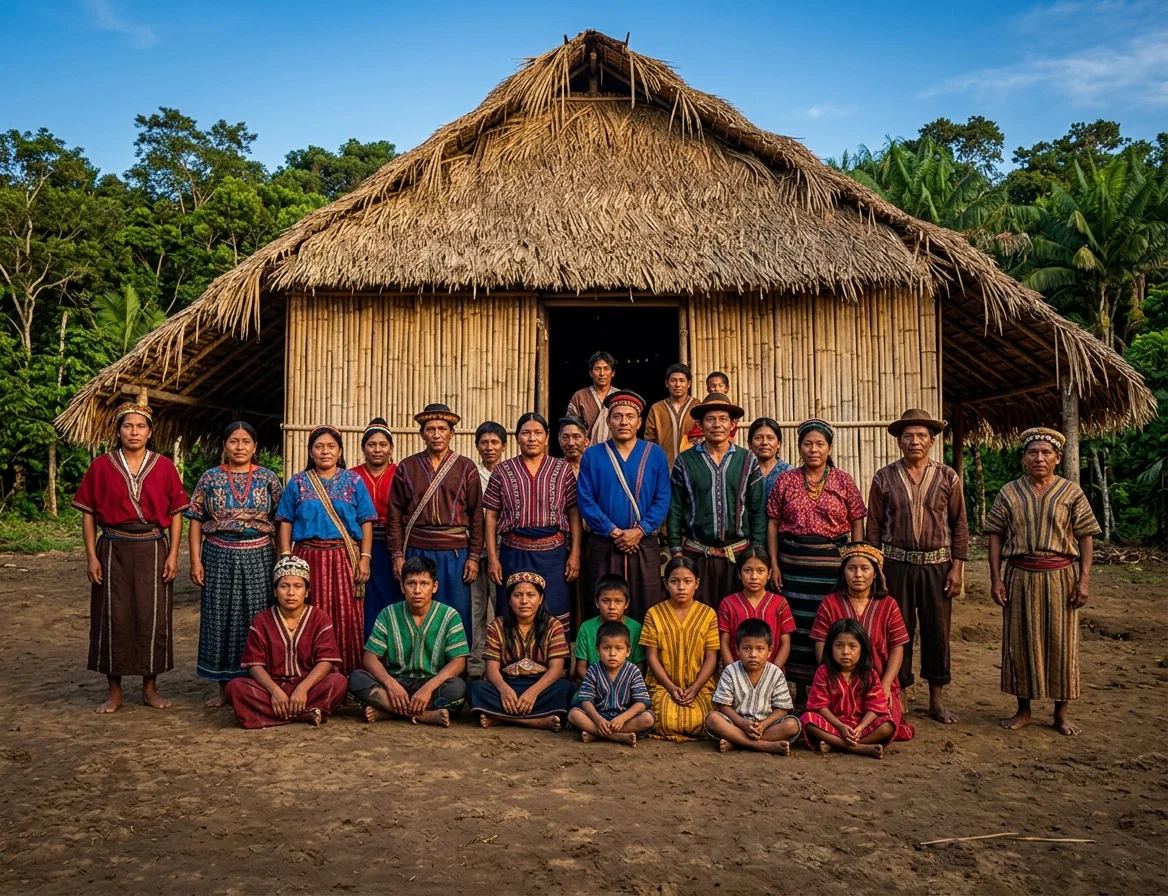
GROUP OF ABORIGINAL INDIANS AND THEIR CHURCH
Long years before the Saviour uttered these words, the Lord through the prophet Ezekiel had brought the complaint of neglect against his people as recorded in Ezekiel 34. This entire chapter furnishes food for thought for God’s people to-day. The Lord’s flock is not confined to those whose names are on the church book, nor to those in civilized lands. “My sheep wandered through all the mountains, and upon every high hill: yea, my flock was scattered upon all the face of the earth, and none did search or seek after them.”
Dwelling in the vast South American forest, there are thousands of the aborigines of the Western hemisphere, whose condition is exactly described in the preceding quotations. A quiet and inoffensive people, they have been passed by on the other side, and wander neglected in their forest homes, surrounded by nature in her grandest forms, yet a “prey to every wild beast of the field.” Satan through the peramun, or witch doctor, holds many of them in the bonds of the most abject superstition.
Yet some of them have heard the voice of the third angel’s message, and their hearts are glad. At the session of the East Caribbean Conference, held in Georgetown, Demerara, some representatives of these forest children were present. Two of them, members of the Tapacrooma Indian church, stood before our conference, and over and over again pleaded, “Send us a teacher.” They told what the message had done for them. Especially did the Sabbath truth seem precious to their souls. Children of nature, the running stream, hill and vale, the growing tree, the singing bird, all speak to them of the great Giver of all good in a language they understand. They have not yet been educated away from nature, so the Sabbath appeals powerfully to them, being the sign of him who made all things, and who still upholds all things by the word of his power, filling heaven and earth.
The brethren who have already accepted the message are certain that present truth alone will touch the hearts of the Indians. The Christianity with which they have come in contact has lacked the power, and many who once were under Christian influences are drifting away. Yet they sit in their loneliness, longing for that which the third angel’s message alone can give; and shall they wait in vain?
Our work in the Guianas began among them about nine years ago. A colored brother, who had been a schoolmaster, visited one of their settlements, and two or three gladly accepted the Sabbath truth. Elder W. G. Kneeland, while struggling against so severe an attack of Demerara malaria that he was soon compelled to leave for the States, spent a few weeks with them on the eve of his departure, and performed the first baptism among them.
They were then left alone for a long time. Smallpox entered their settlement, and many died. They moved their camp farther interior, but they still remained faithful to the precious truths which they had heard. Rarely did our ministers visit them, but Elder D. C. Babcock, while suffering from an attack of malaria which almost compelled him to leave the field, took refuge at their forest home on the sand hills, and gave them further instruction. The work has so far developed that at Tapacrooma Creek, up the Essequibo River, there is at present a church with twenty-one members. Another company up the Demerara River, at Bootooba, has been broken up by removals, and needs gathering together again.
In May, 1905, Elder W. G. Kneeland and the writer visited the Tapacrooma village, and held services in the little church built by themselves of native material in the depths of the forest. As I faced these first-fruits of the forest children, and realized that little if anything was being done by us for them, my heart was stirred. They hold their regular services and Sabbath-school, subscribe for the REVIEW AND HERALD, take the Caribbean Watchman, and pay tithes and offerings. Their hearts rejoice when they enter in their church records the addition of others of their forest families to the ranks of those who keep the commandments of God and the faith of Jesus.
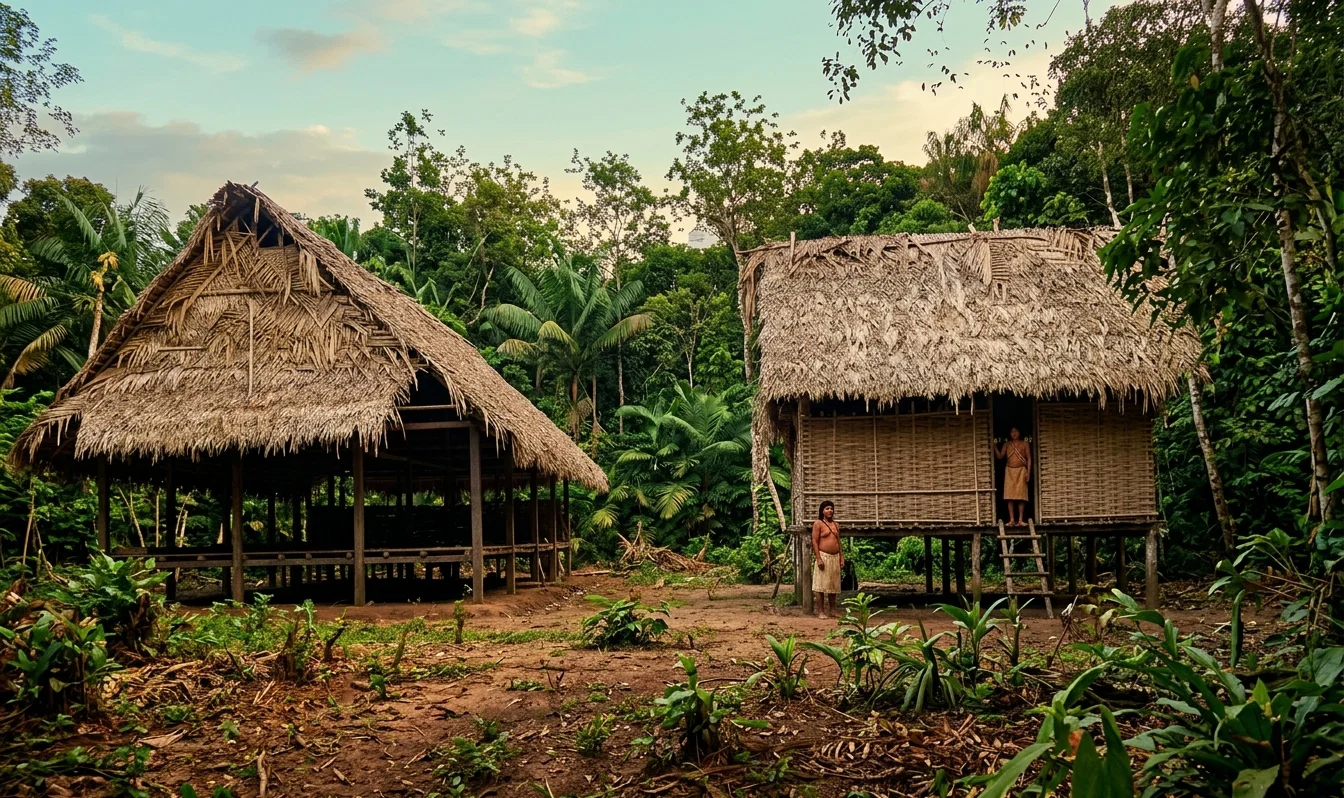
ABORIGINAL INDIAN HOMES
There is something thrilling in the onward march of the great threefold message. It is binding together in a common cause the hearts of men and women of different races and customs. The same truth that has become so precious to those who have had the benefit of modern civilization is manna to the souls of those who have always dwelt in the midst of the simplicity of nature. The Western Washington Conference has set apart one of its laborers, Brother O. E. Davis, for this work, and has13generously pledged his support. Money is now needed to pay his traveling expenses. Who will be touched by this Macedonian call, and send to the treasury of the General Conference funds to supply this need?
To those who are at the front, facing the world’s need, the Lord’s promise in Eze. 34:11-16 is precious. He has promised to search for his sheep, and seek them and gather them from the countries where they are scattered.
Who this day will lay all on the altar of sacrifice, and consecrate themselves, and their little ones, and all their substance to this blessed work?