The Philippine Islands

8%

Review and Herald Publishing Association · Washington, D. C. · May 24, 1906

FromReview and Herald, Vol. 83, No. 21.

Read the full edition

The Philippine Islands

E. H. GATES
Although the Catholic Church has for the past four centuries ruled with a despotic sway in the Philippines, the united front of that body is now broken. A few years ago it was impossible for any one who was not in harmony with that church to do any religious work. Any attempt to hold religious service, or to circulate the Bible, or even to read it, was dealt with promptly, and with an unsparing hand. To-day, as far as the laws of the land are concerned, it is as easy to preach the gospel there as in any Protestant country. This condition of things must be a sad surprise to the church authorities, because for hundreds of years they have felt secure in their wicked attempt to keep the masses in darkness and ignorance for the benefit of the clergy.
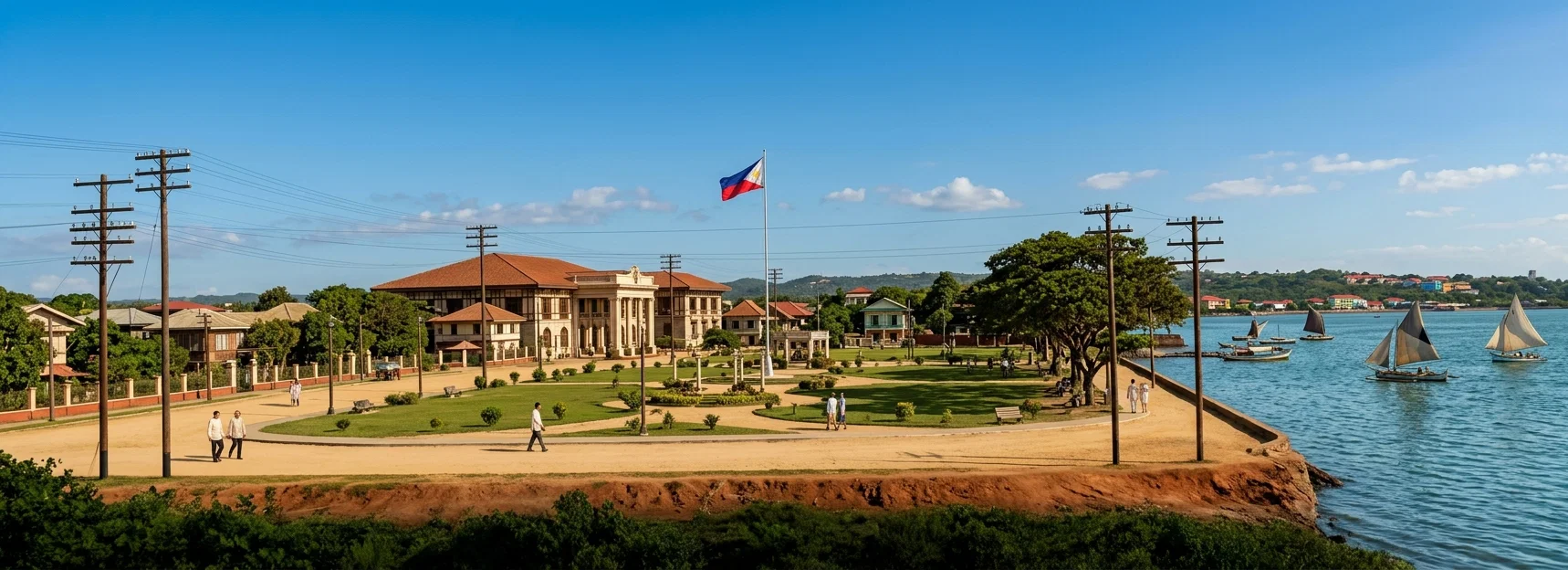
A PUBLIC PARK IN MANILA
To-day the different Bible societies have their agents stationed in the leading street of the walled city, almost under the eaves of the cathedral and other large churches. In different parts of Manila, and in other towns of the group, are many Protestant churches — Methodist, Presbyterian, Episcopal, Congregational, Baptist, United Brethren, etc. But although these denominations have made many converts and are pushing their work with great vigor, their efforts are insignificant compared with the movement known as the Aglipay movement.
Nearly four years ago a certain priest named Gregorio Aglipay left the Catholic Church, and formed what is known as the Independent Catholic Church of the Philippines. This priest had been educated in a Catholic seminary, and, although a Filipino, was advanced with great rapidity. But coming under the displeasure of the church authorities for some alleged irregularity, he was excommunicated. Failing to get a reversal of the sentence of excommunication, he joined the forces of the Insurrectos under the leadership of Aguinaldo, and was by him made vicar-general. When the insurrection was suppressed, and the Philippines came under American rule, Aglipay took the oath of allegiance to the new government.
In 1901 he made an effort to secure the co-operation of the Protestant ministers of the island in an effort to split the Catholic church in two. They very wisely refused to unite with a movement that went no further than to simply protest against the Romish church while leaving the people without the Bible. Aglipay was advised to study the subject more fully, and to unite with the Protestant cause. The next year he organized his Independent Church, and was elected archbishop.
Large numbers of the Catholics at once joined the new church, and many churches sent invitations to the new archbishop to occupy their houses of worship. Whole congregations, with their priests and priests’ houses, joined the movement. In one province it is said that but three churches and priests continued to hold with the old church. Aglipay and his followers took possession of the church houses of the congregations that united with his movement, which led to a decision by the governor, Mr. Taft, called the Proclamation of Peaceable Possession. As the Catholic authorities denounced Aglipay’s possession of the houses as trespass, and demanded that he give them up, the governor decreed that whichever party was in peaceable possession of the house should be considered the rightful occupant, and that the contrary must be proved in the courts before ejection could take place. By this decision large numbers of church houses worth hundreds of thousands of pounds have passed into the hands of the new church. It is said that at least one million five hundred thousand members are in fellowship with Aglipay. These, of course, are Filipinos, as the movement is in opposition to the Spanish friars who have so long oppressed the people of the islands. It is true the movement does not make full-fledged Christians of the adherents, nor are they probably any better than the adherents of the old church; but they are cut off from their allegiance to the pope, and so are in a better condition to receive the truth. Another thing that is favorable is the fact that Aglipay now recommends the reading of the Bible. Many thousands of copies of the Scriptures have been purchased by the leaders of the movement, and sold to the people. This is all of the deepest interest, for until the Bible is made use of and obeyed, there will not be any permanent good as the result of this or any other revolt from the authority of the Romish hierarchy.
A few weeks ago when in Manila, I saw an article in one of the papers which stated that the pope at Rome was much offended at the time of the visit of Miss Alice Roosevelt, daughter of President Roosevelt, to Manila, because Miss Roosevelt showed more respect to Aglipay than the Romish church authorities thought should be shown to one under the frown of that church. It seems that when she visited Manila, and when the citizens of the place called on her, Aglipay was shown honors which were not accorded to the Roman Catholic friars. It is said that she committed the awful offense of having her photo taken standing by the side of this apostate priest. This the infallible pope counted as an insult to the church of which he is the head, and to him in particular. Since the many favors that have been shown to the Romish church by the United States, the pope seems to have the idea that the people of that great nation are his children, and that even the daughter of the chief executive must not show any respect to any one who is regarded as an enemy of that church. This ought to open the eyes of the people of that nation, and of every other, to the great danger of allowing the Romish church toget any foothold in governmental matters.
Let the United States once come under the rule of Rome, and the people will be ruled with the same severity that has characterized her dominion in the Philippines.
The Protestant churches have taken a noble stand in their determination to flood the Philippines with the written Word of God. The efforts of the Bible agents who go from island to island selling these Bibles, while putting up with all manner of hardships, is commendable. We could only wish them Godspeed. Now it remains to be seen what these workers will do when God’s truth for these times shall be proclaimed among the millions of these islands. Up to the present time they have stood on the side of truth in declaring that civil governments have no right to coerce the conscience. It is to be hoped that the same liberality will characterize their actions when the law of God and the testing truths of the last message shall be proclaimed among them.
I learn that the different Protestant churches have divided the territory of the group among themselves into “spheres of influence,” and that it is regarded a breach of missionary comity to get into the territory of another denomination. But God’s last message must be given notwithstanding these regulations, and it will be given, and the honest in heart will recognize the voice of the true Shepherd.
(To be concluded)