Moving to Cuba

6%

Review and Herald Publishing Association · Takoma Park Station, Washington, D. C. · Jun 7, 1906

FromReview and Herald, Vol. 83, No. 23.

Read the full edition

Moving to Cuba

It is not our purpose to encourage our brethren indiscriminately to move to this field; but, lest some who are already planning to come, as well as other interested ones, should gain erroneous ideas of the existing conditions here, which might lead to disappointment, and possible discouragement, we desire to give some facts through this medium. We are encouraged to learn that many are heeding the voice of the spirit of prophecy, and are leaving the large cities. A few of these have already purchased homes in Cuba, while others are preparing to come this way, with the same object in view. To all who come with the motive of lifting in giving the message to this people, Cuba offers a welcome, and we are sure they will have the blessing of the Lord.
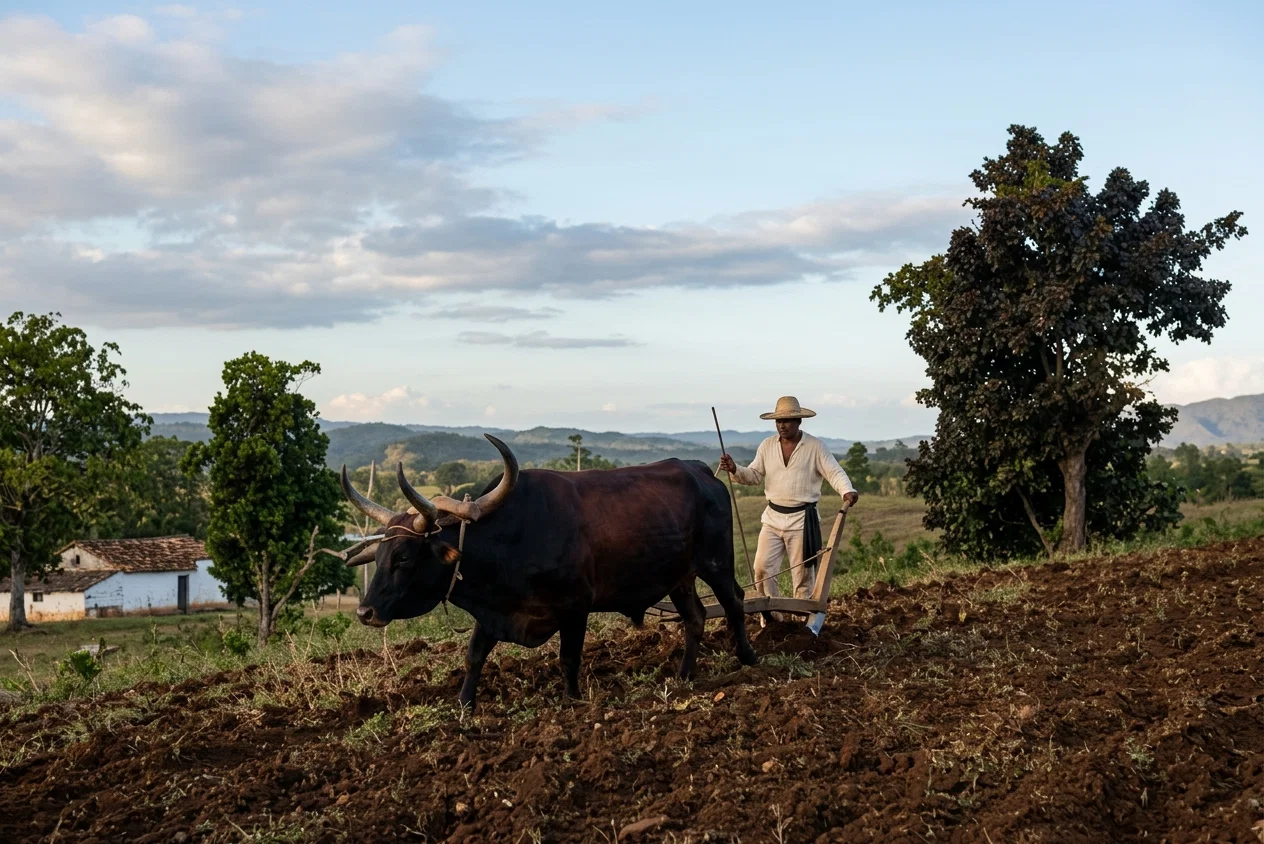
PLOWING IN CUBA
PLOWING IN CUBA
The idea generally prevails that Cuba is immensely rich and productive, and that, at the touch of the hoe or spade, the earth smiles in an abundant harvest. We would say right here, however, to any who may expect to get rich at once, that he will be quite liable to be disappointed. As a rule, the first impressions of the agricultural possibilities on the stranger are not favorable. In a land of such proverbial fertility, he looks for a well-settled country, with fine, cultivated fields, and a show of farm-buildings, with other evidences of prosperity. He is disappointed when riding out of Havana on the main pike road, to note the absence of all the above, with only now and then a cane field, and here and there the ruins of a sugar-mill, destroyed during the late war, or a blockhouse, standing as grim sentinels and reminders of the happy days of the past.
Apart from the devastating results of the late war, which left almost no inhabitants in parts to till the fields, the policy of Spanish rule in Cuba seems to have been directly at enmity with agricultural progress, outside of the cultivation of sugar and tobacco—products that never came in competition with those of Spain. The fact that the Cuban farmer was fined heavily if he planted more than one grape-vine, or if he passed the limit of oranges or other fruits which brought him into competition with the products of the home country, would illustrate how this policy worked. In view of such a policy, can we wonder that the poor Cuban is centuries behind in his civilization and mode of tilling the soil?
There will be those coming to this country who will expect to work the soil as they do at home; and we have met those who expected to be able to spade up the earth at once, and in three months' time have a harvest. To this class we would say that to our knowledge only the inferior, sandy lands of Pinar del Rio render this mode of tillage possible, and, strange to say, these lands are giving good results when fertilized properly. The most fertile lands, however, are the old plantations, which, as a rule, are of a deceptive soil. These, through having been uncultivated for years, naturally cost more to subdue and get in a workable condition. However, the natural fertility, rendering fertilization unnecessary, together with abundant harvests, gives these lands the preference over others.
To be successful here, our brethren must not give up in discouragement at conditions they did not look for. A spirit of adaptation, patience, and an inclination to receive advice from others who are better informed, will, in most cases, overcome the difficulties which are largely only apparent, not real.
To any one who will not follow the above course, and who is not willing to adapt himself to conditions identicalwith those of the pioneer days of thirty years ago in the West and Northwest, we would say, Do not come to Cuba to farm, unless your means permit you to take up improved land near the capital, at a comparatively high price. But with all sincerity, we can say that there is probably no country of limited territory that offers better prospects to the settler of limited means than does Cuba. Thousands have recognized this fact, and proof of it is seen in the influx of American settlers and capital. The fact that the area of fertile lands is limited, the whole country having only the area of Pennsylvania, has caused the fertile lands to advance in price, and a further advance is expected, as they are rapidly taken up.
In view of the fact that the cause in Latin-American fields never has derived its financial support from the natives, but rather from the various outside elements coming in, we may also expect no great financial results here in Cuba; therefore, the coming of our brethren who will give strength financially, as well as otherwise to the cause in this needy field, will be most desirable; and if they come mainly because the work needs them, they will have the Lord's blessing.
The following figures, taken from the United States official weather report issued at Camaguey, Cuba, will indicate that no fear of the summer heat here need be entertained: Extreme maximum temperature recorded for six years, 98°; extreme minimum temperature, 47°. Only on the following dates did the temperature exceed 95° during six years' time:—
June 1, 1901, 96°; Sept. 1, 1900, 96°; July 30, 1899, 97°; Aug. 24, 1899, 98°.
The mean temperature for the four hottest months of the year was as follows:—
June, average temperature, three years, 80°; July, average temperature, six years, 80°; August, average temperature, six years, 81°; September, average temperature, six years, 80°.
Before coming to this field, all will find it to their advantage to correspond with us. Any information possible to obtain will be cheerfully given, if letter is accompanied by a stamp.
E. W. SNYDER.
Apartado 35, Marianao, Cuba.