THE Brazilians are a warm-hearted, impulsive people, slow to forget a kindness, and quick to show one. They are extremely courteous, and look with disdain upon the brusque manners of Americans, who are in too great haste to be polite. They always have time to show every courtesy possible. In business transactions any rudeness or brusqueness is quite unpardonable, and one can expect to find little favor at their hands unless he is prepared to accept and return their courtesies, and await their movements with patient politeness. It is quite too warm in that country for people to hurry, and they never do, nor do they wish others to. Nothing is ever done to-day which can wait until to-morrow, and patience is a much-used and much-abused word in their vocabulary. It will be repeated to one many times, if he tries to hurry them. Espera and paciencia, wait and patience, are almost the first words a foreigner learns.
They are very patient with foreigners, and will not laugh at their mistakes, no matter how ludicrous they are, but will generally offer a polite correction. The words “to direct,” or “lead,” and “to digest” are very similar—dirigir and digerir. A German minister just beginning to preach in the Portuguese had occasion to use the former word a number of times in his sermon and prayer, but instead used the latter—a very ludicrous mistake; but not once did his congregation break through their becoming gravity, and he had no idea of his14blunder until another German friend told him of it after service.
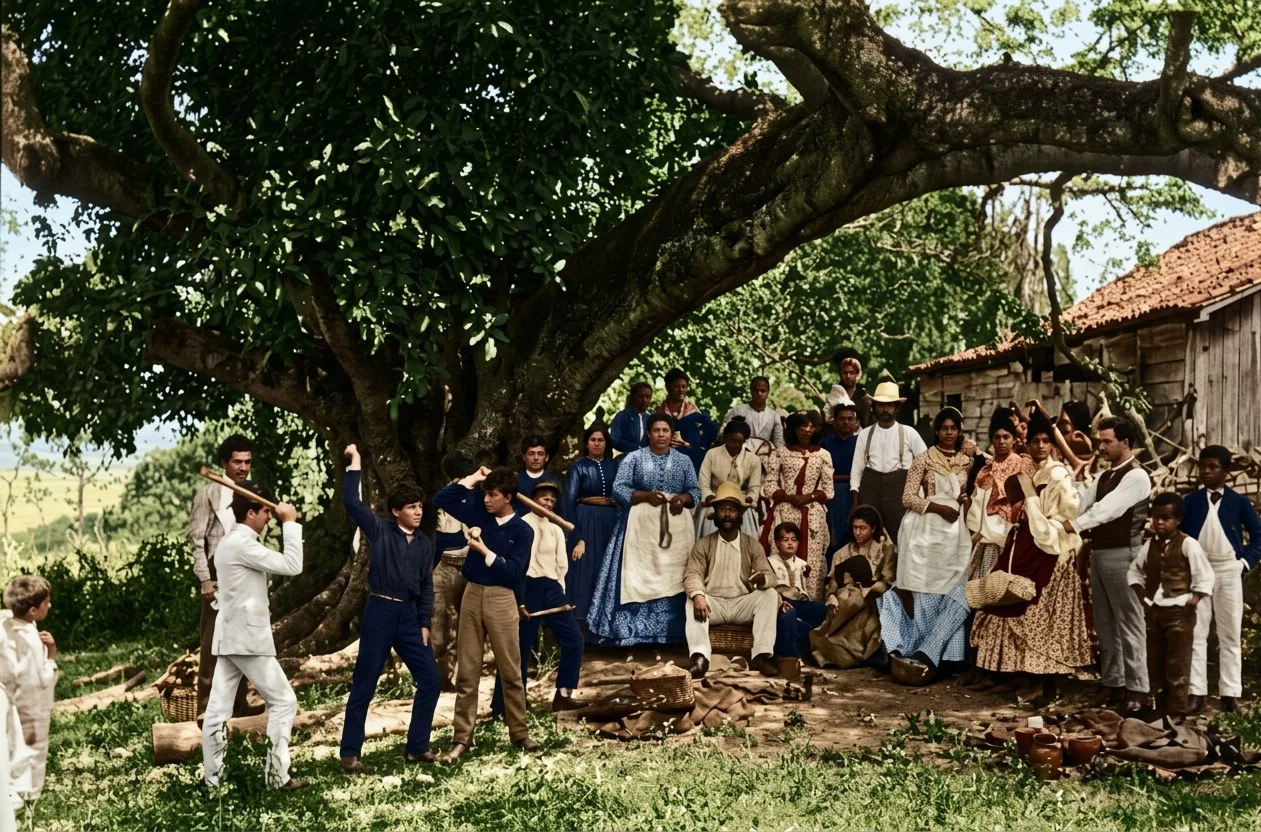
BRAZILIAN PICNIC PARTY UNDER A FIG TREE
The warm climate and the excessive use of stimulants make the Brazilians very excitable, and they gesticulate constantly while in conversation, talking very fast and loud. They are also easily stirred to anger and to fanaticism, and missionaries are often subjected to mob violence. They are kind to their children, and bestow a great deal of affection upon them, while the children, in turn, are taught to respect and reverence their parents and elderly people. The women have few household cares, as their homes are rather scantily furnished, their food simple, and clothing is so expensive that they cannot afford a large wardrobe; so the greater part of their time is spent in idleness. As a consequence, they are saved much worry and work, and do not age so fast as American women. They are fond of display and of bright colors, and are dressy, bestowing special care upon their hair and hands.
As a rule, the people are very superstitious, and have some most absurd ideas about sickness and misfortune. They do not believe that diseases are contagious, but that they are sent or withheld by God; and if death visits the family, it is because God willed it.
One thing which is very painful to the foreigner is the great cruelty with which animals are treated. There are no laws for their protection, and very little sentiment in their favor, and they are beaten, tortured, and starved in the most heartless manner. Together with this there is great disregard of the value of human life, and murders and suicides are distressingly frequent. In fact, vice and crime stalk abroad at noonday, as it were, and in the most heartsickening manner. One can only wonder at the great forbearance of a merciful God in not blotting these large cities out of existence. But it is almost more wonderful how he can be so patient with us who, having the light and truth which these people need to lift them out of their bondage and night, are so slow to take it to the perishing millions. How sad to think that we have been so neglectful of our duty, which, if performed, would have brought the Saviour ere this, and ended all earth’s woe.
Thus far the Brazilians have been quick to accept the gospel as it is presented to them, and there are a goodly number of honest souls in that dark land who are ready and waiting for the third angel’s message.