“THERE are places which are now a moral wilderness, and these are to become as the garden of the Lord. The waste places of the earth are to be cultivated, that they may bud and blossom as the rose. New territories are to be worked by men inspired by the Holy Spirit. New churches must be established, new congregations organized. At this time there should be representatives of present truth in every city, and in the remote parts of the earth.”—“Testimonies for the Church,” Vol. VI, page 24.
Most parts of the United States have a goodly number of representative Sabbath-keepers, but in Alaska there is a dearth of our people. Alaska is usually considered as nothing more than a huge mining camp, from which all persons soon return. That any one should come here to settle seems as preposterous to most persons as the idea of settling on the Pacific Coast seemed to many thirty years ago. Feeling, as religious people usually do, that the larger number of those in Alaska will return from the land of gold to the gospel land, either rich, and hence with minds free from the strain of fortune hunting, and ready to listen to the claims of God, or else poorer than ever, and hence in condition to receive that which is better than gold, slight effort has been made as yet to establish churches or mission schools. Some denominations have sent traveling missionaries into the country; and a few resident missionaries are scattered here and there. But religious work is in its infancy; and if we would, we might press our work to advantage. Creed feeling is notably lacking; due, partly, I admit, to the tolerance of all beliefs, rather than adherence to any.
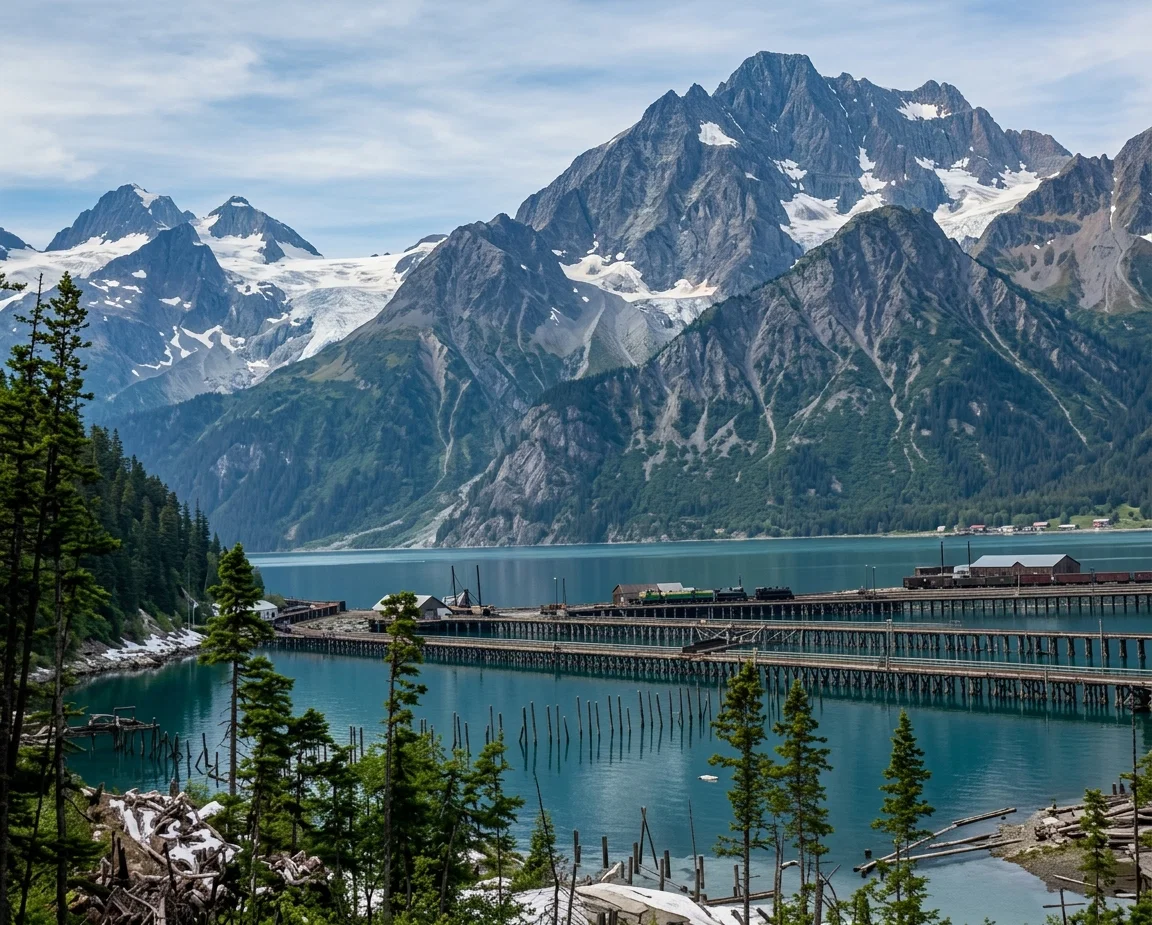
LYNN CANAL
Now is the time to work here; now, while Sunday sentiment is slack, is the most fruit-promising season in which to cast our seed. Before Sunday ideas form and harden is the God-given period in which to trace the truth on the tablets of the heart. This country is growing rapidly. Why should we not grow in and with it? That Alaska is to be a resident country is evidenced by the fact that men are coming here by scores and hundreds every month, from everywhere, bringing wives, sons, and daughters. They secure land, build houses, invest their money in some business, and, in fact, prepare for a permanent stay. Why should we not gain a foothold in this land immediately? Why should we not have representatives in this remote part of the earth? This is indeed a waste place, and shall we be backward in cultivating it, that it may bud and blossom? In many lands, and in all large cities, it is hard for a poor man to earn a living and keep the Sabbath. Ruin glares at him on every hand. But here hunger would not be a bugbear to deter a man convinced of the truth of the third angel’s message, from avowing his conviction and living up to it.
The practice of healthful living is at low ebb, while scurvy and rheumatism are at flood. One would think these diseases were held at a premium, judging from the persistence with which persons will eat flesh that has traveled a thousand miles or more, and that probably was fairly ripe at the outset. If the principles of health reform were once taught, they certainly would cause many to reform. If the inhabitants of Alaska knew of anything that would take the place of the decaying and canned and salted meats they use so much from necessity, they would gladly use it. Shall we let them die of needless disease, in ignorance of the fact that such a substitute does exist?
Alaska is much more than a mining camp. The canning industry stands out in increasingly gigantic proportions. Millions of cases of salmon are shipped out every year; and still the canneries rise like mushrooms, in a night. A plant that cans fifty thousand cases a season is a small one. The usual capacity is a hundred thousand. It takes a building three hundred feet by one hundred feet to put out this number. A case contains forty-eight pound cans. It takes about ten average-sized salmon to fill a case. The average cost to a company is only a cent a fish, making the material for a case cost but a dime, and this they sell for three or four dollars, and the middlemen sell it for five. In spite of the enormous output of the numerous canneries, the demand for Alaska canned salmon is greater than the supply. The writer thinks, however, that if the eager consumer could follow the fish from the time they are caught till they are daintily dished at his table, the reverse condition would increasingly prevail.
One would naturally think that a man could not make more than a meager living, catching salmon for a cent a piece. But when one takes into consideration the fact that four men with a seine often catch several thousand at a haul, he can see that they are not likely to starve. A few miles from here one seine boat made a single haul of forty-five thousand. An average fisherman will net five hundred dollars for a season’s work. Some make double or even treble this.
When the season is over, then the saloons reap a golden harvest. The churches are few and powerless. The saloons are in every town and on almost every corner, furnished with all improved allurements. Lawlessness goes unchecked through the streets, and unblushing.
Again I ask, Shall the needs of this vast country plead for evangelical and medical missionary help until too late—until the image of the beast is formed and dutifully worshiped even here? For years there have been workers in every other part of the United States, but where are there any here? A small branch sanitarium combined with a health food store would certainly thrive in more than one place. Money is plentiful; land for location is abundant for a small consideration, and in some places for nothing; good lumber is nearly as cheap as anywhere in the States. There must be a start made here; for the Spirit of God says so. The Lord, furthermore, insures success to the faithful: “There are places which are now a moral wilderness, and these are to become as the garden of the Lord.” “God calls upon his workers to annex new territory for him.” Read also pages 436-443 of “Testimonies for the Church,” Vol. VI. Who will lead out in this work? A rich blessing awaits him who will.