Travels in Polynesia

9%

Review and Herald Publishing Association · Washington, D. C. · Apr 7, 1904

FromReview and Herald, Vol. 81, No. 14.

Read the full edition

Travels in Polynesia

E. H. GATES
RAIATEA is the largest of the Leeward Islands, which comprise the western part of the Society group. There is a decided similarity between this and the other islands of the group, nearly all of them consisting of high mountains in the center, sloping each way to the sea, and surrounded by a belt of level land, which is covered with cocoanut and other tropical trees and plants. Three of the other islands of the group are in sight, Tahaa being in the same reef that encircles this island, and but three or four miles away, while Borabora and Huahaine are twenty or thirty miles distant.
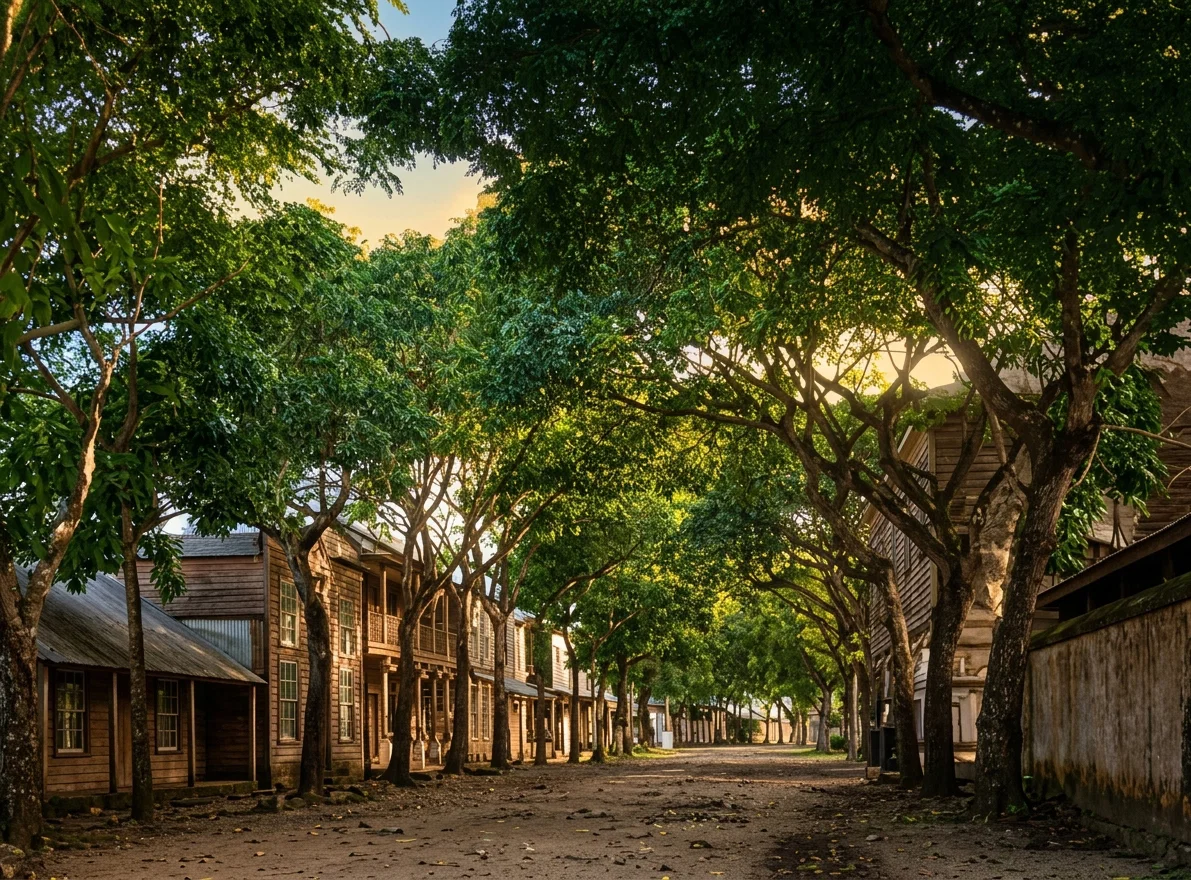
A VILLAGE STREET
A VILLAGE STREET
Christianity was brought to the island in the following way: some time between the year 1796, when the missionaries reached Tahiti from England, and the year 1818, several chiefs from this part of the Society group had gone to Tahiti to assist King Pomare to recover the sovereignty that had been taken from him. While there, they had acquired some knowledge of the true God. A few years later a vessel that had been driven from its moorings at Morea reached this island, and the missionaries on board taught the people more fully the truths of the gospel. The people erected a chapel, and requested a minister to be sent them from Tahiti. This request was complied with by sending Mr. John Williams and a Mr. Orsmond to Huahaine, where they erected a printing-press for the publication of religious books.
Soon afterward Mr. Williams removed to this island, at the request of the chiefs, and was received with much cordiality. His labors here were crowned with success, most of the people of the island embracing Christianity. But Christianity was not received by the people without opposition. The king, Tamatoa, being one of the first to renounce heathenism, met with much opposition from the chiefs, who were not willing to accept Christ. The chiefs of Tahaa made war against him and the Christian party, intending to burn alive all that were captured. But they were defeated by Tamatoa, and the captives were treated with great kindness, instead of being killed as was formerly done. This made such a deep impression on them that they immediately became Christians, and the following morning both parties went out and demolished every idol on Raiatea and Tahaa, so that in three days not a trace of idolatry remained on the islands.
Of course this renunciation of idolatry did not make all the people of these islands full-fledged Christians.
John Williams found a large amount of work to do, and he did it well. One of the first things he did was to begin the erection of a house for himself, which he fitted up with all the conveniences of civilized life which were at his command. This he intended as an education of the people by showing them the good effects of Christianity. Knowing the advantage of bringing the natives together in communities, instead of leaving them scattered all over the island as they were, he persuaded them to form themselves into a settlement. No less than a thousand were thus brought together, most of them building themselves homes in imitation of that of Mr. Williams.
I have seen the house that was built by Mr. Williams. It is not so large as formerly, part of it having been torn down; but enough remains to show that it was a well-built structure.
It has more of a modern appearance than formerly, being roofed with corrugated iron, instead of being thatched with the leaves of the pandanus palm. A few rods farther away is the spot of land on which King Tamatoa built his house, following the example of Mr. Williams. This is now a French fortification. A large chapel (44 by 191 feet) was built by Mr. Williams, which was opened for worship May 11, 1820. Twenty-four hundred persons assembled at the dedicatory exercises. After the work had been placed on a good footing here, Mr. Williams’ restless energy would not allow him to settle down to a life of inaction. In 1823 he wrote to his directors in England, “For my part, I can not content myself within the narrow limits of a single reef.” Encouraged by the fact that the inhabitants of Rurutu, an island south of Tahiti, had accepted the gospel, Mr. Williams visited the Hervey Islands, discovered Raratonga, the chief island of that group, and planted the seeds of the gospel in many other islands. Before the introduction of the gospel, Raiatea was the religious capital of this group, being the abode of the gods.
Opoa was the place where the great religious festivals of heathenism were celebrated. On a low, sandy point of land reaching out into the sea, we saw the mournful evidences of the depravity of humanity when not enlightened by the truth of God. The cruelties which were there perpetrated in the name of religion are terrible to contemplate. Hundreds and thousands of people were probably put to death there, in the efforts of the priests to propitiate the wrath of the gods. These places where human beings were sacrificed were called marais, five of which, in a fair state of preservation, we saw at Opoa. Those altars which we saw were of various sizes and shapes, some being nearly square, while others were long and narrow. Their sides were built of large flat rocks set up edgewise, some of them being ten or twelve feet long, six or seven feet wide, and two feet thick, and filled within with stones of different sizes, among which we found several human bones. Large numbers of these bones have been carried away by curiosity seekers, and but few now remain. It is no wonder that a people who were subjected to such cruelties should gladly receive the good news of salvation through faith in a Saviour who proclaimed peace on earth and good will toward all men.