We are here every day with the Indians, but I will relate the experience of two special days. The mission has ordered a boat from the States to use in our work among the Indians around Lake Titicaca, which, if you will look on the map, you will find is not a very small body of water. Having a boat necessitates our having a place in which to keep it. So we asked the brethren if they would not like to donate a day's labor carrying stone from the mountains. About nine in the morning, Brother Stahl, Brother Achenbach, and I went over to the site, and found about two hundred men and women carrying rocks. Some of the men were dragging the larger rocks with their ox teams, some of the women were driving burros loaded with stones, while others were carrying large loads on their backs.
As there had been a little trouble earlier in the morning, between some of our brethren and those not of our faith, about some rock, Brother Stahl thought best to go to the owners of the mountain and ask permission to carry the stones away. There are so many rocks that if I owned the place I should be very glad to have them removed, but the Indian is very much like his white cousin, and likes to be asked for things. We went to the owners, who seemed very glad to give the permission. One man was so anxious to help that he gave us permission to take down his stone fence, saying that he could replace it later. In all I think we had about enough stone offered us to build a good church building instead of a little boathouse. As the brethren had been so willing to help in every way possible, we thought it well to show our appreciation in a way we knew they would like very much. They have never had much opportunity to play and enjoy themselves, so we invited them to come to the mission, Thursday, December 9, for a day of recreation. In this country such a gathering is called a “feast,” but it very much resembled a Sabbath school picnic in the States.
At nine o'clock they began to gather. At first we were a little afraid we were not going to have a very large company, but by noon there were about three hundred present. As the Indian is very fond of music, we invited some of the brethren to come prepared to play. They have very good native bands. At 10:45 we could hear the music in the distance, and at eleven o'clock they marched into the yard, playing, and I must say it equaled any music I ever heard anywhere. They played for about an hour. Their instruments consisted of a large bass drum, two snare drums, and eight instruments, each made of eight tubes of different lengths, very simple, and yet making very pretty music.
Shortly after twelve, we brought out the food to be served. It was a little different from that in the States. We had two large clothes boilers full of soup, with potatoes, onions, and other native foods; two large butter bowls full of toasted barley; three hundred and sixty biscuits; large jars of kemwa, a native dish; and about seven gallons of sirup made from the native sweets. When there was nothing more to be served, we all went to the yard for some games.
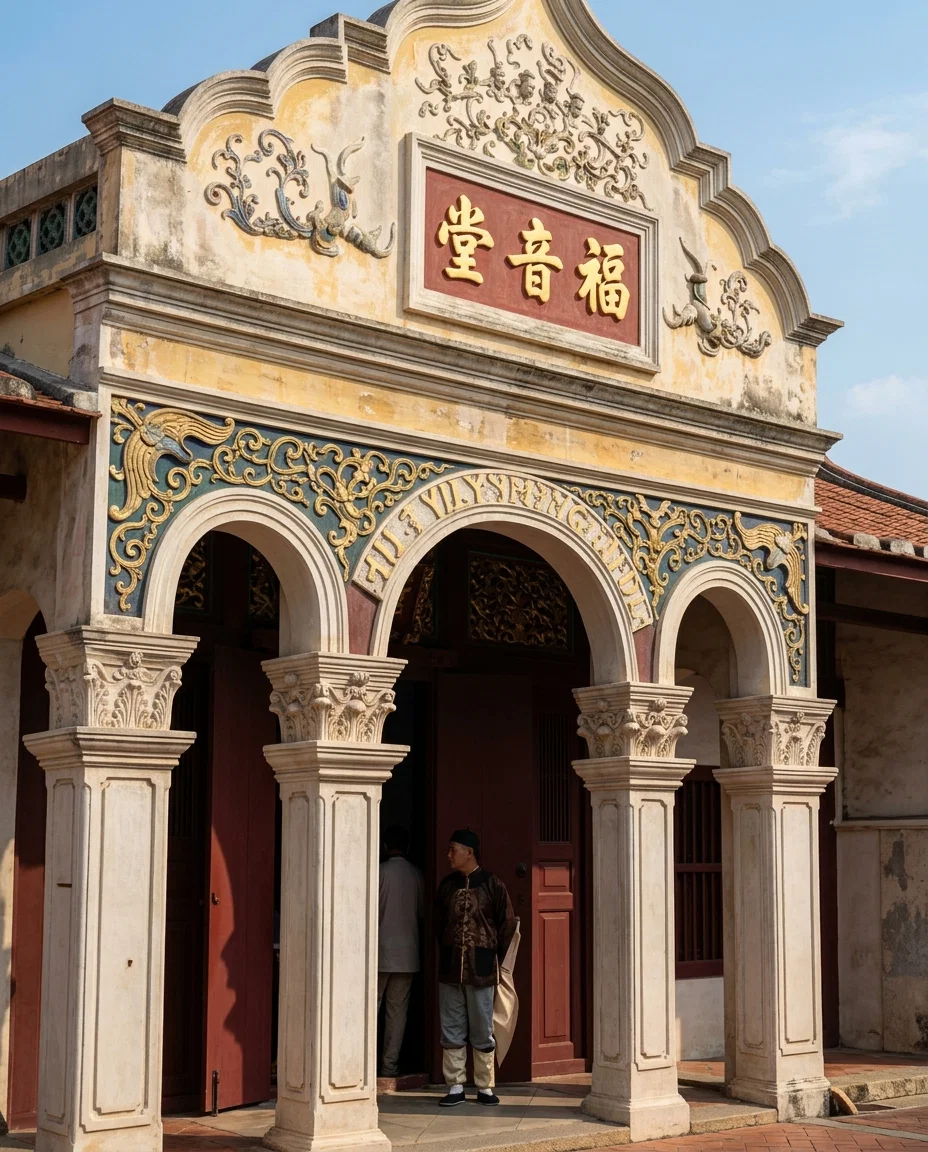
CHAPEL AT CHIOH-BE
Formerly the Catholics had feasts that some who are now our brethren attended. They made a specialty of selling alcohol and the coca leaf, and the Indians would get very drunk. The Indian very much prefers the “sober feast,” as the others invariably left a “bad taste in his mouth” and an empty pocket. One man was present yesterday from a tribe some little distance from here. He said his people were anxiously waiting for a mission. There are many such places.