Photo by F. H. Loasby
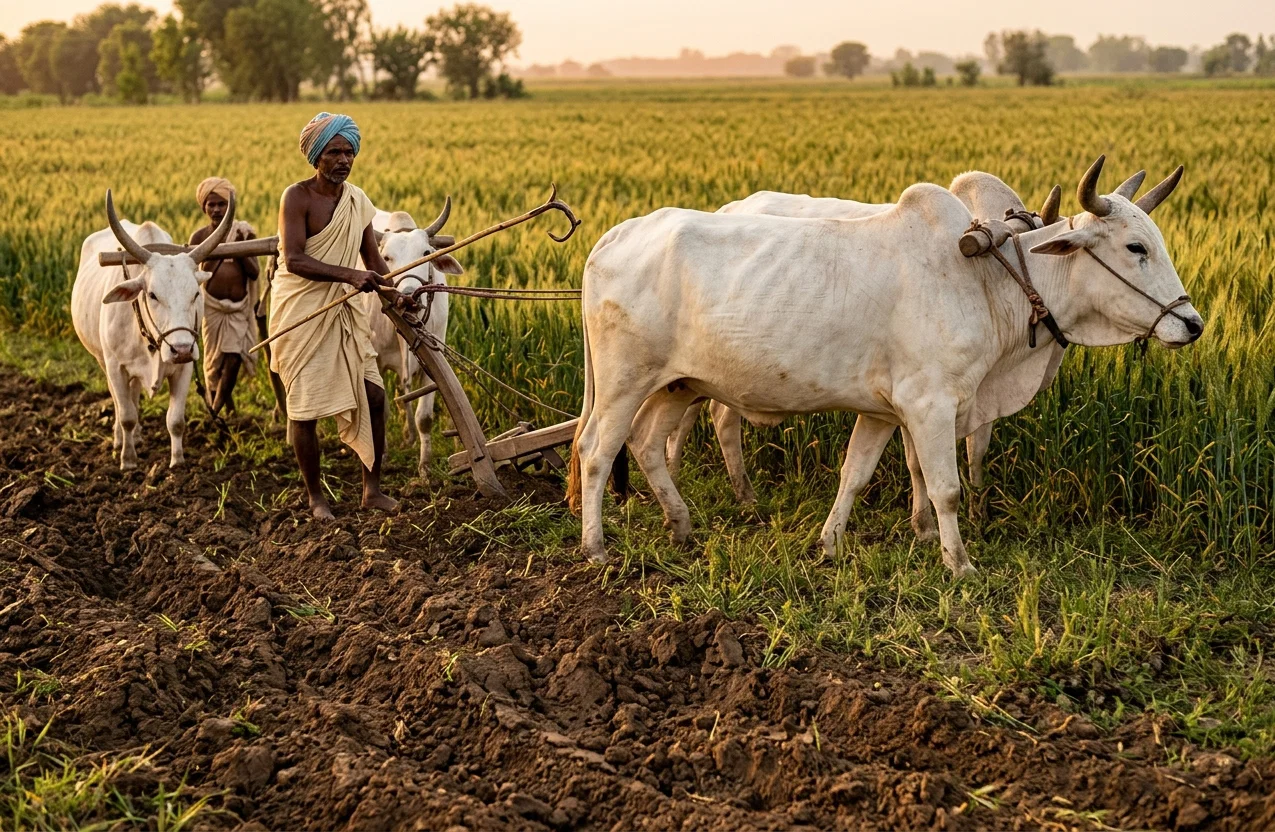
PLOWING IN THE PUNJAB, INDIA. THUS DID ELIJAH FIND ELISHA AT WORK
WHEN THE LATTER WAS ANOINTED PROPHET IN ISRAEL
In the Punjab, North India
By F. H. Loasby
F. H. LOASBY
Here is a familiar scene, natives plowing in the Punjab, using the oxen and the old wooden plow, just as their forefathers have been doing for centuries, or since the time of the ancient patriarchs, for that matter. After the plowing is finished, they harness two oxen to a flat, heavy piece of board, and with this they level off the ground. The seed is then quite often sown by hand, just as was done hundreds of years ago.
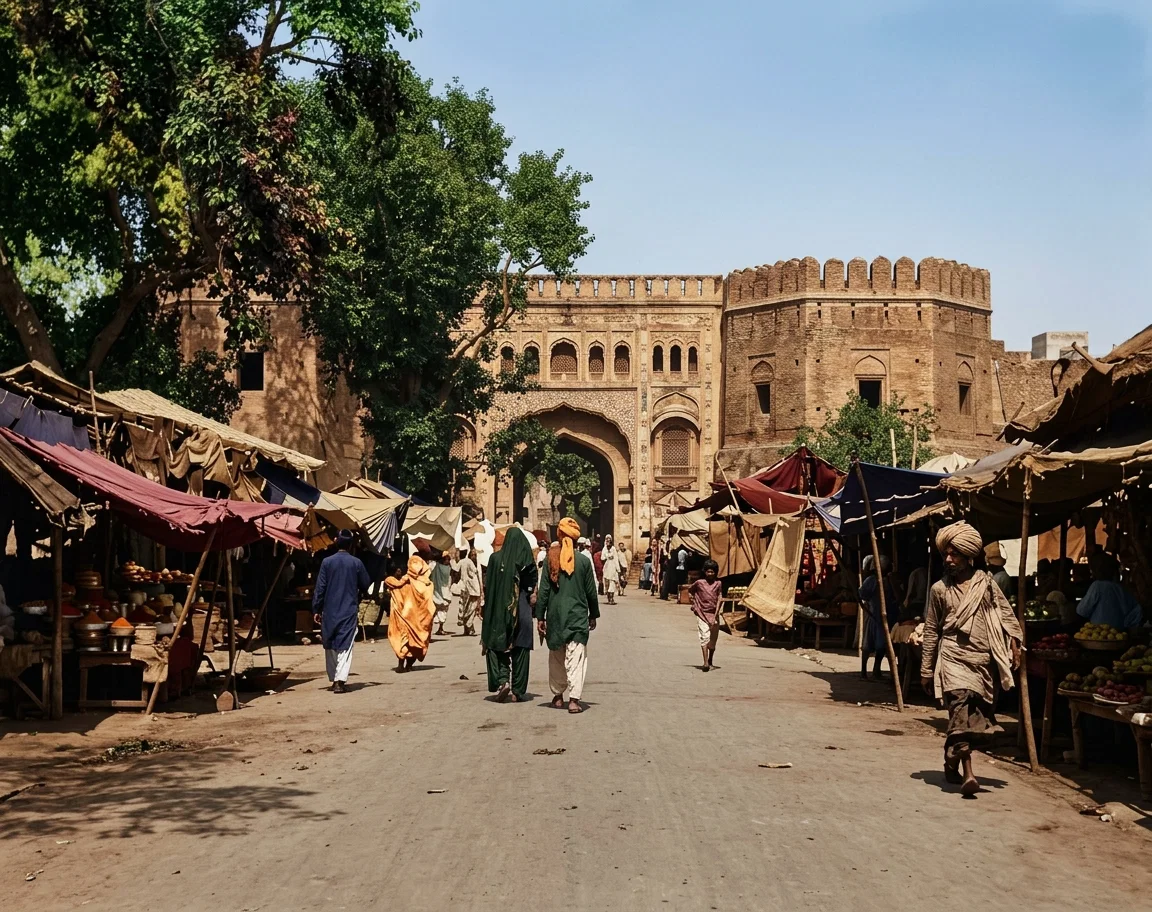
ONE OF THE THIRTEEN GATES OF LAHORE CITY, NORTH INDIA
The other picture is of one of the old gates of Lahore. There are thirteen of these gates. This one is called the Lahore Gate. At one time the old native city was inclosed by a high, massive wall, and these thirteen gates were the means of entrance. There was also a deep, broad moat on the outside of the wall, full of water. After the second Sikh War, in 1849, when the whole of the Punjab was given over to the British,12the wall was nearly all torn down, and the moat filled up. It is now covered with grass and trees, and forms a continuous green belt around the native city, which is a much-favored spot with the people, offering welcome shade from the rays of the fierce Punjab sun.
The native city of Lahore is perhaps more typically Eastern than any other city in India. In its streets and bazaars, which are nearly all so narrow that it is impossible for small carriages to pass each other, one may see representatives of a great number of the various peoples of India. There is the fine-looking Sikh (pronounced "sick"), the lithe Pathan, the prosperous Mussulman, sometimes the Afridi or the Wazir, to say nothing of the big-boned Punjabi; while nowadays we often see the round-faced Gurkha, watching the things of the city with an interest which never more than betrays itself by an amused, almost childlike smile. And from his regimental belt hangs the terrible kukri, the national weapon of the Gurkha.
Every turn of the narrow streets reveals something of interest, from the mosques of bygone emperors to the quaint houses with their zenana windows, where the occupants may see without being seen. There is the stately elephant, the long string of camels from the desert, and the diminutive donkey of the potter, loaded to the breaking point with waterpots to be sold in the bazaar.
But the thing that appeals to us most is that here are thousands of people who know nothing of the gospel truth for this time, and never will know unless the Christian peoples of other lands send their men and money to help carry forward one of the most difficult tasks that Christianity has been called upon to perform,—the giving of the warning message to the millions in these densely populated lands.
We are enjoying splendid health, and for this we thank the Lord. We are of good courage. Although our task seems a large one, we feel that the Lord will make victory sure. The weather here is very hot, now that we have reached April, and we shall be obliged to spend some time in the hills.
We were expecting to be able to move into our bungalow by this time, but owing to the war we have been hindered. We have not yet been able even to begin our building. We are sorry for this, as we work at a great disadvantage by not being conveniently near the people all the time. However, we are hopeful for the future,—the missionary is always hopeful,—and we believe our bungalow will come soon.