LESS than two years ago the prohibition proposition was introduced in the town of Winters. The liquor dealers and their sympathizers predicted the worst “blight” that could possibly strike the business interests of the community.
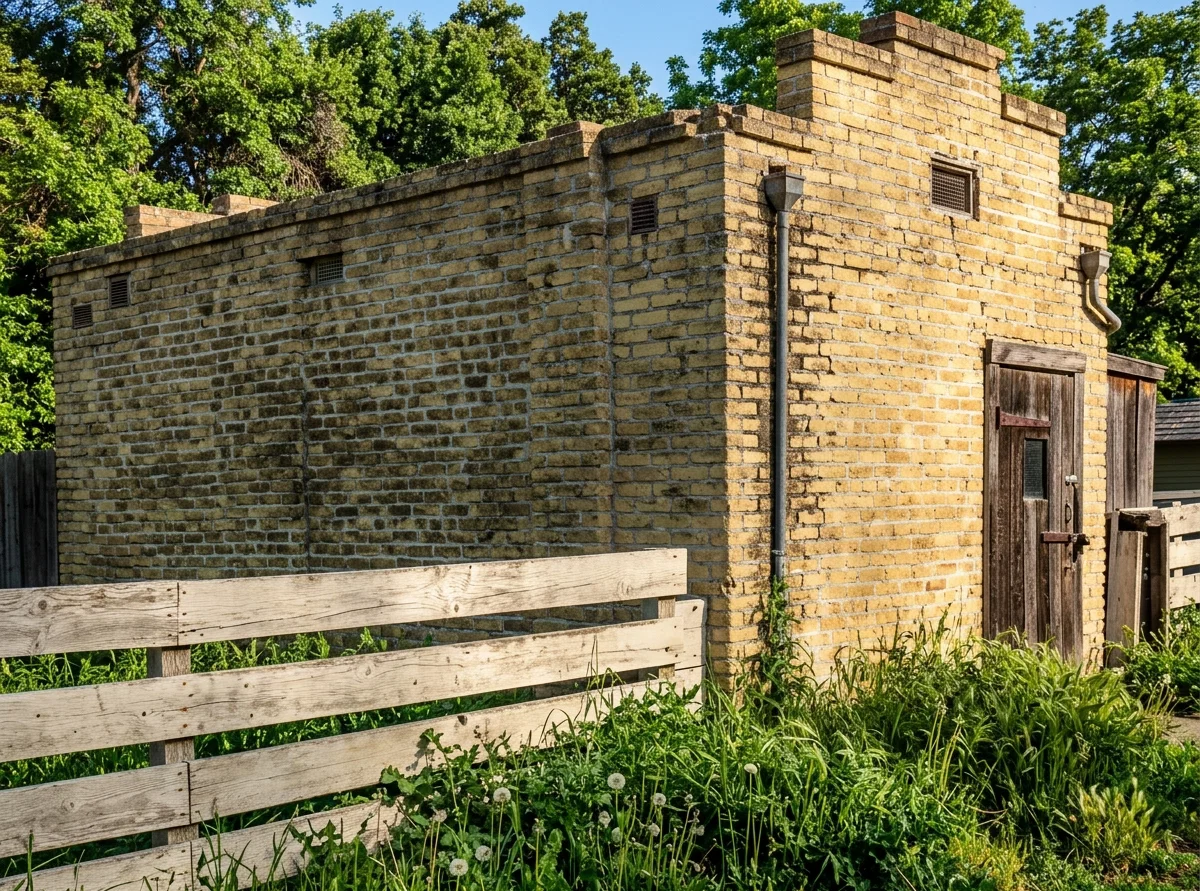
THE RESULT OF PROHIBITION—The grass grows in front of the jail in Winters, Cal., in less than a year after prohibition ordinance takes effect—Illustration from “California Voice.”
There were then six saloons doing a flourishing business by taking in the working men’s money in exchange for the various decoctions usually dispensed in such places. But prohibition won the day, and the “blighting” process began—on the liquor business and its results.
Writing of the matter in less than a year afterward, a correspondent of the California Voice said: “Now there is not a saloon or gambling den in the town. The environments have improved 100 per cent. The churches are better attended, and all kinds of business has increased. The stores are busy places; the mechanics have so much work that building and repairing have to be postponed; hotels are crowded, and rooms in private houses are in demand every night.”
The pioneer merchant of the place is quoted as saying: “Things have changed. There is not a drop of steam or bottle beer to be had for love or money. This is not a good place for the hobos any more, but it will be a good place for sober and industrious working men and women—we want them to come and they will find employment.”
According to the report of the town clerk, three months before the prohibition ordinance went into effect, the balance in the treasury was $616.75. Nine months after the ordinance began to be enforced, the balance was $2,599.19. Yet men in saloon towns argue that they can not dispense with the liquor licenses and keep up expenses!
Mr. G. W. Thissell, Sr., of Winters, is authority for the statement, made at that time, that this financial report “ought to convince any business man that, if working men do not spend their money in the saloons and gambling dens they will spend it for the necessaries of life for their families. Where one of the saloons was run, the saloon-keeper’s wife has opened a first-class restaurant, and it is well patronized.”
Now the only evidence of the predicted “blight” that has come to the town as a result of prohibition, is that which befell the jail. The accompanying illustration is from a photograph of that institution, showing the grass growing undisturbed in front of it. Any town can well afford to suffer such a “blight” as that.