TEMPORAL POWER OF THE PAPACY

4%

Pacific Press Publishing Company · Mountain View, California · Mar 28, 1906

FromSigns of the Times, Vol. 32, No. 13.

Read the full edition

TEMPORAL POWER OF THE PAPACY

BY ONE ON THE GROUND

THE POPE A MONARCH.

Charlemagne, Continued.
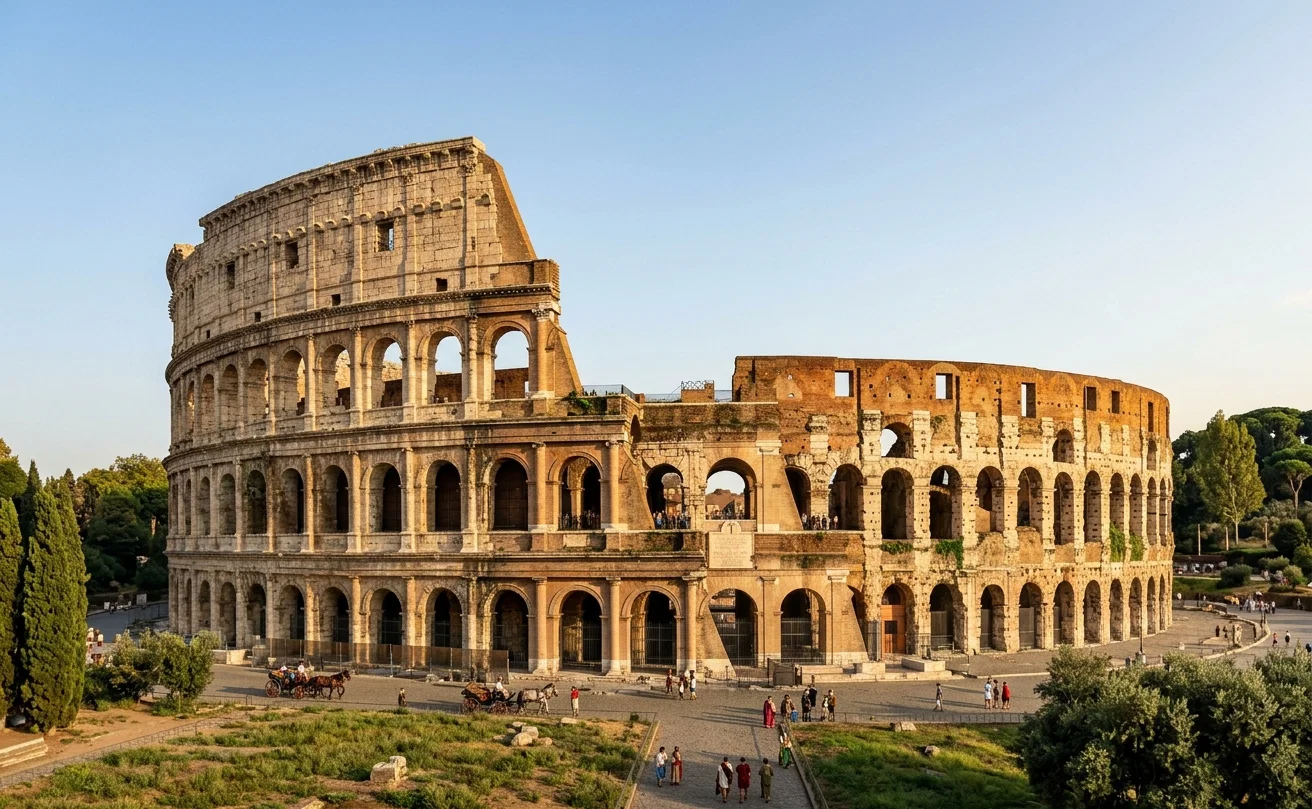
Ruins of the Colosseum, Rome.
CHARLEMAGNE again returned to Italy, and on Christmas day, 800, was coronated in St. Peter's church by Pope Leo III., who pronounced the following words: “To Charles, most pious Augustus crowned by God, great and glorious emperor, be life and victory.” And thus through the will of the pope and the French despot was renewed the Western empire, which fell into the hands of the Franks. But did the pope, then, lose the temporal power in bestowing the crown of the empire upon Charlemagne? In answer I quote as follows: “It is clear that Charlemagne, in being nominated emperor, in reality did not acquire more than the title; and the pope did not lose any of the power that he already possessed. In fact, the temporal supremacy of Charlemagne, instead of damaging the sovereignty of the pope, became a shield of defense for it. And besides that, the Roman pontiff with the placing on the head of Charlemagne the crown of the Western Empire, made him as a temporal prince inferior, and also subject to himself; and therefore he taught the world in general that he had the power to bestow kingdoms and empires, and as pontiff he was superior to the emperors themselves.” “And in this manner the pope began to found that theory that in its development likened the pope to the sun and the emperor to the moon.”
The history of the Papacy from this point onward might well be summed up in the words of the historian as follows: “The pope became then an ambitious monarch with a dominion over the people given by a foreign conqueror. He became a despot more haughty and wicked than any other, in that he invested in himself two powers, and employing the civil to the advancement of the priestly, attempted to extend his empire into the innermost recesses of the conscience. And therefore we must not be surprised that we see the pope pursuing a policy of intrigue in which he makes wrong right and right wrong in order to help those that have given him aid.”
For the next three centuries the popes reigned with such a rule of corruption, cruelty, and murder that words can not portray the condition that existed during that dark period. And still that was but the beginning of the night of woe that settled down upon the world, as a consequence of the papal misrule, and which culminated in the starless midnight when “Europe and Asia were deluged in blood.”

Hildebrand.

In 1073 Hildebrand succeeded to the papal throne, under the title of Gregory VII. He was a genius in politics, and was at thesame time one of the most cruel and fanatical of the Roman pontiffs. “He claimed that the dignity of the ecclesiastical power in comparison with the regal was the difference that one finds between gold and lead; and he considered that the kings of the earth were but servants to the pope. And he well knew that as long as he continued to rule the monarchs spiritually, he then held temporal dominion over the people.”
And these principles he enacted with rigor in the case of Henry IV. of Germany in the famous transaction of Canossa. Gregory, in order to gather to the Papacy greater power, decreed that in the future all bishops should be appointed by the popes, a power that had hitherto been invested in the kings. And he began putting the decree into effect in Germany, as it was a powerful kingdom, and therefore by succeeding there he would more easily win a victory in the other countries. He made it appear that the decree had as its aim the correcting of certain abuses practised by the king. Henry IV. resented these encroachments upon his power, and threatened to make war upon the pope. But Gregory hurled against him the most terrible anathema, and, liberating his subjects from the oath of allegiance, declared him deposed from the throne.

Humbled at Canossa.

As the people would not support upon the throne a king excommunicated, the miserable Henry, forgetting for the moment his dignity, in order to preserve his crown, betook himself to Canossa and prostrated himself before the mitered tyrant, and begged for absolution and pardon. But the pope, depriving him of his royal vestures and dressing him in a suit of coarse wool, made him stand outside of his “paternal” gate in the great cold of January, for three days, alone, hungry, and with his feet bare. “In such vileness could fall a man for the avarice of command.” And thus “Rome returned again, the seat of a terrible power, and the pope recognized himself superior to every other power in the world.”
When we note some of the principles laid down by this pope we can see at what point the Papacy had arrived in its arrogant claims. I quote his rules as follows:
With those excommunicated by the pope, among other things, we should not remain in the same house.
The pope alone may wear the imperial ensigns, and to him alone it is lawful, when the times demand it, to make new laws.
All princes must kiss the feet of the pope.
His is the only name in the world, and his name alone should be recited in all the churches.
To him it is lawful to depose the emperors.
The pope can be judged by no one, and his sentence no one can revoke, but he alone can revoke it.
No one may dare to condemn the one who appeals to the apostolic seat.

Subsequent Centuries.

From this period onward until the Reformation and after, the papal rule might be summed up in the following language: “From this humanity ought to learn that when a man acquires unlimited sway, which is contrary to the laws of nature, altho he preserves the human form, yet he becomes a wild beast that ought, by force and iron bars, to be separated from society.” It was during this period that the pope instigated the bloody crusades in which millions lost their lives; and also in this epoch the Albigenses and Waldenses were mowed down by the sword of persecution; and in fact it was a time when men inspired by Satan attempted to reduce in subjection the consciences of men, and to that end invented forms of torture so cruel that they are incompatible with the basest and meanest attributes of men; and it seems certain that they must have been excavated from the slimy depths of the Satanic nature.
I shall mention but one pope, who will serve as a representative of the period. Innocent III. (1198–1214), the terrible persecutor of the Albigenses and the founder of the Roman Inquisition, “attained a political supremacy of such greatness that it seems incredible to the one reading of it to-day, and to contemplate it, really makes one dizzy. “He elevated the Papacy to a universal monarchy in the full sense of the term.” He hurled his bulls against kings and emperors, and they were deposed from their thrones at his will. Otto of Germany was coronated by him, but when the king refused submission he was quickly deposed. Peter II., of Naples, confessed himself his vassal, and Phillip II. of France cowed into subjection under his fierce anathema. King John of England was humiliated into the dust by this haughty pontiff, and he was compelled to recognize himself a vassal of the pope, and for some years England paid an annual tribute to the Vatican. In the language of Gibbon we might sum up his reign as follows: “Under this young and ambitious priest the successors of St. Peter attained the full meridian of their greatness, and in a reign of eighteen years exercised a despotic command over emperors and kings.”
From the time of the Reformation up to the present, the Papacy has ever followed the same policy of political and ecclesiastical aggrandizement, but it has been compelled, through the new spirit of liberty, to modify at times its means for obtaining this end. I shall not endeavor to speak in particular of the progress of the temporal power during this period, for lack of space, but shall simply refer to the extent of the territory of the Papacy when it lost its temporal dominion.
At the beginning of the campaign of Victor Emanuel II. and Garibaldi in 1860, the Papacy held the following territory, the provinces of Marches, Umbria, Romagne, Latium, and the cities of Benevento and Avignon (France). All of this territory fell under the successful sword of Garibaldi during his campaign of 1860, with the exception of Rome and its immediate surroundings. And on the 20th of September, 1870, the city of Rome was entered by the Italian troops after a resistance of five hours on the part of the papal soldiers, and from that point onward the pope has been deprived of the least vestige of temporal dominion, and has styled himself the prisoner of the Vatican.
Rome, Italy. C. E. MILTON.
(To be continued.)