The Sabbath Test in Singapore

14%

Review and Herald Publishing Association · Takoma Park Station, Washington, D. C. · Jul 8, 1915

FromReview and Herald, Vol. 92, No. 34.

Read the full edition

The Sabbath Test in Singapore

K. M. ADAMS
The great obstacle in this field to the acceptance of the message is the Sabbath question. The native people are beginning to awake to the necessity of an education as a means of worldly advancement, and are preparing themselves and their children so that they can secure positions with the government and get good salaries. A government place means a pleasant job, and a rise in the social scale also.
When the Sabbath truth is presented to them, they are quick to see that it is true, and quick to acknowledge it. But then the possibility comes home to them with startling force, “If I keep the Sabbath, I must resign my position.” One can almost see the gladness at finding the truth die out of their faces as this realization confronts them. It means a loss of money, position, advancement. What will they do? What can they do? The decision is hard for them to make; it is only recently that they have had this work, nor can they resort to manual labor, for the coolie gets only from a fifth to a tenth of what a man in a government office receives.
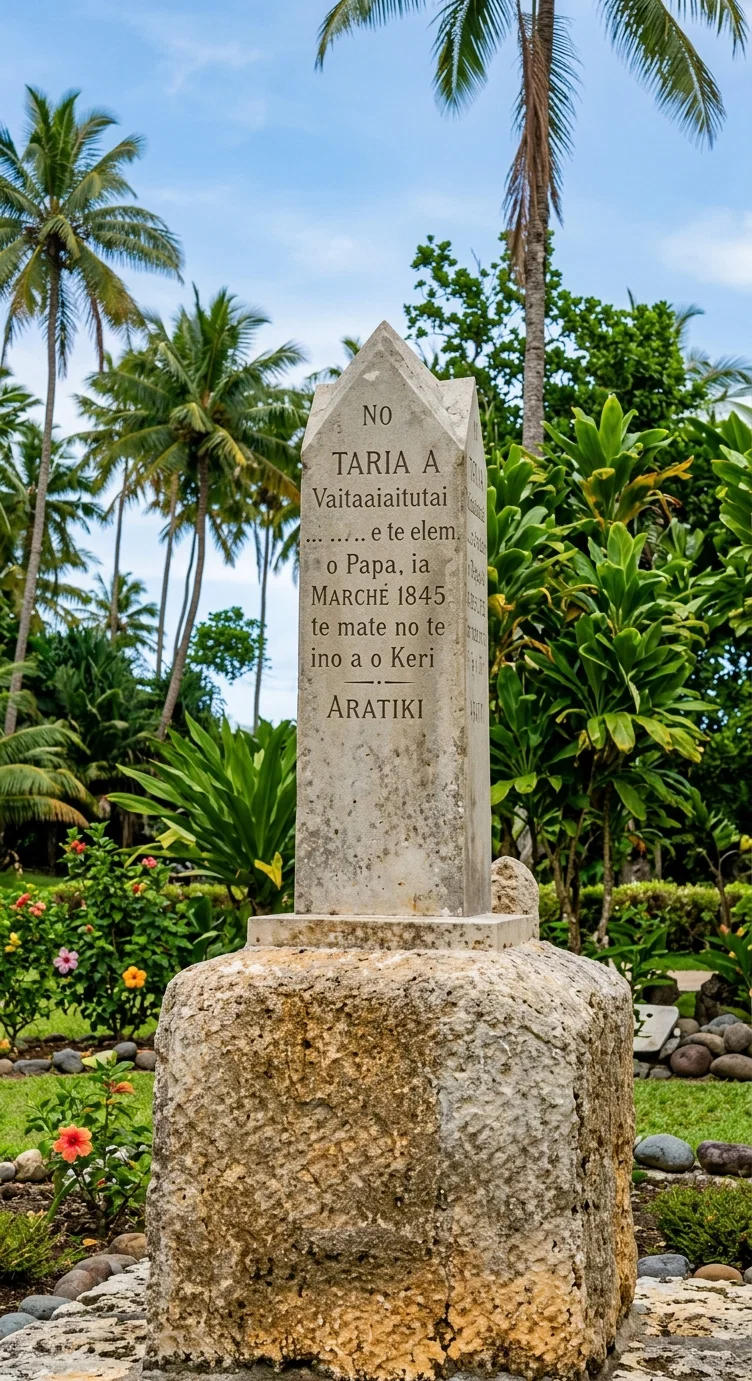
Monument erected in Rarotonga to the memory of native teachers who were massacred in pioneering with the gospel in New Guinea, with James Chalmers.
But in this matter, as in all other things, the Lord has helped. Not one in our field who has decided to resign rather than work on the Sabbath, has lost his position. They have all been given the Sabbath off. We feel that the Lord has worked mightily in this matter, and all the glory is his.
*Straits Settlements.