Under South American Skies — No. 3

5%

Review and Herald Publishing Association · Tacoma Park Station, Washington, D. C. · May 11, 1916

FromReview and Herald, Vol. 93, No. 24.

Read the full edition

Under South American Skies — No. 3

The closing part of my last report was written on the steamship “Vestris” while we were en route from Brazil to Argentina, after attending the union conference in Brazil. As our ship arrived at Montevideo Sabbath morning and remained there until evening, we had the opportunity of meeting with the believers in that city. Brother F. L. Perry, the superintendent of the Uruguay Mission, had arranged for a meeting at 3 P. M., and Brethren Montgomery and Town and I each spoke briefly to the assembled company. A good property is owned by the union conference, and this provides a place for the mission office, for public services, and a home for the workers. We were glad to find that the truth had been planted in the city of Montevideo.
We arrived at Buenos Aires on Sunday morning, January 30, and proceeded at once to La Plata, one hour’s ride by train, where we found the workers’ meeting in progress, leading up to the biennial session of the South American Union Conference. We were heartily welcomed by Elder J. W. Westphal, the president of the union, and all his associates in the work; and the Christian hospitality extended to us made us feel very much at home. So it is the world over. There is something about this message which constitutes a strong tie binding together in a spirit of unity the workers in all parts of the great field, and we are always among friends. The unity of our work is one indication that this movement is under divine guidance.
We were at once assigned a share in the work of the meeting, which, including the conference, was to continue three weeks longer. Brethren Montgomery and Town and I usually gave one study each as our contribution to the daily program, and joined with others in the other features of the meeting. A deep interest was manifested in the study of the gospel message for this time, and we all appreciated the light which came to us from the Word of God. We have been told that there is more light for us, and our experience is in harmony with this statement. Greater assurance and fresh courage seemed to come into the hearts of the workers as we dwelt upon the wonderful revelation of the plan of salvation through the gift of Christ to be the Saviour of the world, and as we gained a new and more comprehensive meaning of the special truths which are to be proclaimed in finishing the work of God in the earth. The prophecies throw a wonderful light upon our time, and what we have been looking forward to for many years is now taking place before our eyes. “Blessed is he that waiteth, and cometh to the thousand three hundred and five and thirty days.”
The meetings of the union conference which began February 11, were of much interest. The reports from the field were encouraging, and the various financial statements rendered showed that the work was being carried forward upon a safe basis. We were thankful to find no burdensome debts resting upon the different organizations, and we were not called upon to give time and strength to devising methods for meeting financial obligations. It is cheering to find that the mission fields have been operated in harmony with the plain counsel given through the Spirit of prophecy, to shun debt. It saves many heart-breaking experiences.
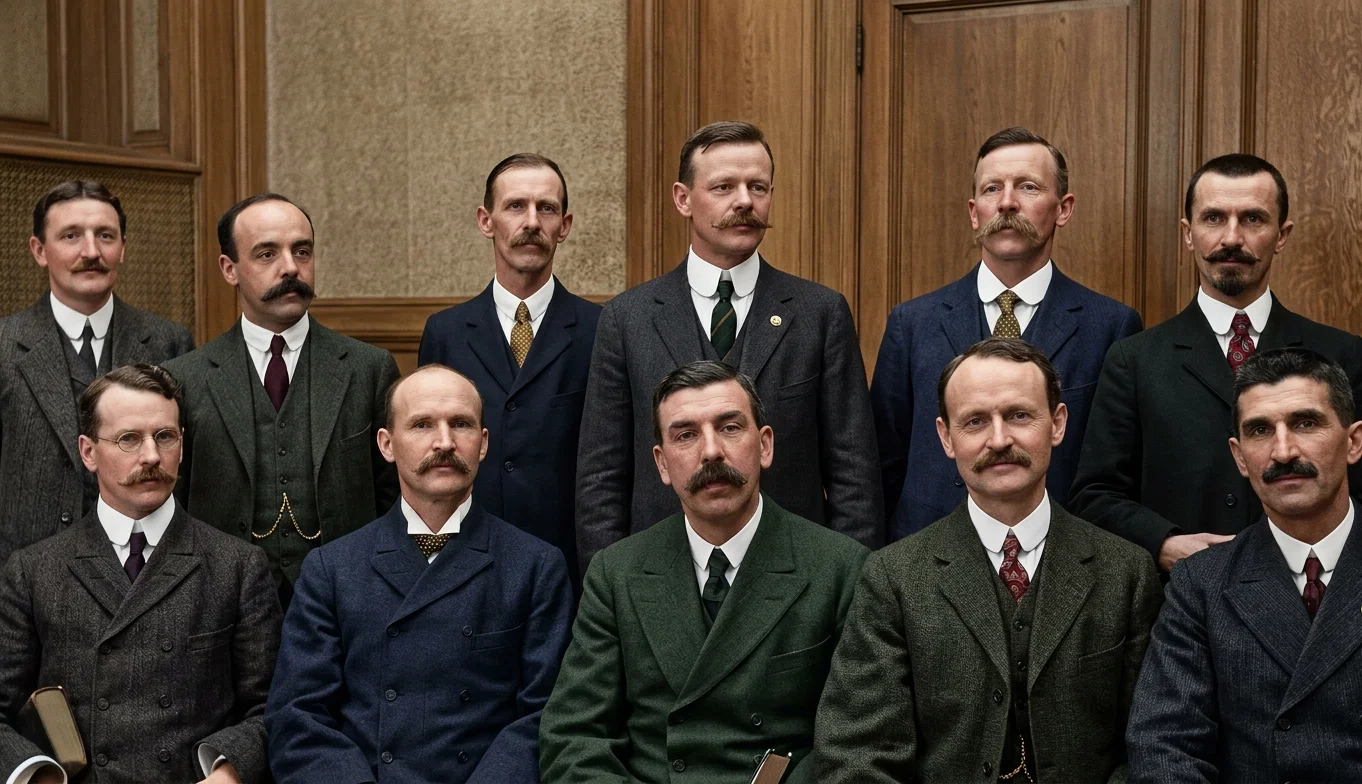
ORDAINED MINISTERS IN THE SOUTH AMERICAN UNION CONFERENCE
In his report to the conference the president, Elder J. W. Westphal, gave a brief review of the work in South America from the time when the first workers came to this country in 1891 down to the present year. In 1901, when the first general organization was effected, there were about 1,100 believers in the whole field. As the work has extended, two union conferences have been organized, with local conferences and local mission fields in the territory of each union. I will quote a brief statement: “In the three years, 1911-13, from the separation of Brazil from the South American Union Conference to the time of the last session, the membership [of the South American Union Conference] had reached 1,947, a total increase of 474. During the biennial term of 1912-13 the increase was 335, beginning with a membership of 1,612. The last biennial term has brought the membership to 2,698, an increase of 751, more than 38½ per cent, or an average of two a day, with a surplus of 21. Of these, 300 were added to the church in 1914, and 451 in 1915, a gain of 50 per cent in 1915 over the previous year.” These facts speak for themselves. Adding the membership in Brazil, 2,197, we have a total membership in South America of 4,895. With a roll of almost five thousand believers, three training schools, two printing offices, and a sanitarium, we may surely say that our message is strongly and permanently established in this field. Those who during the past fifteen or twenty years have acted as the pioneers in this country and have contributed by their labors to bring about the above-mentioned results, have endured many hardships, and have given the best of their lives in self-sacrificing devotion to the interests of the cause of God in South America during the most trying period of its development, and those who enter into their labors and reap the benefit of their faithful efforts should remember them for their works’ sake.
The reports rendered by the heads of the various local fields entered into more details concerning the progress of the work. Limited space prevents me from giving extended extracts from these reports, and I can present only their most important features. It is generally conceded that the mission to the Indians around Lake Titicaca has done more than any other one thing to bring our work into favorable prominence in South America, and it therefore seems proper to speak somewhat fully of that effort. About six years ago an Indian in that region read some of our literature and became interested. He told other Indians what he had learned, and began to correspond with the superintendent of the Peruvian Mission. Later two of our brethren visited these interested Indians, and Brother F. A. Stahl began work among them. Now there is a church of 335 members, 235 of whom have accepted the truth during the last two years.
The medical missionary work and the educational work have been combined with the preaching of the gospel. The average attendance at the school last year was 135, some of those in attendance being thirty years of age. “As the result of this work among the Indians, one town two leagues from this mission cannot support a priest any more. There are two large church buildings at this place, and only four years ago it had the name of being a most profitable parish, and it had two priests stationed there; but things have changed, and there is no priest there now, and none wants to go there. The people of this town have advised the governor to turn over these two large church buildings to the Adventists, telling him that they could certainly use these buildings to greater advantage. The priests themselves have helped in an indirect way to increase the interest in our work by visiting the Indians and scolding them because they attended our Sabbath meetings. This served only to drive the Indians farther away from the priests, and many who hadnever attended our meetings before, did so after being thus scolded.”
There are calls for the extension of the mission work among the Indians, not only at a number of places around Lake Titicaca but also in Bolivia, and this seems to be a most favorable time to respond to these urgent calls. The fact has already been stated in the reports from this field that the granting of religious liberty in Peru by making a change in the constitution was directly due to this work among the Indians, and I do not need to go into the particulars of the case, but this remarkable step has brought our work into great prominence not only in Peru but throughout South America and even in North America, as many papers have reported the facts and discussed the issues involved. As the teachers of the Protestant religion cannot now be legally prosecuted in Peru, it is more than likely that more missionaries representing the various societies may be sent to that field, and I am convinced that just now is our opportunity to occupy this unworked territory. In closing his report, Brother Stahl said, ‘The great need is laborers. Seven are needed at once. These could be placed at the most strategic points, and the work could be connected in this way. The land is open to us, and it is expected that we should go forward and take possession of it.’ I sincerely wish that these laborers could be secured.
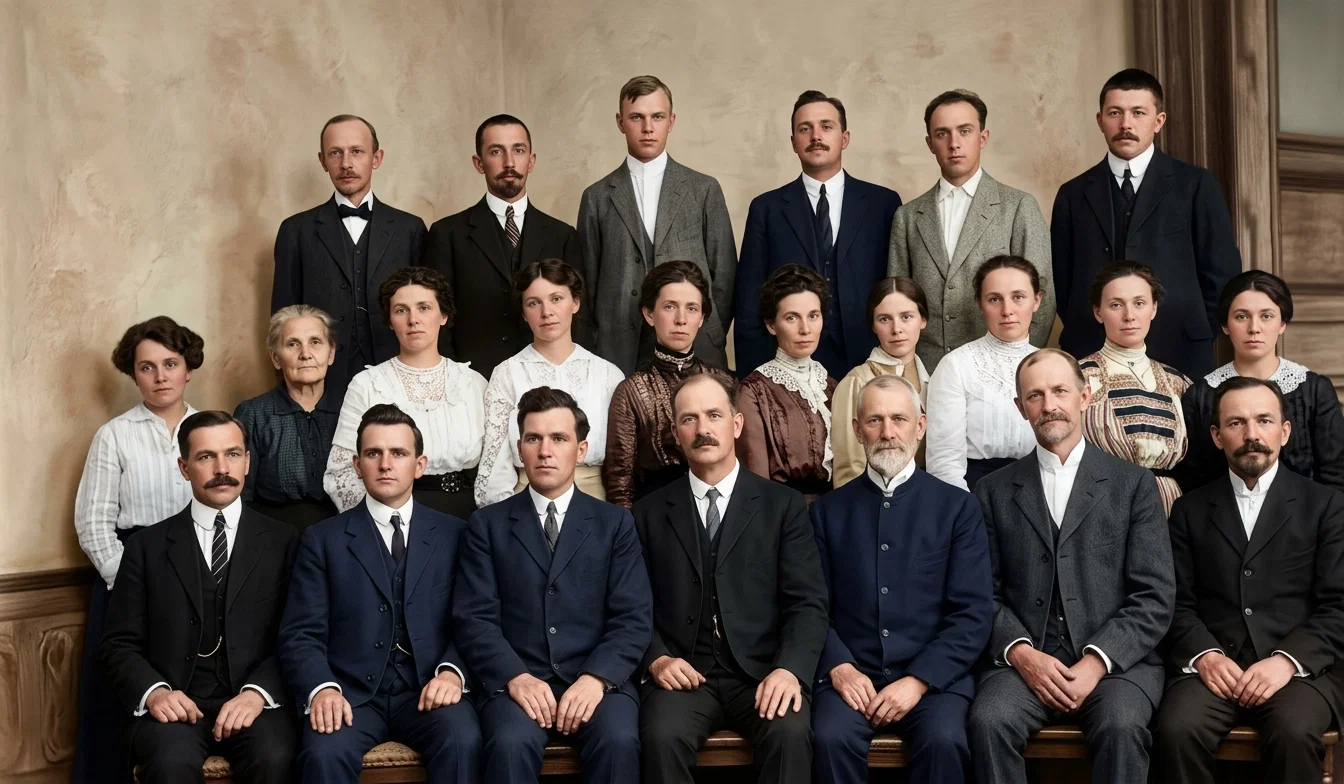
DELEGATES AND VISITORS AT THE LA PLATA MEETING
FORMER STUDENTS OF UNION COLLEGE IN ATTENDANCE AT THE LA PLATA MEETING
One paragraph in the report of Elder C. E. Knight, the superintendent of the Ecuador Mission, is quoted here in order to show the spirit which prevails in a large part of South America: ‘A few months ago I met a New York journalist while on the boat going to Lima who told me that coming down from Panama a priest wished to land at Guayaquil, the port of Ecuador, but the immigration agent would not allow him to do so. The priest asked, “Is not this a Catholic country?” “Yes,” the agent replied. “Then why am I not permitted to land?” inquired the priest. The official answered, “There are too many of you here now.” This reply may at first appear favorable to our efforts at evangelization, but the real reason for giving it was not sympathy with the gospel, but the skeptical and atheistical spirit that is opposing the church.’ As to the progress of our work in Ecuador, Brother Knight said, ‘The present membership is 23, of which number 16 reside in Ecuador. Of these, five are on the list as paid workers. Since the last biennial meeting five have been baptized. There is not the same large percentage of foreign population as there is in many other Latin-American countries from which to draw stable converts, and the Ecuadorian people seem to me less accessible to the truth than any I have met.’ Brother Knight suggested the advisability of opening up work among the aborigines of Ecuador, of whom there are about one million.
In his report of the Inca Union Mission Elder E. L. Maxwell, the superintendent, mentioned a gratifying increase in the sales of literature, as follows: ‘It is in the matter of the circulation of our literature that we have exceeded to the greatest extent our former attainments, and even our most sanguine hopes. While I have not been able to get a statement of the sales during the two years just past, I feel safe in saying that we have sold much more than in any like period in the history of our field. This is especially true of the war specials of the Atalaya [the missionary paper published at Buenos Aires], of which we have disposed of about 35,000 copies. The splendid increase in our membership is in large part due to the good influence of our message-filled literature.’ Another interesting statement was this: ‘The brethren of the Otao church in the hinterland from Lima are building the first and only Protestant chapel built by native Protestants and for native Protestants in the republic.’
In Peru, apart from the converts at Lake Titicaca, there were at the close of 1915 five churches, with a membership of 174. During 1914 and 1915, 87 were baptized. Conditions in Bolivia do not seem to be so favorable as in some other fields, as appears from this extract from Brother Maxwell’s report: ‘Bolivia seems to be a hard field that has given little fruit for the many years of work that have been spent there. During the two years three persons have been baptized, and others are expecting to be baptized soon. The membership is ten, and the tithe receipts and offerings for the two years were $556.95.’ Visiting the churches in Peru is a very different matter from what it is in the average conference in the United States. This will be apparent from Brother Maxwell’s statement that in the three months just before the La Plata meeting he had traveled 237 miles on horseback, in addition to his travel by train and steamer, and some of this journeying is in very high altitudes. One baptism was held at an elevation of 13,500 feet above the level of the sea.
The reports from the conferences and the other mission fields, most of which were verbal, indicated progress and a favorable outlook. The work of the sanitarium in Entre Rios was reported by Dr. R. H. Habenicht, the medical director of the institution. During the two years an average of 35 workers has been employed, of whom 24 were nurses in training, and 1,080 patients have been received. ‘Of the 293 operations, of which a large number were what are called major, only five deaths occurred, and four of these were due to conditions of other organs which existed before the operations were performed.’ The treasurer’s report showed resources of $39,900.08 and liabilities of $4,109.76, about one third of these liabilities being a fund reserved for an addition to the main building. The net gain for the two years was $8,807.61. This is certainly a most gratifying showing.
Prof. H. U. Stevens presented the report of the school in Entre Rios. This institution was established in 1899, and the first principal was Elder N. Z. Town, who was present to hear the report. Since the establishment of the school, there has been steady progress both in facilities and in the grade and character of the work. A new dormitory for the girls has just been erected with funds provided by a thirteenth Sabbath offering in the United States, and this improvement is greatly appreciated. During the past two years between forty and fifty students have been baptized and haveunited with the church. According to the treasurer’s report, the resources of the school are $27,920.45, and the liabilities are $1,981.96, leaving a net worth of $25,938.49. The work was carried on during the biennial period at a net loss of $153.50. Had it not been for the financial crisis which has overtaken the country, there would have been a balance on the other side of the ledger.
From the other financial reports rendered, it appeared that the union conference had kept within its income in operating its field, and that the publishing house had made a net gain during the biennial period of $5,156.21. About three thousand dollars of this gain was afterward donated to the Inca Union Mission, it being the whole amount due to the publishing house for the stock of books and other literature in the various depositories of the mission. This generous gift accompanied the turning over of the territory of the Inca Union Mission by the South American Union Conference to the South American Division Conference, and was a substantial help to the latter conference.
On account of the organization of the South American Division Conference and the consequent change in the territorial lines of the South American Union Conference, it was deemed advisable to change the name of the latter conference, and it will hereafter be known as the Austral Union. The following officers were elected: President, J. W. Westphal; secretary and treasurer, G. E. Hartman; director of the colporteur work, A. R. Sherman; executive committee, J. W. Westphal, R. T. Baer, F. L. Perry, S. Mangold, R. H. Habenicht, H. U. Stevens, G. B. Wheeler, A. R. Sherman, C. E. Krieghoff, and J. T. Thompson.
The last Sabbath of the union conference was a day of special blessing, and on the part of almost every one present there was a renewed consecration of the life to the service of God for hastening his work in the earth. The workers returned to their various fields filled with hope and courage.
At the close of the meeting in La Plata we started at once for the conference in Rio Grande do Sul, a report of which will be furnished by Brother Montgomery. W. W. PRESCOTT.