CENTURY OF QUICK TRANSIT

10%

Review and Herald Publishing Association · Takoma Park Station, Washington, D. C. · Oct 9, 1913

FromReview and Herald, Vol. 90, No. 41.

Read the full edition
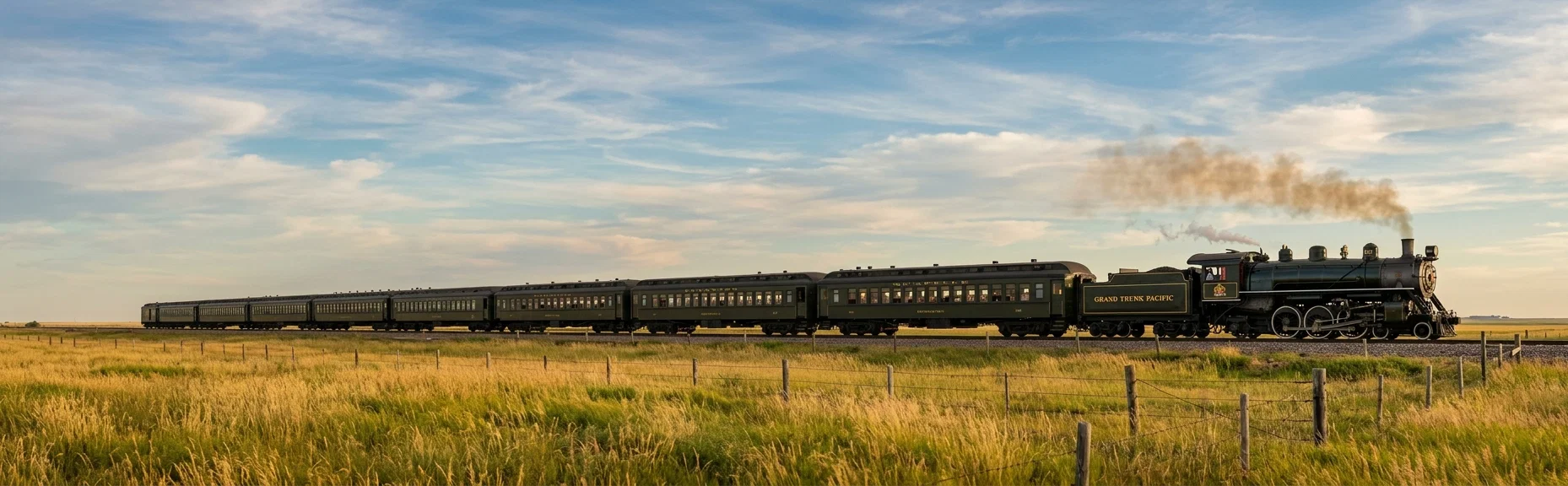
“WEST OF EDMONTON”—GRAND TRUNK PACIFIC TRAIN ON THE PLAINS OF THE FAR CANADIAN NORTHWEST

CENTURY OF QUICK TRANSIT

Facilities for a Quick Work

FOR thousands of years men traveled up and down the world and over the lesser seas in the same old way—as fast as horse or sailboat could carry them. Suddenly a change came. When? Dr. Alfred Russell Wallace, the scientist, speaking of land locomotion, wrote in his book, “The Wonderful Century:” —
“From the earliest historic, and even in prehistoric times, till the construction of our great railways in the second quarter of the present century [the nineteenth], there had been absolutely no change in the methods of human locomotion.”
As for steamship development, while Fulton’s “Clermont” sailed the Hudson in 1807, it was not till 1838 that the first steamship crossed the Atlantic under steam alone. With reference to world-transforming events of the Victorian era,—Queen Victoria’s reign opened in 1837,—McCarthy’s “History of Our Own Times” says:—
“A reign which saw in its earliest years the application of the electric current to the task of transmitting messages, the first successful attempts to make use of steam for the business of transatlantic navigation, the general development of the railway system all over these countries, and the introduction of the penny post, must be considered to have obtained for itself, had it secured no other memorials, an abiding place in history. The history of the past forty or fifty years is almost absolutely distinct from that of any preceding period.”
The express-locomotive, the express-steamer, the telegraph, the telephone, the wireless, the extension of the universal postal system, all these things making for the opening of all lands and the rapid spread of knowledge, have come within a century, and their successful development has been part of the history of our own generation.
Why have these changes waited for our time?—Assuredly because the “sure word of prophecy” declared that when the last days came, the message of the “everlasting gospel” was to be carried to “every nation, and kindred, and tongue, and people.” Rev. 14:6. In vision, the prophet saw this work of evangelizing the world being done quickly, speeding on as by an angel flying “in the midst of heaven.”
The hour has come for the work to be done, and the hand of Providence has provided this generation with means for a quick work which no generation before us ever possessed. This, then, is the generation in which the gospel witness is to be borne to all nations. “And then shall the end come,” said the Lord Jesus, speaking of the signs of his second coming in power and glory. Matt. 24:14.