The School Around a Rice-Sieve

14%

Review and Herald Publishing Association · Takoma Park Station, Washington, D. C. · Oct 9, 1913

FromReview and Herald, Vol. 90, No. 41.

Read the full edition

The School Around a Rice-Sieve

WHILE visiting among the country villages back in the interior from my home, I was surprised to find in one village the children intelligent in Bible knowledge. They seemed to know about the Bible characters, and could answer readily a great many questions. This was very strange indeed, for the women and even a great many of the men did not know how to read. Where, then, had these children learned?
I asked if they had a school in their village. No, there was no school there. A chapel then? — No, there was no chapel in that part. Where, then, have you learned these things? One boy answered that a certain man in the village taught the boys a little every evening.
I made it in my way to search out this man, and this is what I saw: He was a farmer, and lived in a little mud-brick house with a straw roof and no floor. He was a poor man, too, for he must pay a high rent to the landlord on the fields he tilled. But every day after the evening meal was finished, he gathered into his little home his own children, and as many others as were willing and free to come. The big rice-sieve was turned over on the bottom ofa grain basket, and the children clustered around it for their lesson. This was their table, and the plain farmer was their teacher. The school went merrily on for an hour or more, the teacher naming the characters, and the children, all together, repeating them after him. Afterward each child took turn in reading by himself, after which their teacher spent a few minutes explaining the meaning of what had been studied.
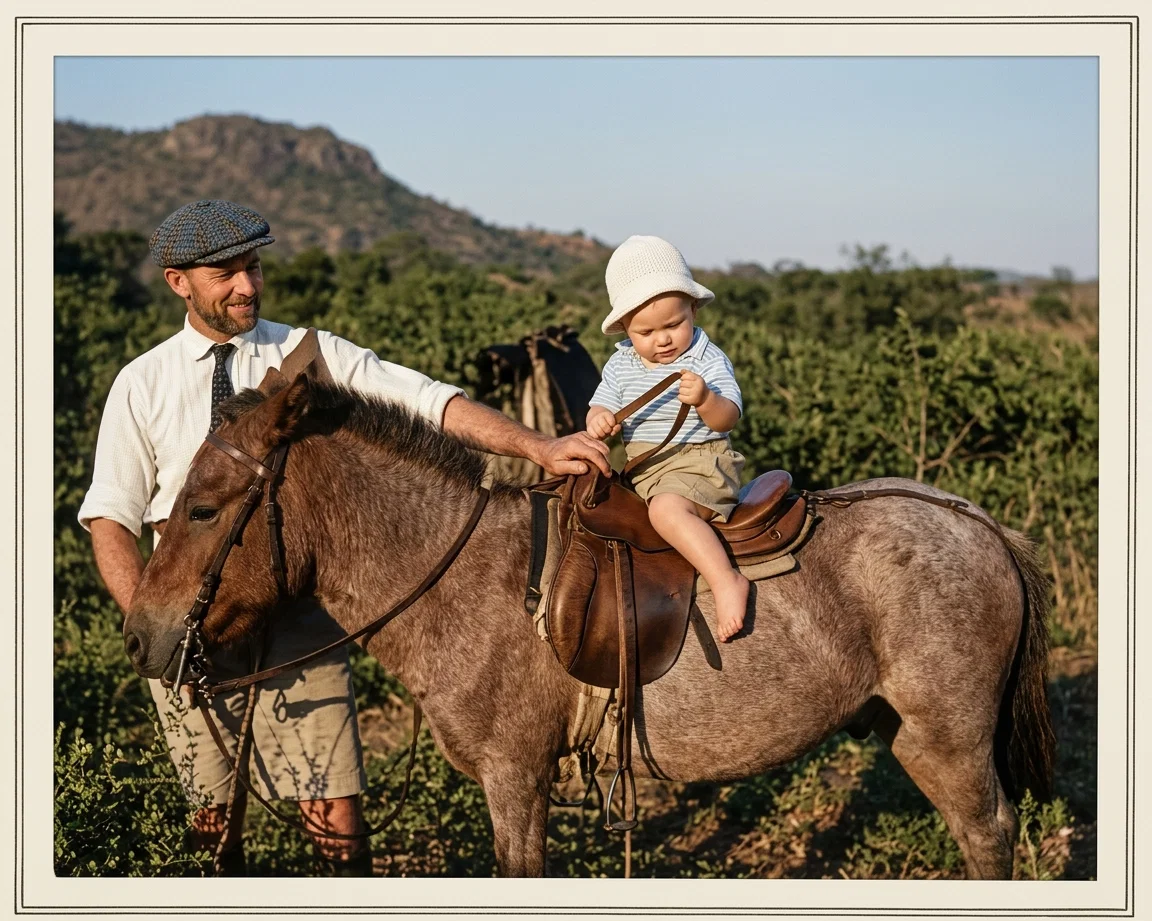
Baby Konigmacher learning to ride, Mantandane Station, Nyasaland.
The table was then inverted, and became a rice-sieve again, and the teacher was transformed into the farmer. “Come, children, we must work the harder now to make up for the time spent in reading. All hands move fast.” The children flew to their work with the same willing spirit they had shown in their study.
These people were too poor to spare the children from work during the daytime, too poor to help support a school, or even to afford a table upon which to lay their books; but earnestness and zeal made up for the lack of these things, and eternity alone will reveal the influence of that faithful farmer and his school around the rice-sieve. HUNG HEI YING.