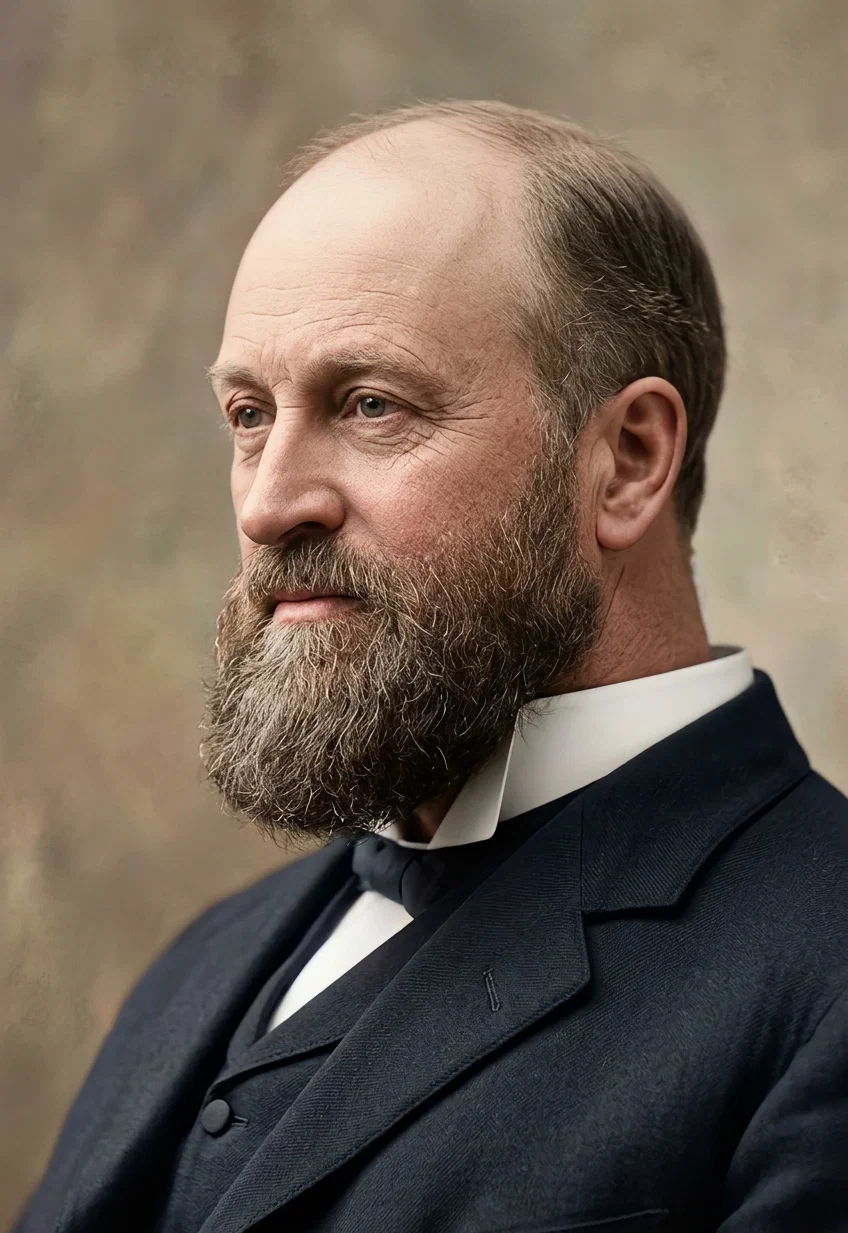
Life Sketch of Elder G. W. Amadon

8%

Review and Herald Publishing Association · Takoma Park Station, Washington, D. C. · Mar 20, 1913

FromReview and Herald, Vol. 90, No. 12.

Read the full edition

Life Sketch of Elder G. W. Amadon

THE funeral service for Elder G. W. Amadon was held in the Tabernacle at Battle Creek, Mich., on the afternoon of February 26. A large congregation was in attendance. The service was opened by a quartet singing one of Brother Amadon's favorite songs, “How cheering is the Christian's hope.”
ELDER G. W. AMADON
ELDER G. W. AMADON
Following this song Elder C. F. McVagh, the president of the West Michigan Conference, read the one hundred twenty-first and twenty-third psalms. These scriptures were selected to be read at the service because they were the two psalms upon which Brother Amadon meditated much of the time during his last sickness. Following the scripture lesson, Elder A. C. Bourdeau offered a most earnest prayer. After the rendering of another song by the quartet, Elder A. J. Clark, the pastor of the Battle Creek church, read the following biography of Brother Amadon's life:—
“George W. Amadon was born at Sandlake (near Albany), N. Y., Aug. 30, 1832. His boyhood days were spent with his grandfather, near Boston. As he grew to manhood he desired an education, and entered Oberlin College, where he worked his way and studied.
“He connected with the Review and Herald Office in Rochester, N. Y., soon after Elder Uriah Smith and Brother Warren Bachelor became associated with that work. He came to Battle Creek when the office was moved, and remained with it fifty years. He had been with it just half a century when the plant was destroyed by fire. Then for several years he was visiting pastor of the Battle Creek church. His hands were always full. He sought out the afflicted, and by his prayers and words of encouragement helped them. When he was seventy-two years old he was ordained as a minister of the West Michigan Conference. As his years advanced, the responsibilities of his calling pressed heavily upon him and his anxiety for the work increased. To make his burdens lighter, and if possible to obtain for him a new lease of life, the family moved to St. Joseph, Mich., where he could enjoy the fresh air of the lake. In every way the change was beneficial. He delighted in the beautiful scenery along the river, the vineyards, and gardens, and had keen interest in the boats on the lake. Above all he loved the members of the Benton Harbor church, with whom he worshiped nearly every Sabbath for the eighteen months of really good health he enjoyed.
“He was tenderly cared for during his last illness by his faithful wife and daughter Grace, whose ministrations were constant and untiring until he closed his eyes in death. During the first months of his illness he sometimes felt depressed and restless. He longed to be able to meet with his brethren again and to do his part in the work. As he lay on his bed or sat in his chair he continually repeated scripture upon scripture, and when he no longer had strength to do this, he called for some one to quote the promises to him, indicating which one he wanted by giving the first word or two. He wanted to hear frequently the words in Isa. 54:10: ‘For the mountains shall depart, and the hills be removed; but my kindness shall not depart from thee, neither shall the covenant of my peace be removed, saith the Lord that hath mercy on thee.’
“He died in the early morning of February 24, at the age of eighty years, five months, and twenty-four days.”
The funeral discourse was delivered by the writer. It was based upon Heb. 11:4, “He being dead yet speaketh.” It was shown that Abel, the character to whom this text refers, stands forth in bold relief in the Bible as a remarkable example of one whose profession was sustained by a life or character that has ever stood as a living testimony through the history of the world, demonstrating that there is a reality in the religion of Jesus Christ. In these times when there are so many whose profession is but as sounding brass or a tinkling cymbal, such characters as Abel should be emphasized in contrast to those who only possess an empty profession of religion.
The deceased was one whose life was in harmony with his profession. Such a life continues to speak after the individual has fallen in death. Like Cornelius of old, he was a man of prayer. Among the greatest tributes to his life of devotion were the many calls he received from his brethren and sisters to pray forthem when sick or dying. He was methodical, systematic, and accurate in all his business relations.
Following the funeral sermon, Elders A. C. Bourdreau and H. Nicola spoke words of esteem and regard for their departed brother and colaborer in the cause of present truth.
He was laid to rest in the Battle Creek cemetery, to await the coming of the Life-giver. K. C. RUSSELL.