Meiktila, Burma

14%

Review and Herald Publishing Association · Takoma Park Station, Washington, D. C. · Feb 27, 1913

FromReview and Herald, Vol. 90, No. 9.

Read the full edition

Meiktila, Burma

R. B. THURBER
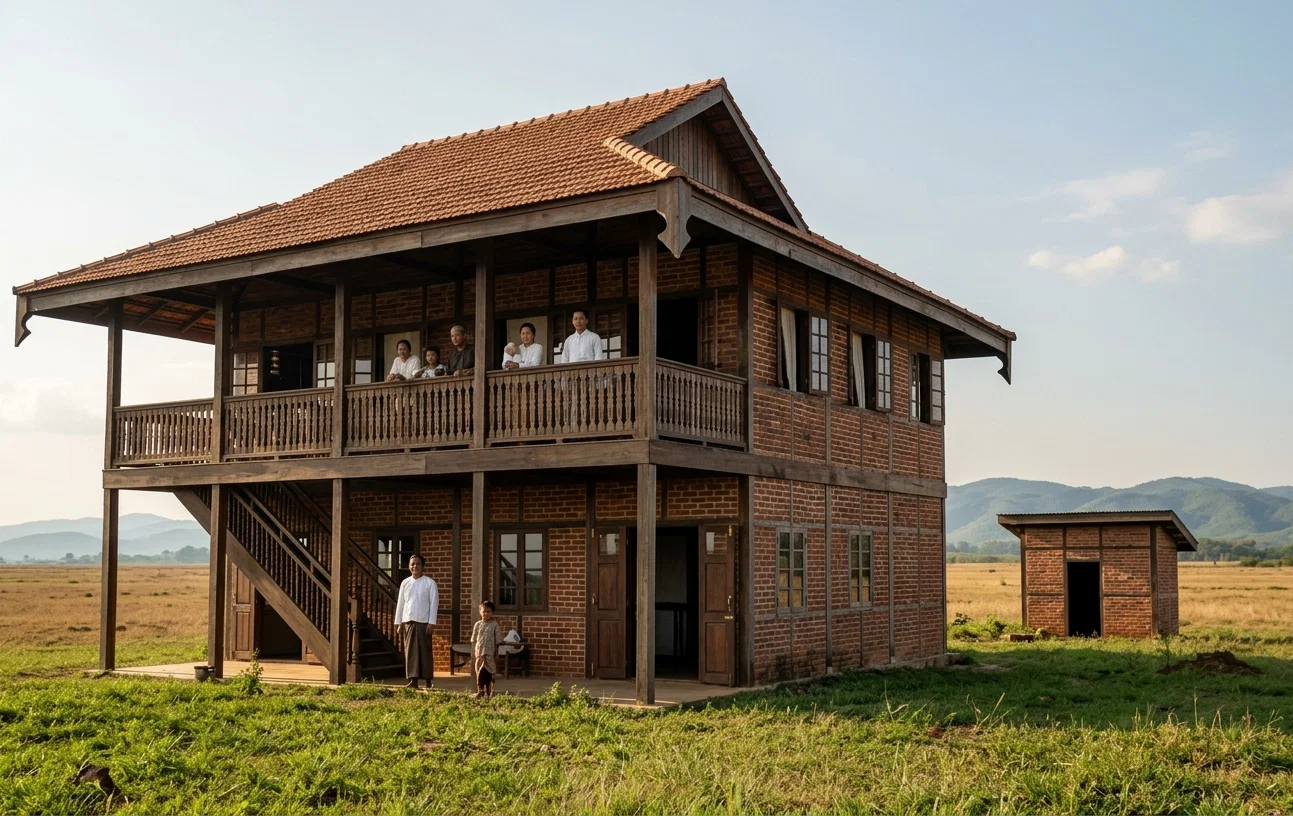
We moved into our new house Sept. 1, 1912, and herewith present a picture of it as it looked a month later. A little painting needed to be done to finish it. It stands a bit to one side of the front of the school campus, and presents a good appearance. It has a cement floor below and a tile roof. First-class wood and bricks have been put into the walls, in a method of construction called brick nogging. We had to put in good materials especially, to insure against attacks of white ants. These pests are here in great numbers, and even bore up through the cement floor. Circumstances worked against our getting up this building as cheaply in proportion as we did our school building. Materials cost more, and our foreman was found working against us in various ways; so in the middle of the work we had to change to another man. The total cost is about $1,550. But it is a substantial building, and men who know have estimated its value much higher. With verandas it measures thirty-two by thirty-two feet. One room on the ground floor is used as an office for the school.
We describe it thus fully because it is your house, readers of the REVIEW, and you are interested. You built it with the money you gave to the $300,000 Fund. We moved to it from a house that stands in stagnant water, where we had to wade out or make bridges. We appreciate more than we can express the sacrifice the loving ones in the home land have made for us, and we send a thousand thanks. I verily believe my efficiency in the work is added to one half by having such a place in which to live. We thank God and take courage.
NEW MISSION HOME AT MEIKTILA, BURMA — PROVIDED BY THE $300,000 FUND
The attendance at the school has gone far beyond our capacity and expectations this year. We hoped for seventy-five, but this writing sees our enrolment at one hundred two. It may seem paradoxical to say that the attendance has gone beyond the capacity. But the limit of capacity was set for comfort, and as it is we, are decidedly uncomfortable. Boys are being turned away now; however, it hurts us to do it.
The trades—leather, cane, and wood working—are in a fairly prosperous condition; at least we have all the orders we can fill. We sorely need more building room and a good mechanic to take oversight of the trades.