Eighteen Years in Prison for Conscience’ Sake

7%

Review and Herald Publishing Association · Tacoma Park Station, Washington, D. C. · Oct 19, 1911

FromReview and Herald, Vol. 88, No. 42.

Read the full edition

Eighteen Years in Prison for Conscience’ Sake

Abyssinia

Eighteen Years in Prison for Conscience’ Sake
ANOL GRUNDSET
The following is taken from a newsletter from Adis Abeba, the capital city of Abyssinia, and tells of sufferings endured because of religious convictions:—
“Wobe, or Wube, as the name is written in Amharic, received lasting impressions when the German missionaries, during King Menelek’s younger days, were here. A Bible translation came out, if I remember rightly, all ready in 1845, which since has been twice revised. The Bible in Amharic—Geez the people do not understand—has proved to be stronger than all the martyrdom that the priests invent for the readers of it. . . .
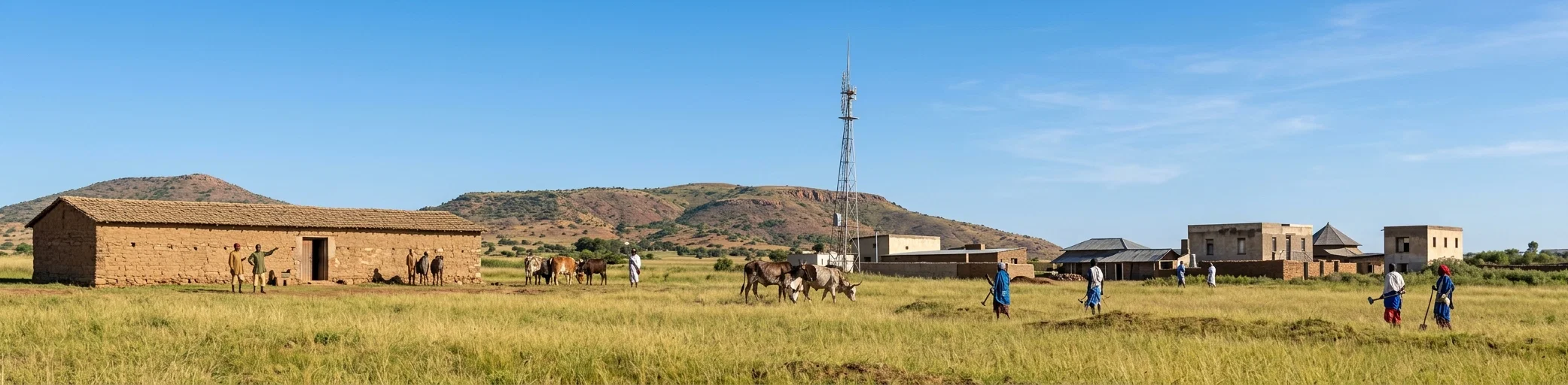
THE ASMARA MISSION STATION, ON BORDER OF ABYSSINIA, EAST AFRICA
“Before the German missionaries, who were supported by an English company, came here, the people lived in the deepest spiritual darkness. That darkness the bishop and priests delighted in. As the light began to pierce through the darkness, persecution of the light-bearers began. Those found to adhere to the way of light were imprisoned. Those drawn toward the light did not, however, reveal the forbidden Book, but hid it in the earth, uncovering and reading it at night. In this way many even to-day read in secret. The light advances. There are Nicodemus souls scattered in the land who believe, though open professions are very rare.”
“Such souls as Wube, who was imprisoned, are few to be found. There was one like him, who dared openly confess his faith. This comrade was whipped to death, and Wube at the same time received forty strikes. Since then he has been dragged from province to province, from mountain (lone place) to mountain, with his limbs locked in chains, and with chains still tighter drawn at every time he has been retried and been unwilling to surrender his faith.
“When Tajelenj was imprisoned, Wube was brought here and again re-questioned, but remained steadfast. It is not in vain that he has suffered. The bishop and minister of justice have at every trial gnashed their teeth against him; but it has been heard from persons standing near these officials that their consciences are aware that they have not dealt rightly with him. They know that he is more righteous than they, but what shame to them to acknowledge their wrong. Because of their fear that if they should let him go, the light would take on wings and much which they suppose to be hid be revealed, they keep him watched in chains. They hope in this way to torment him unto death, and in silence hide him and his history under the sod. We may yet see the outcome.”
A few pages of this man’s sufferings ought to be written in Amharic, and spread among the people; for one or more such histories should help toward attaining religious liberty for the people of Abyssinia.
The happenings of the past few months, when the bishop and priests, after the death of the late king, began another persecuting career, in which even foreign representatives in Abyssinia have taken steps to interfere, prove that darkness is still cherished and the Bible and its adherents made subjects of attack. To us especially interested in the removal of barriers, are these things momentous. I believe the Lord, in and through all this, will work out in his own time, to his own end, the opening of Abyssinia for the preaching of the everlasting gospel of the third angel.
We hear Abyssinia often spoken of as a Christian land; but, ah! it is a land of utter darkness, with a corrupted priesthood holding the people by reins of superstition and falsehood. The white messengers of the gospel are interpreted to be demons, and their teachings evil errors. The people are warned to have nothing to do with us. Nevertheless, amid obstacles our school has gone well. Some students have run away from home and villages to come to us to obtain an education.
Dear believers, let your prayers unite with ours that the way may soon be opened for the Word, God’s precious light, to be circulated among the people of this dark land, and that its saving truths may germinate in some honest hearts to bear fruit.
Asmara, East Africa.