F. G. LANE

7%

Review and Herald Publishing Association · Takoma Park Station, Washington, D. C. · Jul 6, 1911

FromReview and Herald, Vol. 88, No. 27.

Read the full edition

F. G. LANE

Venezuela

F. G. LANE

Venezuela, with its vast resources, is a country of which, until recently, but little was known by the people of other lands. It was discovered by Columbus in 1498. The first settlement was made by the Spaniards at Cumana, in the year 1520. It remained under Spanish rule until a series of insurrections (1810–20) resulted in a declaration of independence and the forming of the Colombian federation, under the leadership of Simon Bolivar. This federation comprised all the territory now included in Venezuela, Colombia, and Ecuador.
Venezuela, compared with the countries of Europe, is second only to Russia in size. It was declared a republic in 1830. From that time to the present there has been an average of one rebellion in every two years. This condition has done much to retard progress. A large part of the country is still in its primitive state, inhabited only by Indians, many of whom are of the lowest type.
Health conditions are not of the best. In the lowlands, where it is hot and swampy, this is quite natural; but in the highlands, where the climate is all that could be desired, and with an abundance of good water, it is clearly the result of the unsanitary conditions which exist. Of this sanitary neglect, Caracas is a fair example. There is much sickness and death in the poorer districts because of the filthy conditions in which the people live. A city beautiful for situation, three thousand feet above the level of the sea, with an ideal climate, perfect drainage, and a fair supply of good water,—a city which, with a little well-directed effort, could be made an ideal health resort,—nevertheless it allows sanitary conditions which would be a disgrace to any city.
The people of Venezuela are chiefly Spanish and Indian, with some Negroes. The masses are largely illiterate. There seems to be no organized system of education; there are some schools in the cities, but these, aside from the university, are hardly worthy of the name. Taking the country as a whole, it is said that less than five per cent of the people can read or write.
The population is not definitely known, but according to the latest statistical calculation it is about two million five hundred thousand. The people are scattered over an area of about three hundred sixty-four thousand square miles. There is no system of roads; a short distance from the cities, the public highways degenerate into mere paths. It is said there are four hundred miles of railroad in the country, but this is divided into five or six widely separated sections. Thus it is seen that Venezuela can be classed as one of the very difficult fields to reach with the message.
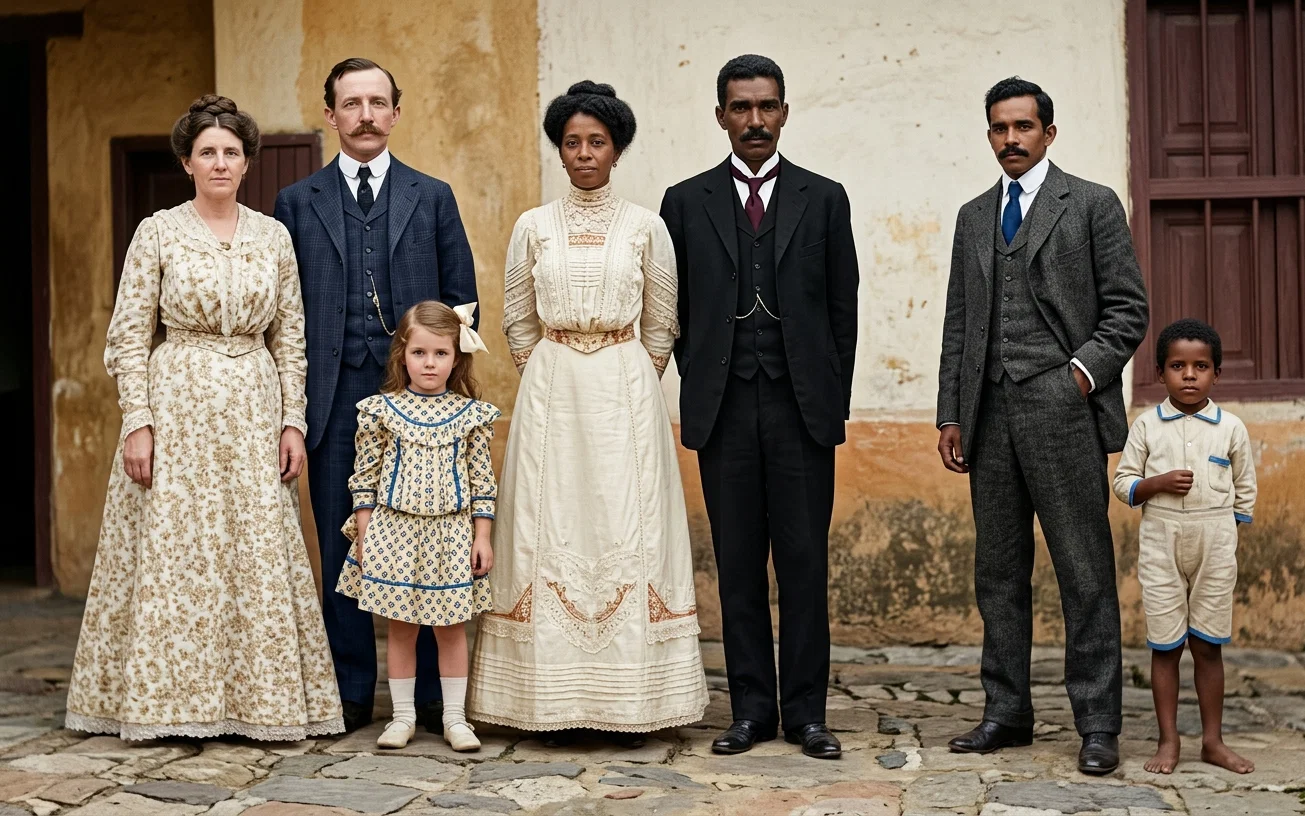
WORKERS IN VENEZUELA
At left, F. G. Lane and family; at right, Brother Greenage and wife and language teacher.
WORKERS IN VENEZUELA At left, F. G. Lane and family; at right, Brother Greenage and wife and language teacher.
The prevailing religion is Catholic. There are, in all, about three thousand Protestants and many heathen. Infidelity is a strong and growing enemy with which to deal. A large part of the people have no place in their lives for religion, unless it be for social or financial gain. Vice of every kind prevails. Public lotteries and gambling-houses are conducted by the government. With very few exceptions, money is esteemed far above character. Yet in all this, we find souls who hunger for something better, and who quickly respond to the cheering notes of the gospel message. We find that here, as well as in other parts of the world, the Lord has his sheep, who know his voice, and who also are ready to respond to the call, “Come out of her, my people, and that ye be not partakers of her sins, and that ye receive not of her plagues.”
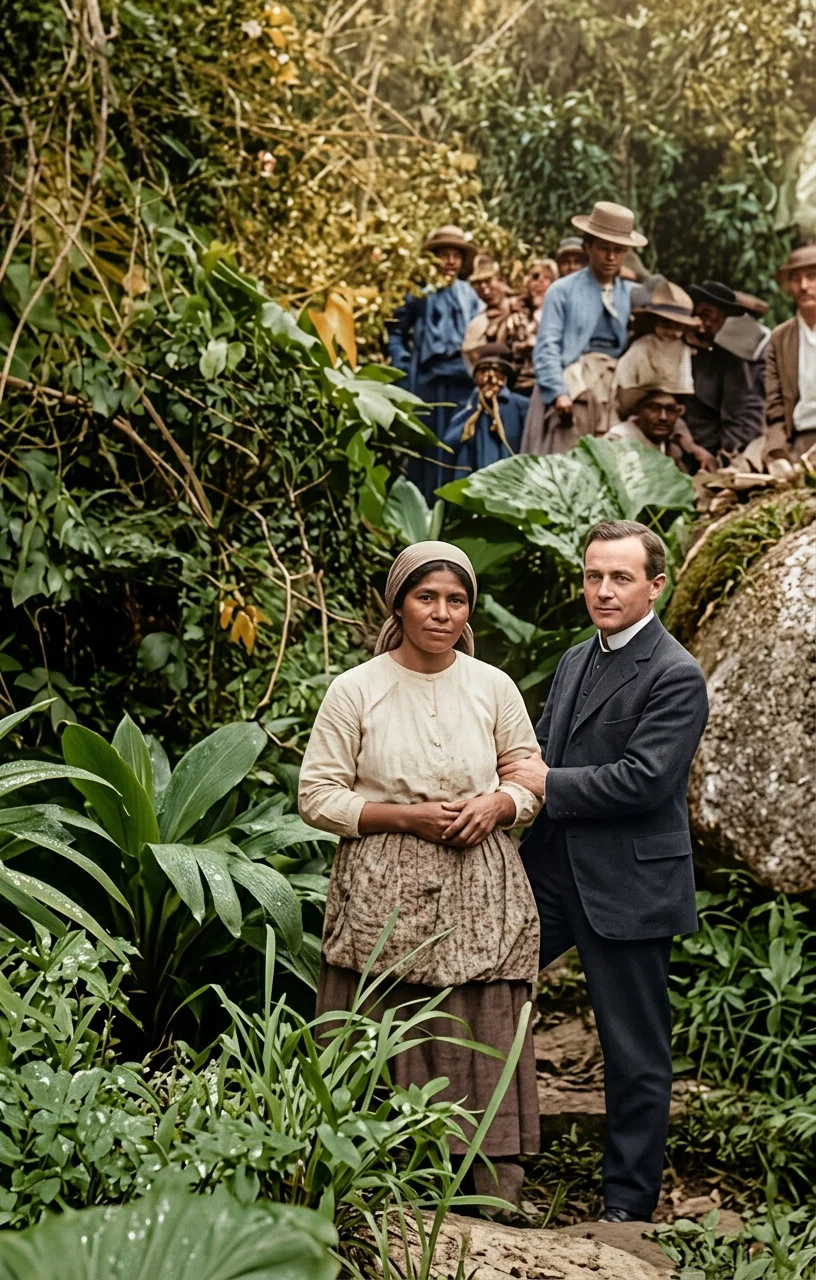
OUR FIRST BAPTISMAL SERVICE IN VENEZUELA
We arrived here the first day of August, 1910, knowing nothing of the language, but trusting the Lord to lead in opening the work; and he has not disappointed us. March 25, 1911, a little less than eight months after our arrival, we had the privilege of burying eleven precious souls in baptism, and the next day we organized the first Seventh-day Adventist church in Venezuela. April 1 we held our first communion service, and all enjoyed the presence of the Spirit of God; all are truly rejoicing in the hope of a soon-coming Saviour and the knowledge of sins forgiven. There are others who have expressed a desire to unite with us at the next opportunity.
The work is onward here. We are now anxiously waiting for some truth-filled books, that we may be able to get the message before many who, perhaps, can not be reached in any other way.
Caracas.