New China

7%

Review and Herald Publishing Association · Takoma Park Station, Washington, D. C. · Mar 23, 1911

FromReview and Herald, Vol. 88, No. 12.

Read the full edition

New China

A. C. SELMON, M. D.
In these days of change in China, it does not take long for a new order of things to become firmly established. No sooner is a parliament promised, and no sooner are the people given a taste, in the provincial assemblies, of what it means to have a word to say in the affairs of the nation, than the demand for the immediate opening of a parliament becomes so strong that a decree is issued by the throne shortening the nine-year limit, and promising a parliament in the fifth year of Hsuen Tung (1911 is the third year of Hsuen Tung). In view of this early opening of a parliament, compulsory education is now proposed, and the first steps are being taken to carry into effect the education of the millions of China's boys and girls.
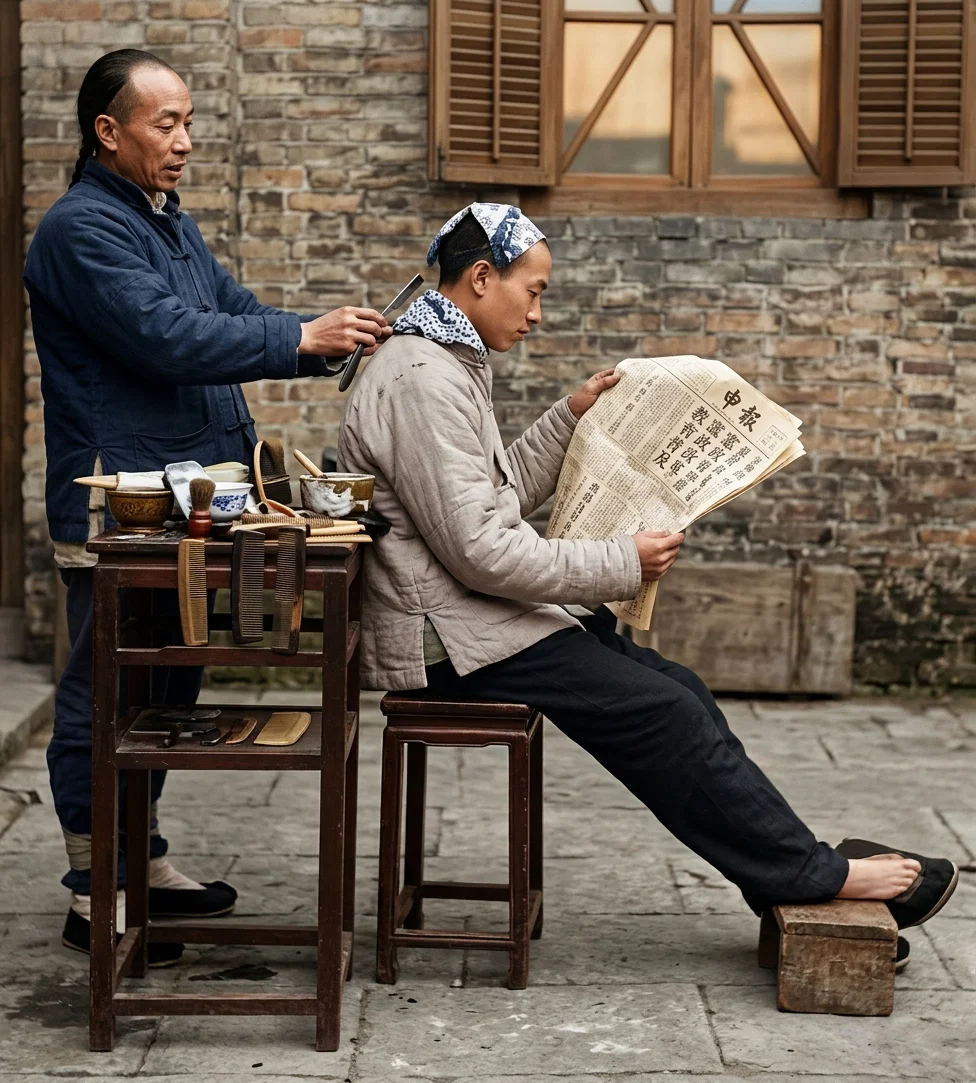
It may be asked, What is causing such marked changes in public opinion and governmental policy now, when up to only a few years ago, decades and even centuries saw no change of any moment? The answer is, The newspaper. Some idea of the number of newspapers in China may be gained from the fact that there are eight dailies in Shanghai, three in Hankow, five in Tientsin, and five in Peking. Even interior cities are issuing dailies. This great educational factor is coming to be the mouthpiece of the people. Public opinion is taking shape, and the death-knell of the old order is sounding. Questions of the day relating to government, education, business, social customs, etc., are discussed in these dailies, and in many cases very ably. The educated Chinese in the cities are coming to be a newspaper-reading people. Although the percentage of illiteracy is still high, and poverty is a deterring factor, yet the one man who can and does read becomes a newsmonger, in the tea-shop and in the street, for a large circle of those who can not read.
Photo by F. E. Stafford
The accompanying illustration of a scene in a barber's shop is a striking evidence of the new order of things. It tells of a state of affairs a millennium removed from the days of the first opium war. The Chinese commissioner Lin was a captive on board a British gunboat. When asked if he would not like to hear some of the recent happenings of the world, he replied that a man in whose mind were stored the Four Books and the Five Classics had no desire nor need to hear the recent events in the world.
With such conditions as these in the China of to-day, can any believer in the triumph of this message doubt the importance of pushing the interests ofthe Chinese publishing work? Probably in no other field in which the message is being proclaimed, is there such an opportunity to make use of the printed page as there is in China to-day. Given a people who, in the first place, have a reverence for literature, and in addition are now breaking with the past in the line of government, education, industries, and even to some extent in religion, what more could be asked to emphasize the importance of this work?
In spite of difficulties our publishing work has grown. Since the first stages of the work in Honan, when Dr. H. W. Miller began issuing a few hundred copies of our Chinese paper each month, the issue has almost doubled from year to year. During 1909 the average monthly issue was about five thousand. In the spring of 1910 we began issuing monthly a Mandarin edition of the Shi Djao Yueh Bao (Signs of the Times Monthly) in addition to the wenli (classical) edition. The average monthly issue for the two editions was twelve thousand. In addition to the monthly paper, tracts and pamphlets are put out as fast as our limited facilities will permit. In the early months of 1910, eighty-five thousand of the Sabbath Calendar were shipped from the Mission Press. At the time of this writing, two hundred thousand copies of the 1911 Sabbath Calendar have been sold. In February, 1910, a special issue of the monthly was put out for the Chinese New-year, and seventeen thousand copies were sold. We are now working on our Chinese New-year's special for 1911, and the orders already received have passed the forty thousand mark.
From every station in the field, most encouraging reports are received of the interest taken by the Sabbath-keepers in selling and distributing this literature. All are working to the end of having every Sabbath-keeping family subscribe for the paper.
The list of publications issued by the China Mission Press at the present time includes the monthly paper, Sabbath-school lessons, and the Sabbath Calendar, all of which are issued in both the classical and the Mandarin. The following tracts and pamphlets are issued in the classical: “Know Thy Creator,” “A Treatise on the Sabbath,” “The Lord’s Day” (this deals with the origin and meaning of Sunday-keeping), “The Lord Is Soon Coming,” “God’s Love for Man,” and “In the Beginning.” The following are also issued in the Mandarin: A song-book containing 126 songs; “Christ Our Saviour,” “The Lord Is Soon Coming,” “The True Sabbath,” “Know Thy Creator,” “The Sabbath a Definite Period of Time,” “Sabbath Poem,” “Easy Steps in the Gospel Story,” “The Second Chapter of Daniel,” and “Gospel Primer.” The “Story of Joseph,” and “A Dialogue on the Sabbath” are issued in the Cantonese dialect. A song-book is also issued in the Shanghai dialect.
As a result of the literature distributed, many have heard the message, and accepted the truth for this time. One instance will suffice to show the far-reaching results that may be realized: About four years ago a man came to one of the mission stations in Honan. He seemed to be an earnest seeker after truth, and when he returned home, took with him a supply of all the literature that had been issued up to that time. Later events proved that this man himself had little interest in the gospel; but a neighbor of his, who had for many years been an evangelist and colporteur, borrowed the bundle of literature, and gave it a careful reading. As a result he in time began to keep the Sabbath, and for over two years has been one of our most efficient workers. Through correspondence and sending out tracts and pamphlets, a friend in another province, who was also an evangelist, began keeping the Sabbath, and with him a little company of seven others. In this way the work was opened in a new province.
We praise the Lord for the progress already made; but when we compare what has been done with what must be done, and compare our facilities with the immense size of the empire, as to both territory and population, it is evident that we have barely made a beginning. If the population of the United States requires practically the entire output of three large and well-equipped publishing-houses to supply the needed literature, what can our one cylinder-press, taking a twenty-by-thirty-inch form, with our two job-presses, do in supplying the literature needed in warning four hundred thirty-five millions of people?
Evidences are not wanting in all parts of the world that the work will soon close. We must improve the time. All connected with the publishing work here are of good courage to do the best we can with the equipment we have; but when plates of a book and tracts must wait month after month before they can be printed, we are led to pray earnestly that help may soon be forthcoming to equip the publishing work in China, that it may do its part in proclaiming the closing message.
Shanghai.