The Levant Union Mission

5%

Review and Herald Publishing Association · Tacoma Park Station, Washington, D. C. · Jun 16, 1910

FromReview and Herald, Vol. 87, No. 24.

Read the full edition

The Levant Union Mission

This union comprises the countries around the eastern Mediterranean. Our work is yet small. The population of fifty-two million is mostly Mohammedan.

Syrian-Egyptian Mission

Of the little band of workers in this mission, Elder W. C. Ising, of Beirut, the superintendent, says:—
We have ten evangelistic and Bible workers in all,—one native, a Copt, of Egypt, and nine foreigners, including four lady nurses. This little force is located at Beirut, Haifa, Joppa, and Jerusalem, in Syria; and in Cairo and Luxor, in Egypt.
This autumn (1909) we have started on a campaign of public lecturing at Haifa, Jerusalem, and Luxor (the ancient Thebes, or No-Amon of Nahum 3:8, margin). This is the first effort of this kind, to my knowledge. Unfortunately the work among the Germans at Haifa could not be brought to the desired close, for the brother who had come from Germany just a year previous felt that he must return on account of his health. We hope that these efforts will be crowned with some precious souls embracing the truth.

JERUSALEM

Our small sanitarium at Jerusalem is to be transferred to better quarters in 1910. Of this year's work, Brother L. Krug says:—
Our institution has been the means of acquainting a number of persons with this message. Among the persons taking treatments we have counted not less than twenty-one different nationalities. We have had to meet many interestingquestions pertaining to our faith as Sabbath-keepers; even many Jews who have relaxed in observing this day of rest having been put to shame by our practical testimony. Also financially we have had a good year, better than the last.
DAMASCUS
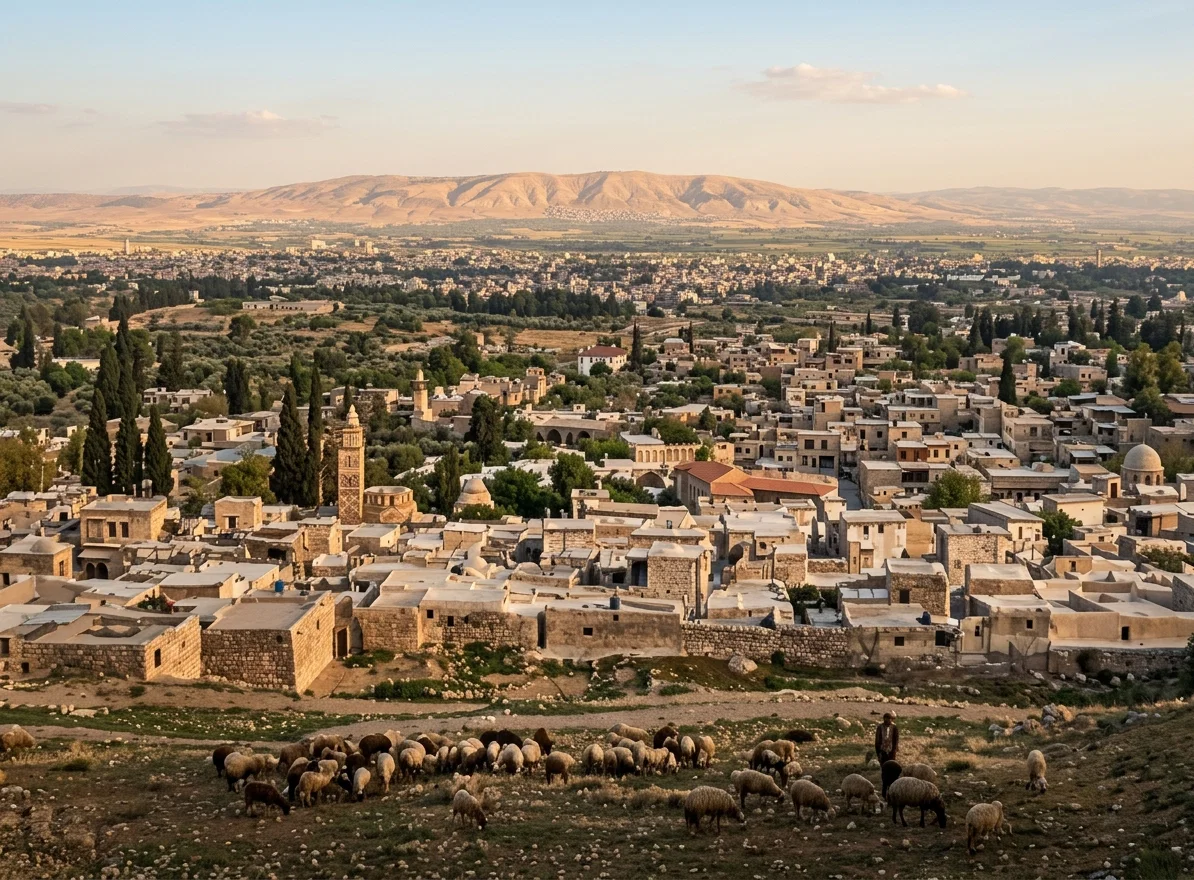
DAMASCUS

IN ANCIENT DAMASCUS

Of the manner in which a man of ancient Damascus found the truth, Elder Ising says:—
Two young Armenians had come to Cairo, one from Persia, the other from Bagdad. When standing in the zoological garden one day, they were addressed by our Armenian brother, Beserdian. This acquaintance resulted in their acceptance of the third angel's message. During the time of my visit to Cairo, in April, I baptized them in a canal of the Nile. Soon after, one of these new brethren returned to Bagdad, a city of about two hundred thousand inhabitants. Thus he has become the first messenger of truth in the central part of Mesopotamia, the native land of Abraham. He writes: “There are many here who believe the Sabbath is true, and say, ‘When the Seventh-day Adventists send missionaries here, we will join them.’ There is much field here, but the workers are not only few but are none. God cares.”
Returning from the General Conference, I was accompanied by Sister E. Z. Simons, formerly of the West Indies, who visited various parts of the field. I hope that her efforts in selling some fifteen thousand pages of literature in Damascus will bear fruit in due season, as well as her distribution of tracts in parts of the Lebanon Mountains.

Turkish Mission

Early in the year 1909 Elder C. D. AcMoody was compelled to lay down the superintendency of this field, on account of poor health. In the spring came the massacres in the Adana district, in which some of our Armenian brethren lost their lives. Elder Z. G. Baharian and his Armenian associates have pushed forward with the work, however. Some of the believers in Tarsus have endured much persecution. About the middle of the year, Elder E. E. Frauchiger, of Germany, was appointed superintendent, and a publishing depository has been established in Constantinople. Considerable stir was made by the energy with which one of our native colporteurs sold tracts in Turkish. Elder Frauchiger wrote:—
In one of the papers a whole column was devoted to this house-to-house effort to sell Turkish publications. Indeed, we are the first Christian society to canvass with purely Turkish tracts. The future may teach us more about this.
At any rate it has strained the tolerance of the Turkish authorities, under even the new régime, and after several police experiences and the confiscation of considerable literature at various times, the brethren have counseled greater caution. They are working on “Steps to Christ” in Armenian and also in Arabic.
From Smyrna, where he is located with a company of Greek believers, Elder R. S. Greaves has made trips to Macedonia, now Albania, where believers have also sprung up. In November a general meeting was held in Constantinople, Elder Conradi reporting: “The presence of a number of new workers seemed to indicate that a new era is dawning in our Turkish Mission.”