The German Union Conference

2%

Review and Herald Publishing Association · Tacoma Park Station, Washington, D. C. · Jun 16, 1910

FromReview and Herald, Vol. 87, No. 24.

Read the full edition

The German Union Conference

The Field in General
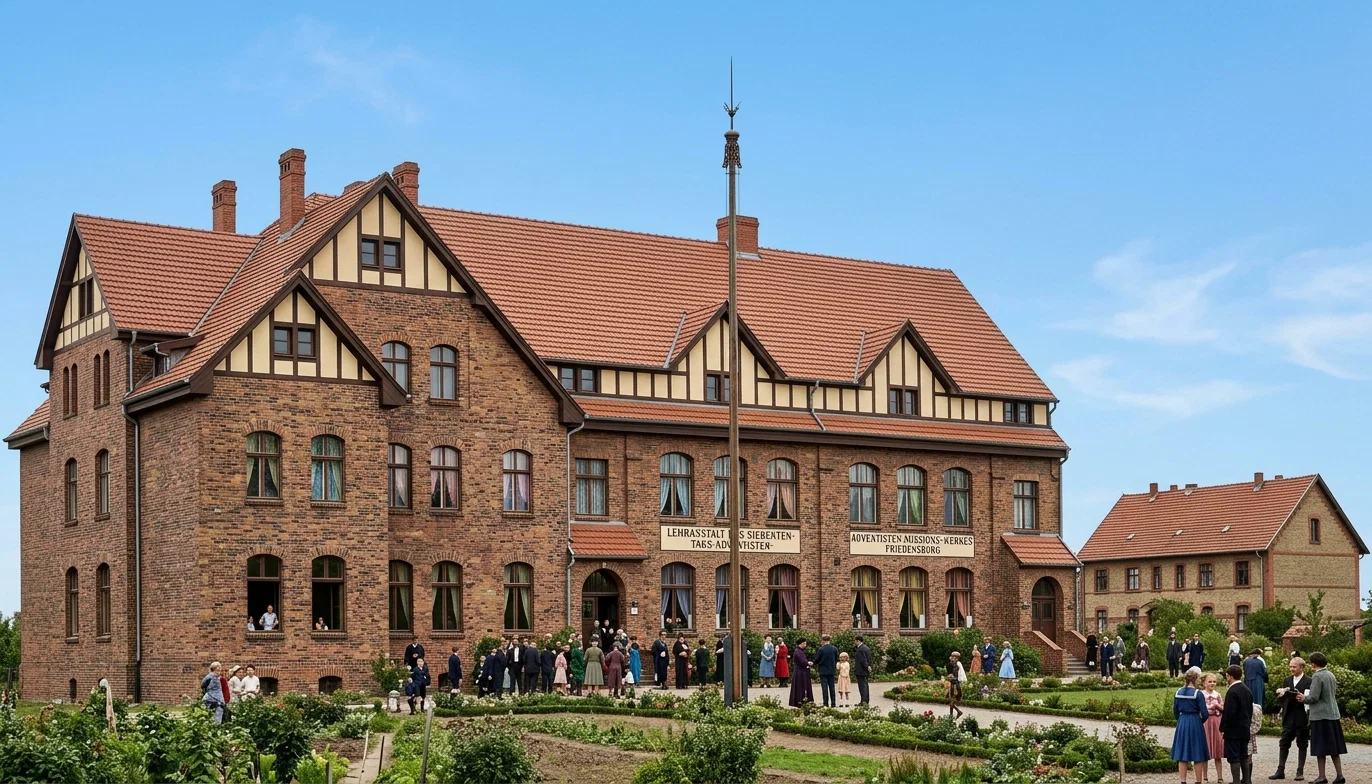
NEW SCHOOL BUILDING, FRIEDENSAU, GERMANY
The message of Sabbath reform makes vigorous progress in the land of the Reformation. The German Union Conference, however, includes more than Germany. The membership during the year had an increase of thirteen hundred, while the tithe of the believersincreased about twenty thousand dollars.
The president of the union, Elder H. F. Schuberth, says:—
We are glad that, through the blessing of God, the year 1909 has been one of progress to us. It has been possible to make a further division of our union conference, so that from the first of January there has been an East German Union Conference and a West German Union Conference.
Our workers have increased in spite of the fact that four brethren from our field were sent to Turkey, one to Egypt, one to Brazil, two to the Victoria Nyanza Mission, Central Africa, and one to our German East African Mission.
New territory within the union conference has been entered, as follows: Galicia and Bukowina, in Austria; Belgrade, the capital of Servia; and Trieste, Austria.
Two new magazines, Der Protestant (The Protestant) and Der Erzieher (The Educator), have been established by our Hamburg Publishing House; also a periodical in the Polish, and another in the Servian. A new school building has been erected at Friedensau, containing class-rooms, and dwellings for the teachers. This school has about one hundred eighty students, who are preparing for gospel work.
In some portions of Germany restrictive laws still cause difficulty. For instance, in the kingdom of Saxony and in Mecklenburg the authorities sometimes make our people trouble by not allowing them to baptize and to celebrate the Lord’s supper.

In Austria

With rigid Catholic censorship and restrictive laws, our workers have met with many obstacles. Yet over fifty were added to the membership of Austria during the year 1909. Elder J. Wolfgarten, superintendent of the mission, gives us these stirring paragraphs, showing how our brethren witness for the truth amid intolerance and irreligion:—

RESTRICTIVE LAWS

Religious liberty exists—upon paper; but at the same time the law specifies that the sects shall not be allowed to make any propaganda. Therefore, near the close of 1907, we founded in Lower Austria the “Society of Christian Men and Women,” in order that we might be accorded the right to hold meetings. As our efforts here were crowned with success, we established a society in Bohemia, in 1908, and this year we have organized societies in the provinces of Styria, Silesia, and Moravia. In these provinces we may hold public meetings, though still we can not offer prayer publicly. We generally assemble in a small room before the lecture, to ask God for his protection. Every meetingmust be opened by a native Austrian, who may invite any one present to speak. Through the activity of these societies in the two years since we began to establish them, over one hundred have been baptized. The clergy secretly work against us. It is also the custom among the Austrian Social Democrats and Freethinkers to break up every meeting of a religious character. That is, these people come by the dozen, and often by the hundred, and make so much noise and disturbance that the meeting is dismissed by the police. We have experienced this in different places.

PROVIDENTIAL LEADINGS

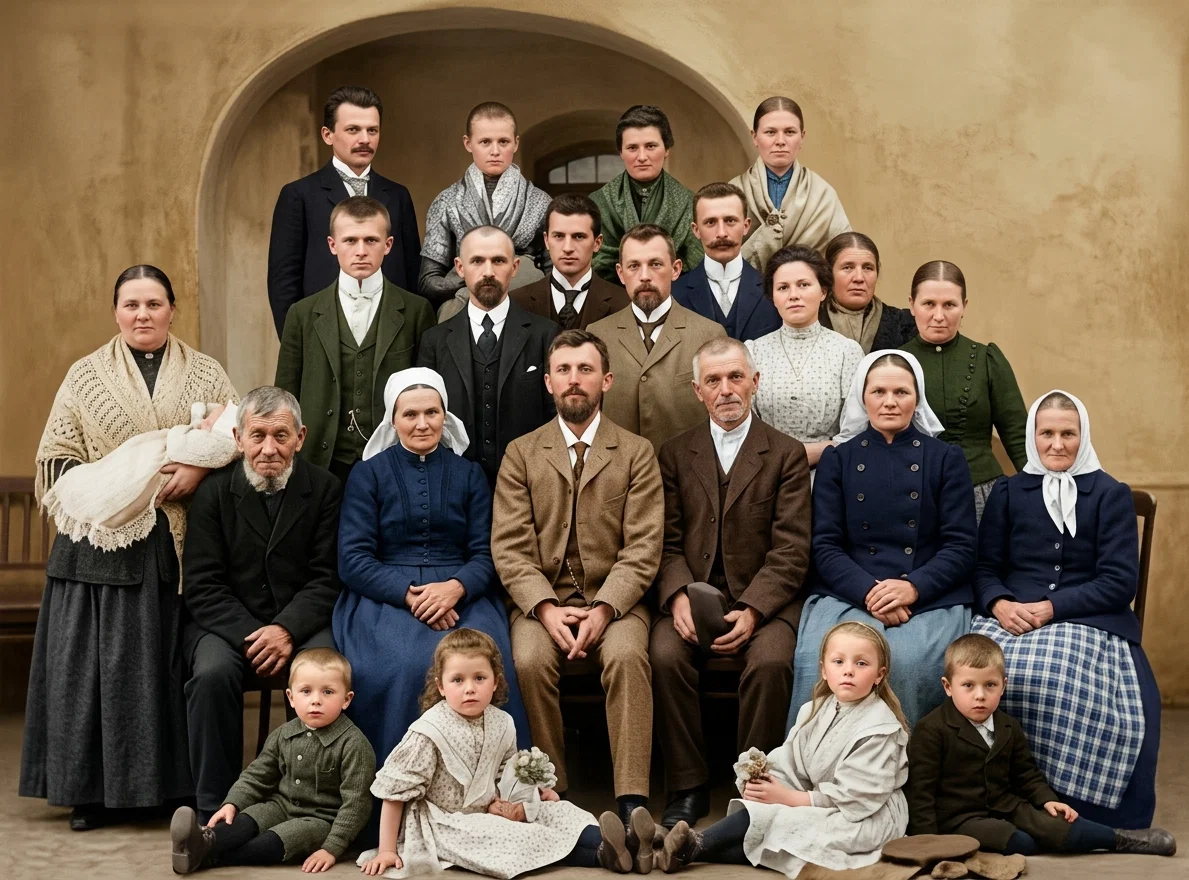
GROUP OF AUSTRIAN BELIEVERS
In Gratz, the capital of Styria, we have been enabled to see the special leading of the providence of God. The police demanded that an Austrian should open the meeting, and then they would allow that I be granted permission to lecture unhindered. But I was a stranger in the city. Two years previously I had visited Gratz, and had become acquainted with an official at the city hall. I reasoned that if I could recall this gentleman’s name, he might be able to help me. After a short time, I remembered his name, at least part of it, and as the names of all the officials are on their doors at the city hall, I sought out the gentleman in question. He knew me before I recognized him. I told him my difficulty. With tears in his eyes, he said to me, “Two days ago I prayed God to give me an opportunity to do something for your mission, and now you are here.” My heart was so filled with joy that I did not know what to say, but I did believe that the angel of the Lord had prepared the way for me. The gentleman went with me to the police headquarters, and he became responsible for the lectures. Since then I have baptized fourteen believers in that city, and we now have a church of sixteen members there.
A certain lady in the same city went to the cathedral, and prayed to God that he would show her on that day what the truth really is, inasmuch as she had already heard our lectures. On that very day, I held a meeting concerning God’s work in this time. This lady was present. At the close of the lecture she expressed her thanks for the word heard, and said, “I have become convinced today that this is God’s work, and I am willing to obey, notwithstanding all the difficulties which will be made for me athome.” She asked one of our sisters how this work is supported, and in answer the sister showed her the tithing system as revealed in the Bible. The lady, who is a teacher, replied that she would at once reserve her tithe to support the cause.
In Vienna we have received the first permission for one of our nurses to take subscriptions for Gute Gesundheit (Good Health), and to canvass for “Ministry of Healing” and “Christian Temperance.” This is truly a great step in advance when we consider that canvassing is altogether forbidden in Austria. One is not even allowed to lend an unauthorized publication.
Our brethren must celebrate baptism and the Lord’s supper secretly—behind closed doors. But nothing can stop the work. Believers have recently been baptized at Meran, in the Tyrol, the first in this district. We rejoice with the little band of our Austrian Mission in the good news Elder Wolfgarten now sends:—

A “MORE LIGHT” SOCIETY

A recent cause of thanksgiving is that we have been able to establish a new society, the rights of which are not confined to any province, but are granted for all countries of Austria. This society is called the “Austrian Reading Society ‘More Light,’” and we are allowed permission to begin lectures everywhere in all cities, countries, and languages of Austria.
Elder Wolfgarten asks our prayers for Austria. “Entire provinces,” he says, “such as Upper Austria, Salzburg, Tyrol, Vorarlberg, Carinthia, Carniola, Goritz, and Gradiska, as well as the kingdom of Dalmatia, have not yet been entered by us, as we have neither the men nor the means.”

In Hungary

“The church that does not use intoxicating drinks”—that, says Elder J. F. Huenergardt, president of our Hungarian Conference, is the name by which our church is known by many. The masses in the cities, being acquainted with religion only as they have seen it associated with intolerance, have become irreligious, and drunkenness and evil-living largely prevail. Therefore some are drawn to investigate Bible truth by hearing of a “church that does not use intoxicating drinks.”

BY BONDS AND IMPRISONMENTS

Elder Huenergardt’s report for 1909 gives us this description of a common method of work:—
Theoretically this is a land of religious liberty tolerance. In practise, however, we often have difficulties in procuring permission to hold public lectures in a new place. Sometimes we are denied permission entirely—then we do our work without it. The result usually is that the authorities, upon the command of the clergy of the place, Catholic or Protestant as the case may be, arrest our workers and lock them up in a safe place for a few hours, or sometimes days, or transport them home free of charge. After they are released, they almost always return and follow up the interest. Then they may again be taken. This is repeated until we are no more molested. These experiences often bring good results. One of our laborers told me a few days ago that he found a great many interested souls in a large community. The people were all very thankful for what they had heard, and invited our brother to continue his labors among them. This was, however, not in accord with the wish of the priest. He had the worker arrested and led away. The people were very sorry, and were surprised that their priest should arrest a man who had neither stolen nor committed any other offense, save that of speaking the word of God. The worker was taken to another official in a large town, where he was examined and released. Directly after receiving freedom, he returned to the place whence he had been led away. A large crowd again gathered to hear the living word.

GROWTH

By no means does the clerical opposition stop the progress of the work:—
Our membership rose in the past year from 485 to nearly six hundred. We have members in all the principal nationalitiesrepresented in this country. At present we have in our field five ordained ministers and eleven other workers. These are distributed as follows: seven workers among the Hungarians, one among the Servians, one among the Slavonians, three among the Rumanians, and four among the Germans and Saxons.

BELIEVERS ENDURING HARDNESS

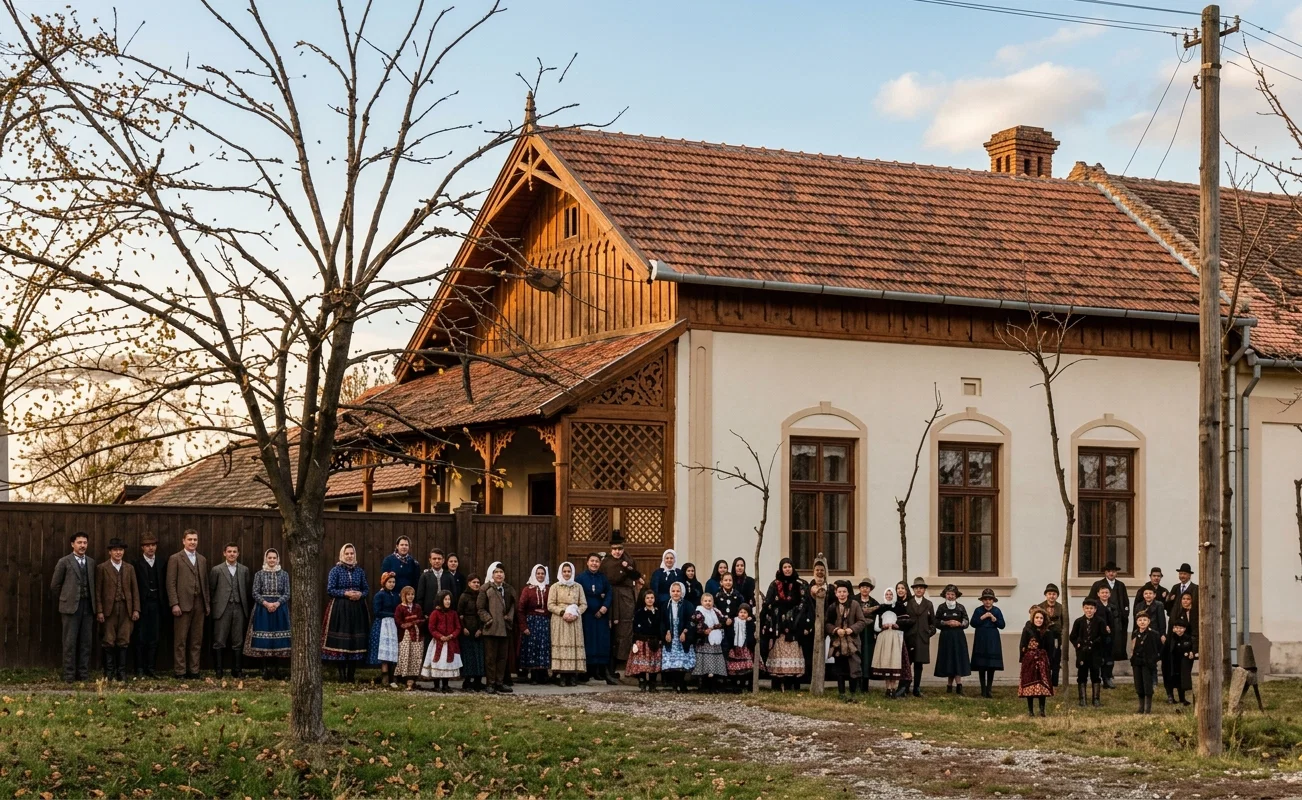
SLAVONIAN CHURCH, IN HUNGARY
In the beginning of the year, we began labors in a Protestant neighborhood of eastern Transylvania. A number of persons in another town had heard of us, and invited us to come and preach to them. We accepted the invitation, and paid them several visits. A great many came out to hear. Thereupon the clergyman of the place gave out that we were false prophets, and that the people would do a good work if they drove us out. The place of meeting was surrounded. Some brought clubs and stones to attack us. They bombarded the house, but no one was hurt. Eight accepted the message. Upon this, the enemy became still more enraged, and from that time on our friends had no peace. They were insulted in every way possible. They soon found that the police were on the side of the enemy. Our people were at last obliged to sell out and go elsewhere. This they did, with material loss, but without a murmur. They were willing to make a sacrifice for the truth.
Up to the present, twenty souls have accepted the message in that place, and a number more are awaiting the opportunity to follow. Our brethren continually visit the town, and we are confident that, with the help of the Lord, we shall in the end gain the victory, and see a strong church developed even there.
With trust in God and in his Holy Word, the little force of workers in Hungary faces the task of carrying the message to twenty-one millions of people, of five nationalities.

In the Balkans

Our Balkan Mission, under the German Union Conference, has for its territory Rumania, with nearly eight million people, and Bulgaria, with four million.

WITNESSING AMID TUMULT

This little corner of Europe seems often the center of tumult. Amid strife and political unrest, and clerical opposition, and with many a blessed experience of the power of God in saving souls, the believers have borne witness to the truth. Here is an item, reported by a brother, of Bucharest, the capital of Rumania:—We have reason to thank our Heavenly Father, for he has still been with us this last quarter of the year. In Bucharest, the offerings for the week of prayer were 472 francs ($94). The Rumanian brethren have never shown themselves more faithful and willing. The government seeks to have a very watchful care over us, especially since the life of the prime minister was attempted. All churches were then visited by the police, and they will not allow any society to exist without authorization. It would seem that we have a great controversy before us, but as God is with us, we fear not what man may be able to do. Indeed, the bishops have already made the attempt to hold us responsible for this crime, for they said in an open meeting of the priests that the apostasy from the Greek Catholic Church is the reason for such an attempt, and that the Adventists have especially been active in bringing about such an apostasy.
When this was being published in the papers, I was in Ploesti, where I was holding meetings with about forty persons, of the so-called better classes. A priest came thither, fairly raging against us. He wanted to hinder my meeting, denying the authority of the Holy Scriptures; but as he received no support from the hearers, he subsided, and waited to see what would come of my lecture. After I had closed, he began to clap his hands as if he were in a theater, and openly confessed before the hearers: “I have never heard such a good explanation of that which was the subject of the evening. I acknowledge before you all that this gentleman is absolutely not a dangerous man, as was reported to me, but a man of God, who will teach you only that which is good. I beseech of Holy Mary and of the Saviour, that they may allow the word spoken to take root in the hearts of you all.” There was a deep silence, and those present looked at the priest and at me in wonder. It was a glorious witness he had given. While the bishop was accusing the Adventists, one of his subordinates was praising the words that came out of the mouth of an Adventist, and that in the presence of a number of strangers and friends.
In Bucharest the people come to us in ever-increasing crowds. We have no more room for them. Our place of meeting is much too small. We can not remain there. Now is the time to work, for the people have an interest. Twenty-two have announced their intention to be baptized, and others are ready to follow.
Our membership in the Balkans represents the Rumanian, German, Hungarian, Ruthenian, Greek, Slovakian, Bohemian, Russian, Polish, Armenian, Bulgarian, and Croatian nationalities.