Growth of the Chinese Publishing Work

8%

Review and Herald Publishing Association · Takoma Park Station, Washington, D. C. · Feb 24, 1910

FromReview and Herald, Vol. 87, No. 8.

Read the full edition

Growth of the Chinese Publishing Work

and it looked for a time as if the whole establishment was to go with the flames, but it was checked without doing a great deal of damage.
Our Chinese publishing work has been growing in a most encouraging way. Dr. Miller writes:—
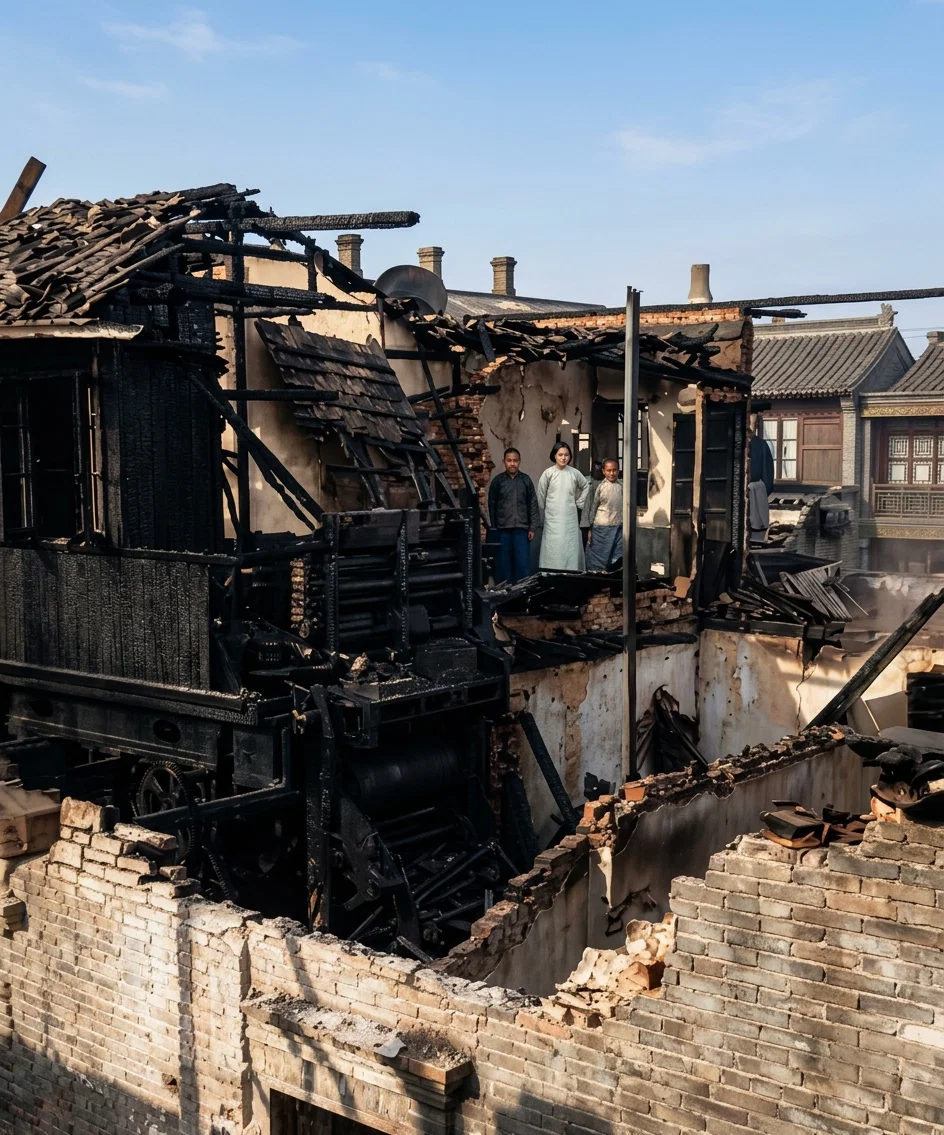
RUINS OF OUR CHINESE PRESS
In order to get out the work we had in hand we have been obliged to practically double our press staff since September 1. One new platen press was added, as it required one press going all the time to print the covers of our monthly paper, the circulation of which has steadily grown. Already we have received orders for the February number of the (Chinese) Signs of the Times to the amount of fifteen thousand. We had just printed and shipped to the field sixty-five thousand Sabbath calendars before the fire.
Never have we witnessed such prosperity in the publishing work in this field as during the past few months. We have perhaps realized as much as any one the unsuitableness of Chinese houses for operating a printing house even on a small scale: the scrap paper about such an office, where a foundry is a necessity; the lighting by lamps, and the constant use of gasoline, all of which must be in adjoining rooms of a very combustible house, is a condition that has given us much anxiety at times. We carried an insurance on the machinery and stock, but the rate was very high, owing to the existing conditions.
And now comes his account of the fire:—
Last Tuesday morning, at a little after 1 A. M., a fire broke out in the kitchen of a Chinese house, two houses to the north of our printing press, in the same row of flats. These houses were used as binderies by the Commercial Press. The fire spread very rapidly, and by the time any of us living near by could be called, the fire had begun to mow down the buildings to the north and south. It was a still night, otherwise nothing could have been done to check the flames. The city fire company will not bring the engines outside of the concession, and the water was at very low pressure. Pieces of hose were secured and attached to the nearest hydrants.
While these were being put in operation, the Chinese used small hand pumps, which spurted about a pint of water at a time; others carried water in pails. At last those who had the hose, wet down the buildings, beginning at our office, at about the middle of the building, and were able to check the flames at that point. Our pressrooms and type-rooms were in flames before any of our brethren arrived, and practically everything in them that was combustible burned. The Chinese type, amounting to about four thousand pounds' weight, was melted. The two platen presses, the hand-power cylinder press, the stitcher, saw-bench and tools, some printed stock, plates, and a few cuts were in the pressroom, and are lying surrounded by a mass of the débris of bricks, tiles, and half-burned wood, with melted type spattered over them. The little Army press was on the second floor in the type-room, and it went down with the débris. Quite a little of the Wenli stock was damaged by water, although the greater part can be saved. Some of the English type was melted in the cases, but most of it is in good condition. Several hundred dollars' worth of paper stock was saved. All the office furniture, the foundry, machinery, matrices, and subscription list were saved. The library books were all saved, with slight damage due to being thrown out of second-floor window. We believe most of our machinery can be put in shape again.
Our greatest loss was on the Chinese type. It is covered by insurance, however, and we see no reason why we should not recover most of its value. The financial loss will not be the most important matter; the setback given to our publishing work at this time is what we deplore. The Sabbath-school lessons for the first quarter were mostly off the press, and would have been sent out this week, but nearly all the plates were melted and the printed stock burned or spoiled by water. We have the translators at work on them, have gathered out our matrices, and are putting the job in the hands of the Commercial Press at once. We hope to print our cover pages for the paper on our own platen presses, but the other matter we will hire done. We are therefore turning off over half of our staff, and keeping only the translators, the man for the foundry, and the men for the platen presses. We will use up our stock of paper and occupy only half the former building until we can make some other arrangements, or until we get into our own buildings.
We do not feel justified in again buying new fonts of type and employing as many workmen as we had, with no place of our own for them to live in, having them scattered about in this wicked city. For the past year and more those connected with the management of the press have felt that we should be out of the heart of this city.
We feel of good courage, though it seems that the publishing work in China has a struggle for existence. It weathers all storms, however, and steers right ahead. Yesterday the mail brought a word of good news from Brother Han, saying that a young minister who came to Ying Shang to look after the interest of the Chinese Christian Union there, had, through literature and Bible studies, begun keeping the Sabbath, and was sending our literature to his friends in Shan-tung. Such reports are continually coming to us, and letters have been received from tracts and papers sent into Manchuria. The literature issued last year has brought its returns from many quarters of our field. While we feel called to greater activity than ever before in producing and circulating our publications, yet we believe that the light given us to move out of the cities with our institutions is intended as much for China as for other countries. And now before any institutions are actually begun, and at a time when consideration must be given to the establishment of a publishing house, sanitarium, training-school, and educational work, should we not consider what bearing the presenttrying experience just passed through should have in guiding us to make the right move forward?
We are not planning in any wise to relinquish our efforts in the circulation and production of literature. We must do many times more than has been done. It became necessary to remove the treasurer's office in order to provide room for the press in the half of the building left us.