Annual Meetings in Russia

5%

Review and Herald Publishing Association · Takoma Park Station, Washington, D. C. · Jan 20, 1910

FromReview and Herald, Vol. 87, No. 3.

Read the full edition

Annual Meetings in Russia

L. R. CONRADI
St. Petersburg
AFTER our good meeting in Finland, I spoke, October 11, to a large audience in our chapel at St. Petersburg. We still encounter serious difficulties in obtaining permission to hold our general meetings. Elder J. T. Boettcher and E. Kotz had arrived the day previous, and had spoken to a full house that night. Four of us then waited upon the secretary of the prime minister, to see whether we could not remove the obstacles. He assured us that he would present the matter, which he did. This proved quite a help as we went on. It is encouraging to see what progress the truth is making in the capital of the empire.
After the service, we hurried to our train, and after a long ride of fifty-five hours, reached Zarizyu, which is quite a trading port on the River Volga.
The East Russian field now comprises four governments, with a population of about twelve million. We have four hundred members, mostly Germans. One new church was raised up last year by Elder G. Hetze, at Kamitchin, a considerable town farther up on the Volga. This church now numbers twenty-six members. As our Bible studies and business meetings proceeded, a priest who attended, became more and more interested, and freely acknowledged that he was getting an entirely different idea than he had had from what he had been informed by others.
Our people seemed pleased to have one of our African missionaries present to relate to them how the truth was winning its way even among the heathen, and about fifty dollars was raised for missions. As we presented the needs of a school property, three hundred twenty-five dollars was pledged for that purpose, and a number of our relief books were taken.
Sabbath was a good day, and all freely related their new song of victory, except the priest and the official. But in the evening the priest came forward, and said to me: “Brother Conradi, I am not quite satisfied with you to-day. While others related the new song, you slighted me, as though I was a heathen.” I answered that I had given a general invitation, which he admitted, saying, “I would have also gladly taken part, were there no other considerations”—referring to his own church. Elder Boettcher then showed him the “Ministry of Healing” and “Christ’s Object Lessons” in German; he bought both books, expecting that his son, who is studying German, would read them to him.
By Sunday the official became so friendly that quite a number of strangers, attracted by the short, favorable editorials in the only city paper remaining, were freely admitted.

The Caucasian Conference

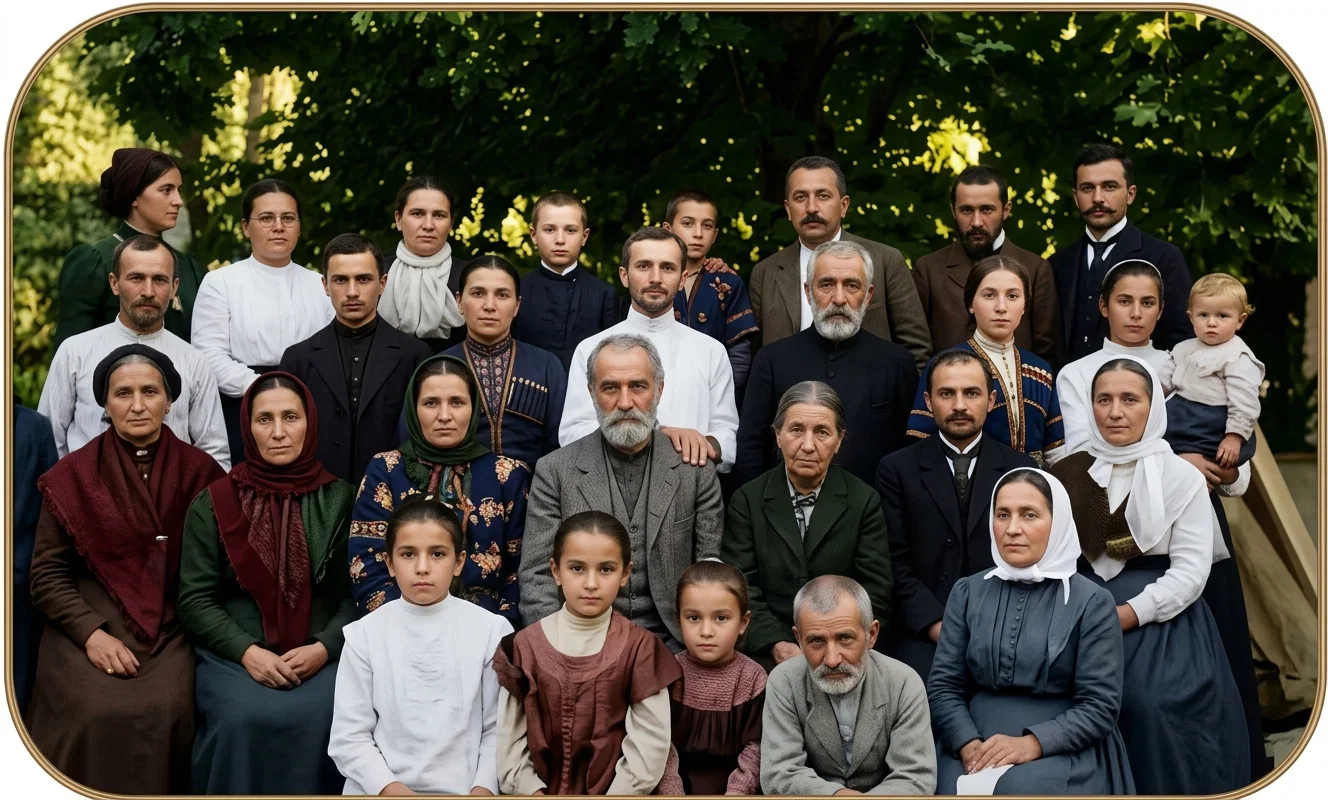
Of the three Russian conferences, the Caucasian is the largest and oldest, though the Baltic is already stronger in finance. Separated by a mighty mountain range, which towers between the northeast corner of the Black Sea and the southwest corner of the Caspian Sea, the field consists of two parts. The work first began in the German and Russian colonies this side of the mountains. But as some of our Russian brethren were exiled to the very border of Persia, the seed of truth was also sown there, and it is fast springing up also in the southern Caucasus. Our annual meeting was appointedfor Noworossiisk, a thriving port on the Black Sea, well shielded by the foothills of the Caucasian range. This conference now numbers eight hundred thirty-two members, and we were pleased to see our churches so well represented, a number of individuals coming from the very border of Persia. Two new companies were admitted—Noworossiisk, with eleven, and Tiflis, with twenty-three members. The accompanying cut shows the company at Tiflis, the leading city of the Caucasus. Brother Heyde, a German merchant, who has spent the last twenty years in different parts of Russia and Siberia, is the leader of the new company, and gives us a valuable member on the new conference committee.
THE TIFLIS CHURCH IN CAUCASIAN CONFERENCE
Our local company had put forth special efforts to train a good choir to sing their beautiful Russian psalms. As we had a good translator in Brother Suiridow, who has been educated at Friedensau, we could speak freely to the large audience. Our translator was called up to the police station, and was closely questioned. But the Lord helped him in giving the right answers. Sabbath was a good day for our own people. And as the hall could not be obtained, we were the freer to go to our own hall and ordain Brother Guadjin, one of our promising workers. Our brethren also enjoyed there the privilege of giving, unrestricted by earthly power, to the cause they so dearly love. So few of us prize the glorious privilege of giving freely to God’s cause, until we are deprived of it.
Brother Schlegel, who came here from Switzerland, and has labored acceptably, arrived in bad health, and had to put himself under the care of physicians. Dr. Pampaian, who has labored among the Armenians, was at this time transferred to the Turkish field.

The South Russian Conference

Quite a company of us took the steamer at Noworossiisk, October 25, for Odessa—Brethren Boettcher, Kotz, Pampaian, Suiridow, a Russian sister, and the writer. A crowd of our people assembled at the dock to bid us farewell. Gradually the Caucasus faded out of sight, and the coast of Crimea appeared in the distance. By evening our boat touched at Feodosia, and by sunrise our steamer dropped anchor in the harbor of Yalta. As seeming continuation of the Caucasus, there towers up another small range across southern Crimea, attaining the height of six thousand feet. This solid wall protects the narrow coast for about twenty-five miles, against the northern winds, and a Russian “Riviera” has been built up here. The narrow strip of land is covered with towns and villas, and at Yalta and Livadia are the beautiful palaces where the imperial family generally spend the winters. The fruit here equals that of California. The few hours our steamer stopped were spent ashore. It is a grand sight to see the big waves rush in over the breakers, and often leap over the high wall of the harbor, now and then dealing out free shower-baths to those unfortunate enough to be within reach.
In the afternoon Sebastopol was reached—the noted fortress of the Crimean War. Since that time the fortifications have been increased, and there are many men-of-war and torpedoes in port. But for us, what is the most interesting, we have here a good Russian church of eighty members.
The next morning we arrived at Odessa, where our brethren met us and conducted us to our lodging. Odessa is Russia’s chief harbor. With its six hundred thousand inhabitants, it is the fourth city of the empire. It was with considerable difficulty that Elder Schamhoy had obtained permission for his local meetings. As the interest grew, he had to secure a larger hall, and now is obliged to move for the third time. Their present hall consists of two large rooms and an anteroom; and as the Russians and Germans were almost equally divided, the speaker had to place himself near the door between, Four new companies were admitted, with over sixty members, among them Odessa with eleven. The present membership is now six hundred seven.
Five hundred dollars was pledged toward the school enterprise, and this the more willingly when they learned that it would probably be located in their conference. Southern Russia would present many advantages. The climate is milder, the soil better, there is fruit; but land is from fifty to one hundred dollars an acre, and it is difficult to find something answering for both a school and sanitarium sufficiently near a railway. While we look about, the money is being secured; but, even with the five thousand dollars from the United States, there will be only about ten thousand dollars to begin with, and many obstacles undreamed of in the United States will probably have to be surmounted.
Our brethren in all these fields appreciate the help furnished them by the General Conference, and we were happy to speak to them the word of life. May the Lord richly bless the work in this great empire.