The Work in Greater New York

7%

Review and Herald Publishing Association · Takoma Park Station, Washington, D. C. · Jan 20, 1910

FromReview and Herald, Vol. 87, No. 3.

Read the full edition

The Work in Greater New York

On Nov. 10, 1909, I came to New York for the purpose of acquainting myself as much as possible with the situation here from the standpoint of the giving of the message among the great foreign population of this large metropolis. During the short time of a fortnight, one can obtain only the most meager, superficial idea of the true condition. Still, I confess that even this limited view has made a profound impression on my mind.
The day following my arrival, the president and members of the New Jersey Conference met me, to counsel over some matters relating to that conference. The next day I had the pleasure of attending a gathering of our representatives among the various nationalities of New York and Brooklyn — Italians, Hungarians, Slavonians, Bohemians, Spaniards, Germans, Swedes, and Danish-Norwegians. The object was that I might become acquainted with these workers, and learn all I could concerning what they are doing. There were fifteen present, and it was a very interesting occasion. Each related, first, very briefly, his own experience in coming into the truth, and then gave a presentation of what was being accomplished for the people he represented. All this was very helpful to me in understanding the situation.
The next step taken was to visit these various people in their own services, and, as far as possible, become acquainted with the conditions and surroundings, as this is necessary in order to plan wisely and be a real help to this work. I have thus visited the Slavonians, Bohemians, Italians, and Hungarians, both in Newark, N. J., and in New York City; the Germans in Brooklyn, the Bronx, and Jersey City; and the Scandinavians in Perth Amboy, N. J.
The meeting with the Slavic-Bohemian church at Newark was very interesting. We found the believers both intelligent and whole-hearted, and they seemed earnest in their missionary efforts. The expense for halls and meeting-places is great in these cities, and the membership not being large, the burden is a heavy one. I was informed that one brother of this church, from a weekly wage of nine dollars, contributes two dollars every week to this expense. Such an effort certainly gives evidence of real interest and devotion.
BROTHER S. HALUSIC, HOLDING A STREET MEETING AMONG THE SLAVIC-BOHEMIANS, IN NEW YORK CITY
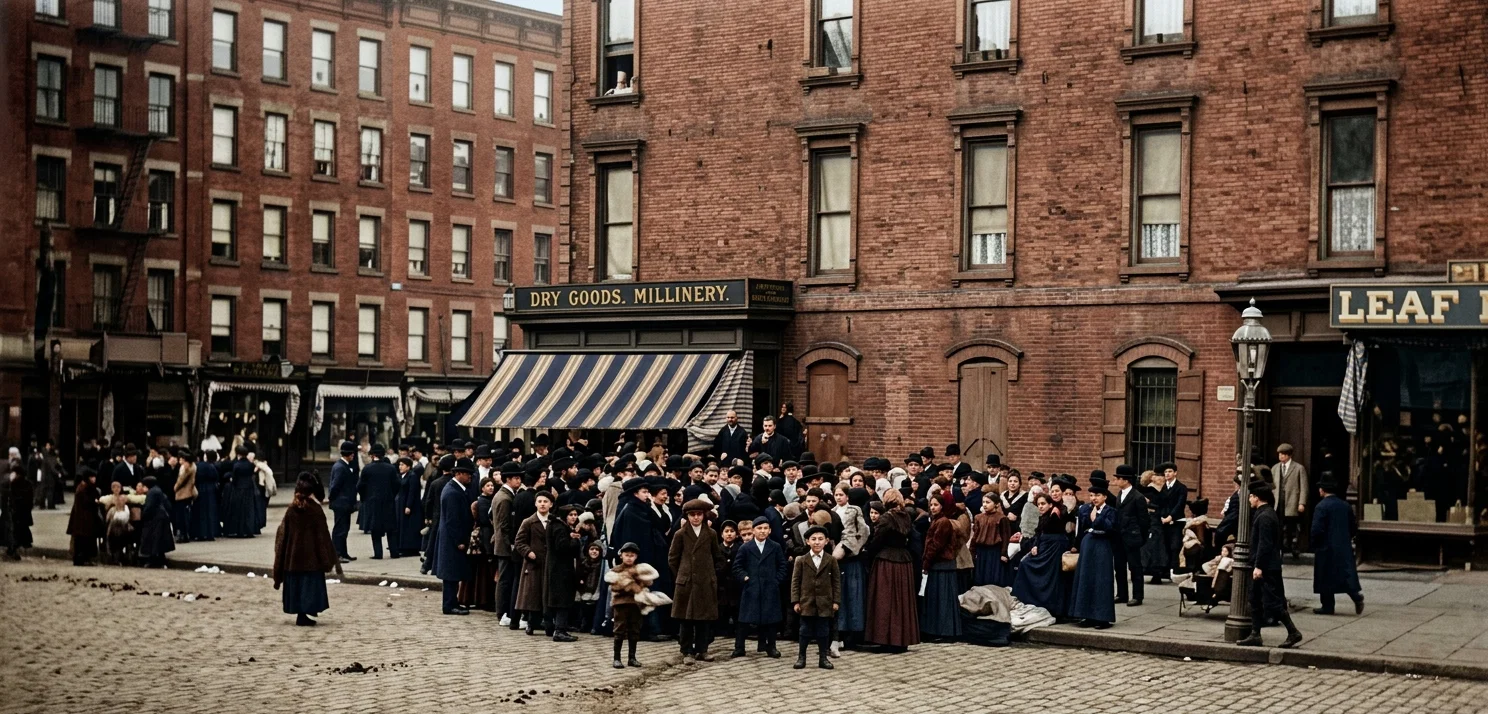
In New York the Slavonians are in a still more trying position, as they have nowhere to invite the public to hear the truth, except the street. One day I attended one of these street meetings, held in the Slavonian community. The speaker, Brother Halusic, stood on the curbstone, and there was a large crowd around him. Those on the outer edge were more or less indifferent, while those near him listened with marked attention. A place is needed where those who are interested can hear and study the truth under more favorable conditions. You will say, “Why do you not have a hall, or some such place?” The answer is, Means has been lacking.
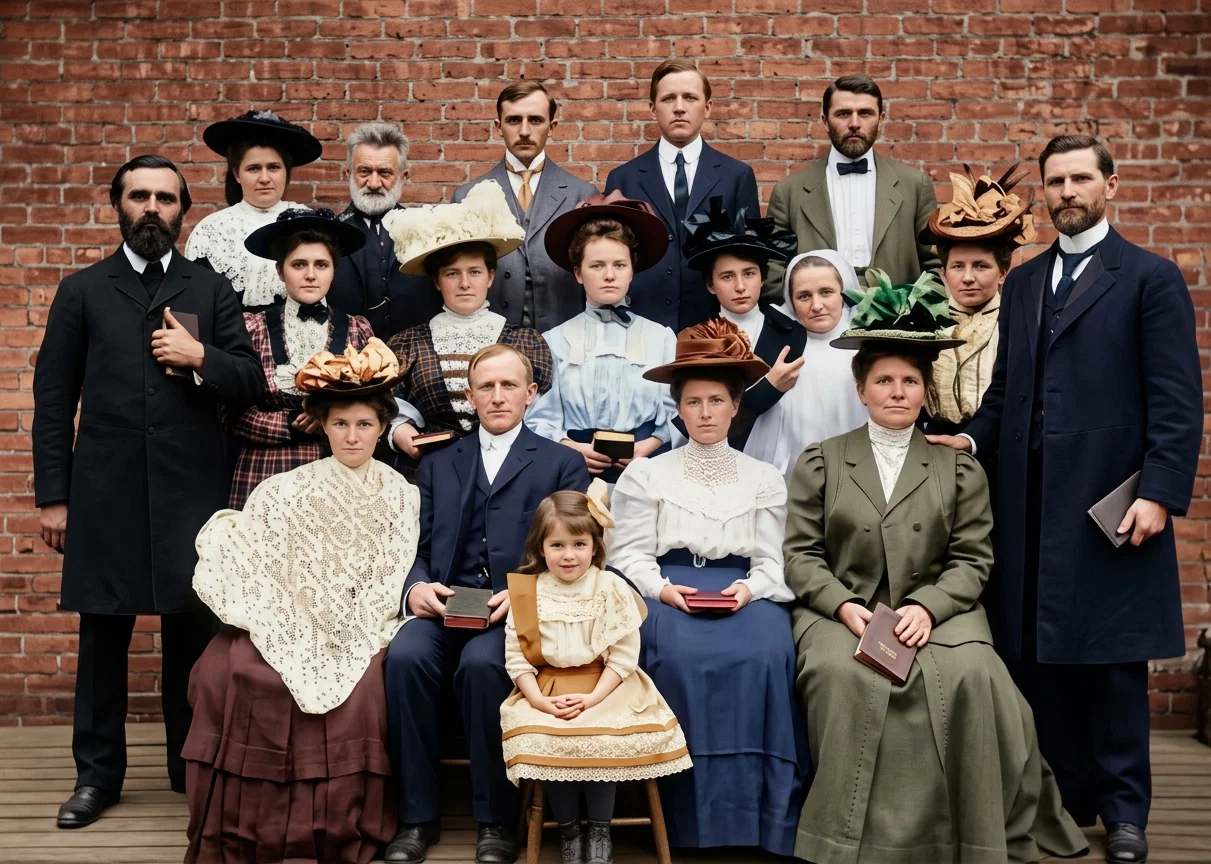
AT THE RIGHT, BESIDE HIS WIFE, STANDS BROTHER S. HALUSIC, THE SLAVIC-BOHEMIAN, WITH THE COMPANY OF SABBATH-KEEPERS GATHERED OUT OF NEW YORK THROUGH HIS LABORS
I confess that while I stood there on the street, viewing the multitude moving in every direction, and seeing our brother standing in the midst of an eager, listening crowd, I felt deeply touched. I said to myself, “These people must have a meeting-place. It must not be that for the lack of a few dollars they shall be deprived of hearing the message.”
Again, I thought that if our brethren and sisters could be present on one of these occasions, and see the condition for themselves, there would be those among them who would feel it a privilege to make a contribution to help secure a meeting-place. Yes, I know they would be glad to do it.
The Hungarians are situated much like the Slavonians. We have laborers in both these tongues, but have no place where they can meet. I feel that we should not rest until this matter is changed. What do you say, dear reader?
I met with the Italians both at mid-week Bible study and on the Sabbath. I was glad to find that they have a place at their disposal for their services. I greatly enjoyed these opportunities.
As yet, I can say that I have received only my first lesson; but even with this limited knowledge, I am profoundly impressed with the greatness of the work of the North American Foreign Department. It is by no means forbidding in its nature; on the contrary, it is intensely interesting. And, while there are serious difficulties to be mastered, yet the outlook is encouraging, and promises an abundant harvest. But laborers and funds are needed, and they must be forthcoming — yes, they will be forthcoming; for God's care is over this department of the cause. We hope it will be remembered in prayer, and by such donations of means as the Spirit of God may direct.
O. A. OLSEN.