Russia—Conferences at Zarazin, Noworossisk, and Odessa
By J. T. Boettcher
J. T. BOETTCHER
The conference at Zarazin was held October 14-17. Our first service was disturbed and interrupted by the police. We have always spoken through an interpreter. While Elder L. R. Conradi was conducting a Bible study, interpreted by Brother Gobel, a policeman who was present went at once to the telephone, and informed the chief of police that German was being spoken. The answer came back immediately that only services in the Russian languages would be permitted. One can imagine how we felt. We informed the congregation that we must go to the police station, and that no further meeting could be held until we returned.
When we arrived there, we had to wait some time before we obtained an audience, and then our efforts were in vain. The chief of police insisted that only Russian should be spoken, although we informed him that most of the people who come to hear us were German. At last we asked him to at least allow us to proceed with only our own people (Adventists) present. To this he consented. So we returned, and found all the people still there. Brother Kotz, from Africa, had been entertaining them with music. Much to our regret, we were obliged to send all those away who were not members of our church. We gave our members tickets of admission. Among those turned away was a Russian priest. In the afternoon he returned. I went to him, and told him that he could not remain. However, he had been to the police and obtained permission to attend, in case we were willing, and we gladly let him stay. It was quite interesting to see the policeman with the sword, sitting in one corner of the sofa, and the Russian priest with the cross in the other, keeping watch over us. The priest, however, became very much interested, and missed only one meeting during the entire conference, and before the close bought two of our large books. When I gave a temperance lecture, using the charts to illustrate, he was so pleased that he came forward to shake hands with me and thank me.
Our next session was at Noworossisk, October 21-24. The governor had given us permission to hold this conference, but at the last moment decided that he must ask the general governor in Tiflis, and consequently, when we arrived, our brethren were without that permission. We went to the governor, and explained the situation to him, whereupon he at once telegraphed to the general governor. In the middle of the night we were aroused by the police, who informed us that the permission had come, and we could go ahead. But here also we were not to be spared difficulties. Everything went off well until we began to read resolutions concerning our finances. Then the chief of police jumped up, and went to the telephone to ask the governor if we were allowed to take up collections. During his absence from the hall we worked as fast as we could, taking pledges and cash. When he returned, he stepped to the front, and forbade our taking up any collections, or reading any resolutions concerning finances, threatening to close the meeting if we did so. So we shall be obliged to go from church to church to work up the finances, as this conference came short in 1908 about two thousand rubles. Also, because of the presence of the police, we could say nothing of our school matter, and so received no money for that.
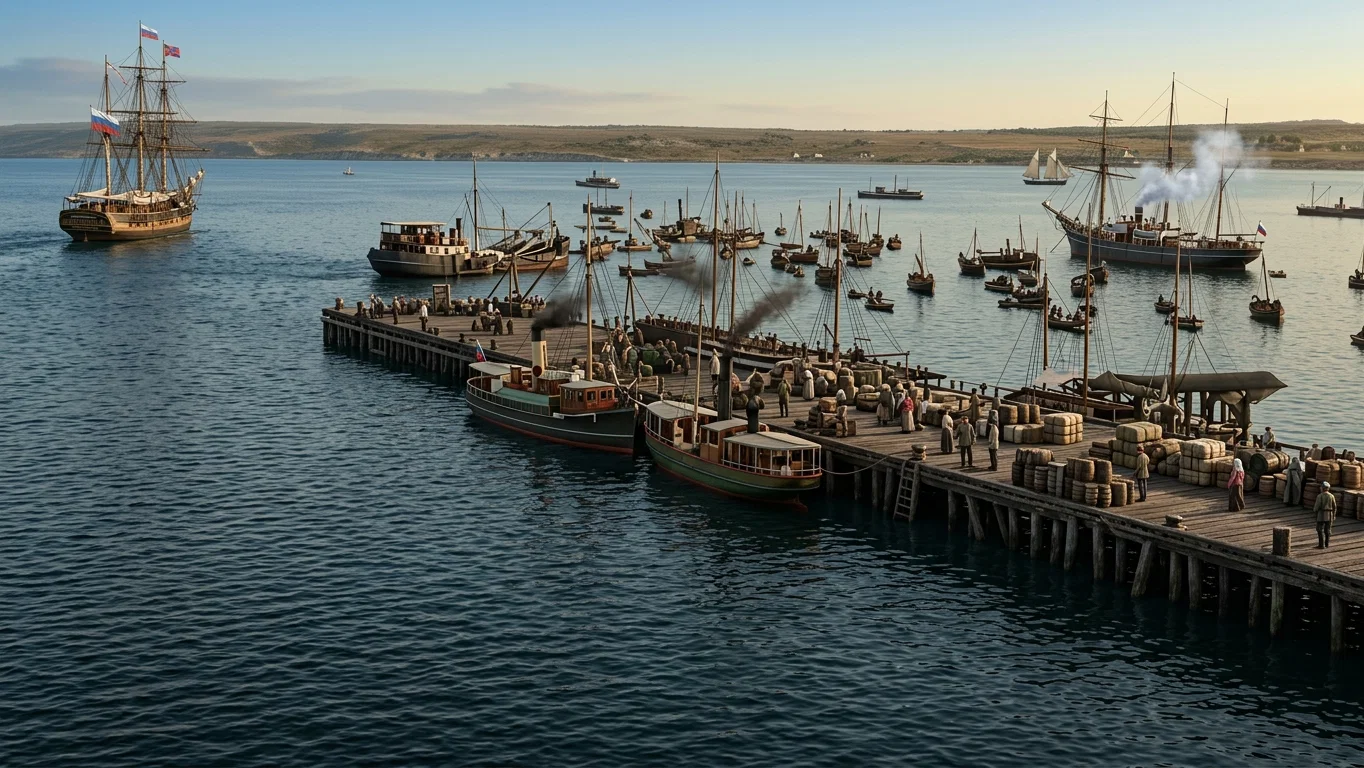
THE DOCK AT NOWOROSSISK, RUSSIA
During the social service on Sabbath, a Jewish brother was relating his experience. He told how, although he was a Jew, he had wanted truth, and had gone in search of it—first to the Lutheran church. Not finding it there,13he had gone to the Greek Catholic. Here, too, he had found error. At this point the policeman jumped up again, and came to my side. I was leading the meeting. Knowing what he intended to do, I quietly had the people sing a psalm, had a brother offer prayer, and then told them that, as they had been together a long time, it would be well to take a recess. This was all done before the police found a chance to close the meeting.
Three brethren from Mt. Ararat were with us here. They came hundreds of miles to attend, and their eyes fairly shone with joy as they listened to the preaching of the message.
The evening after the Sabbath we ordained Brother E. Gnedin to the work of the ministry. As he is a Russian, we could not ordain him in our public hall with the policeman present, but did so privately. He has been in the truth twelve years. We now have two ordained Russian ministers in our union.
The canvassing work goes hard in the Caucasus, because there are so many different nationalities living here. In the past we have paid some of the colporteurs; but, finding it bad policy, we shall not do so in the future. Dr. Vahon Pampaian goes from here with Elder Conradi to Turkey. The doctor has labored hard among the Armenians, and has met with some success. Another brother will continue his effort.
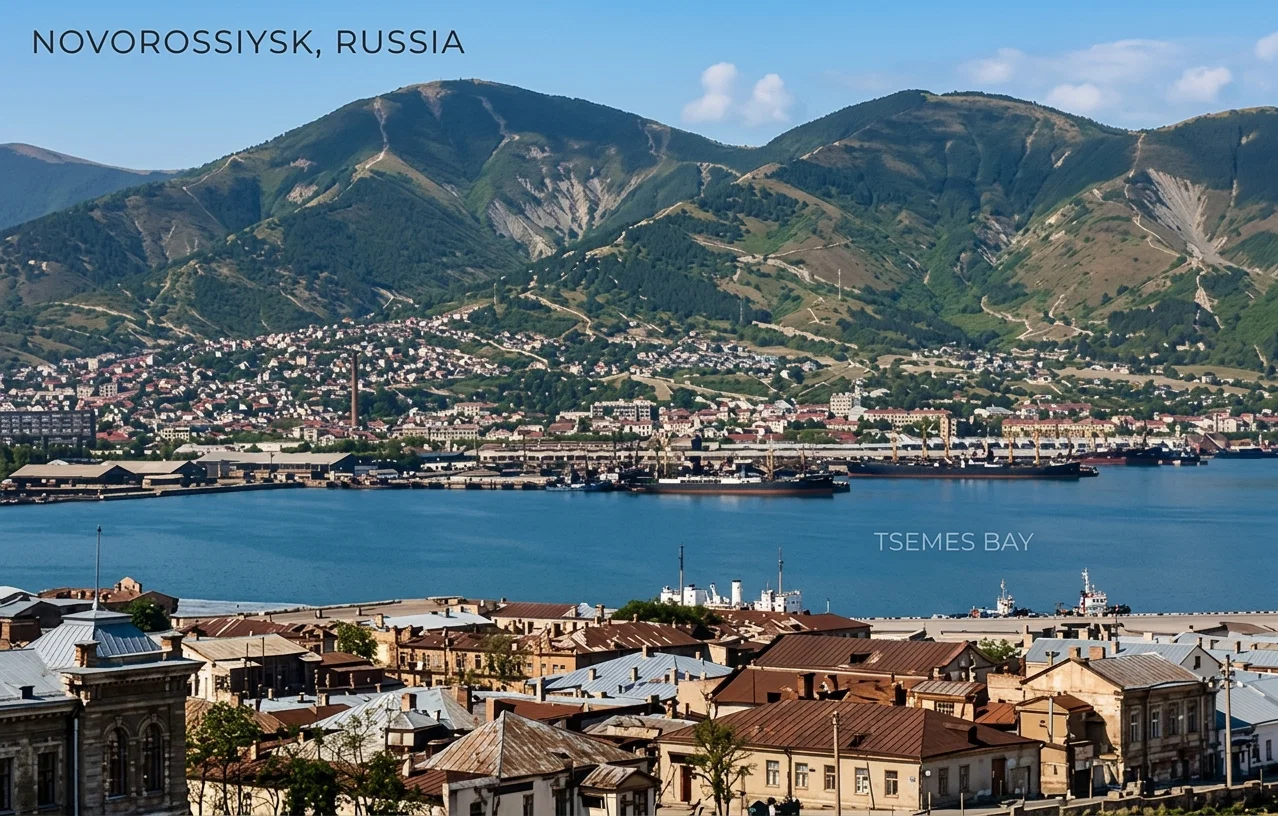
Sabbath, while I was taking a walk on the piers [seen in the illustration], which reach far out into the sea, I looked at the beautiful city of Noworossisk, surrounded with hills on three sides, the Black Sea in front, and thought how much might be done for this people if there could only be liberty to preach the truth of God. But I realized the fact that I was in Russia, where the Word of God is still bound.
Our third conference was held in the city of Odessa, October 28-31. As we did not receive permission from the governor to hold our conference at this place, we were obliged to use our own hall, which seats only about two hundred people. However, since the recent experiences, we were glad for a rest from the police, and concluded that the Lord knew best in not giving us the so much-desired permission. We had room enough. And, best of all, we had full liberty. We could take up collections, read resolutions and speak to them, and hold our social meetings unmolested. There was an excellent spirit, and one thousand rubles were given for the school.
Before our session, the priests wrote long articles against us. But as they told in these where our services were held, they only did free advertising for us.
The missionaries of the Greek church held a conference in Odessa at the same time as ours, and, had we had a public hall, would have made us much trouble. The evening after the Sabbath they sent a messenger with a letter, asking us to hold a debate with them upon the immortality of the soul. We took the letter, and wrote upon the back of it “Neh. 6:3” as answer, and returned it to them. They had also written a tract upon Col. 2:16, against us, and this they distributed at the door at the close of our service that evening. Our people took as many of them as they could get. On Sunday evening we took Col. 2:16 for our text, and the Lord gave us a grand victory.
We have now rented a large hall in this city, costing seven hundred rubles a year, and three workers will follow up the interest which has been awakened.