Harvest-Time in Korea

7%

Review and Herald Publishing Association · Tacoma Park Station, Washington, D. C. · Dec 9, 1909

FromReview and Herald, Vol. 86, No. 49.

Read the full edition

Harvest-Time in Korea

C. L. BUTTERFIELD
FRIDAY evening, October 8, we were made glad by the arrival of Brother and Sister Wangerin, of Wisconsin. They had had a pleasant and quick trip. Elder W. H. Smith sent word by them from Japan that he would take a boat from Kobe direct to the east coast of Korea, and that the boat would touch at Fusan on the eleventh. So to-day I am on my way from Seoul to Fusan to join him, and together we shall go to Wonsan, where he expects to locate.
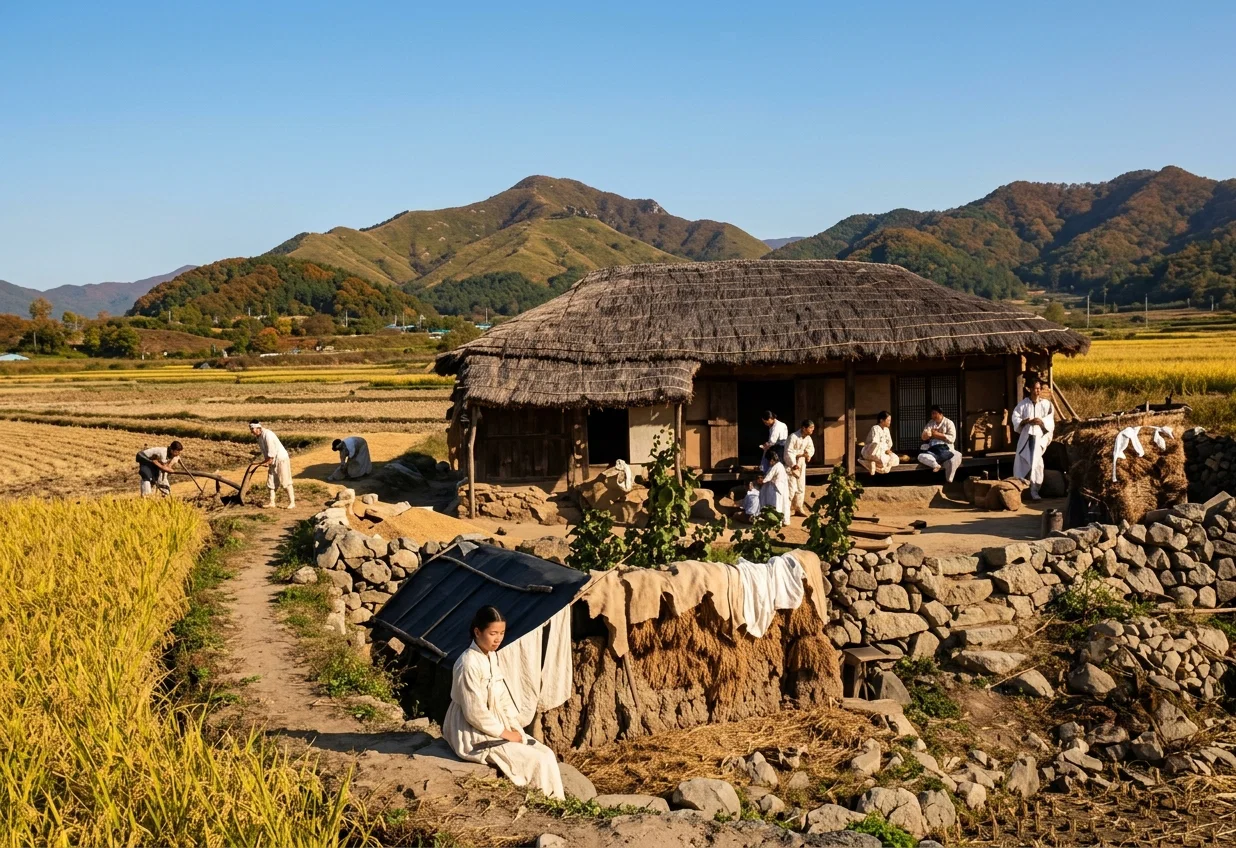
A TYPICAL KOREAN FARM-HOUSE
I was somewhat surprised this morning to see so many men engaged in the rice harvest. It seems only a few days since I was watching the men prepare these fields and plant the rice. But harvest is here. The first frosts, telling us that winter is fast approaching, have appeared and given a brownish tint to the trees and grass on the many mountains. As I pass through these fertile valleys, I can see hundreds and thousands of laborers—men and women—gathering in the rice.
While looking at these fields, I think of the great field—the world—“white already to harvest.” In this harvest we also see that the first frosts—the gray heads of those who saw the last great sign hung out in the heavens—have come, with many other indications, telling us that the winter, when the harvest of the world will have been reaped and the sheaves gathered into the garner, is just before us. But where are the reapers? As we look at Korea, with its millions; Japan to one side, with her tens of millions; China on the other side, with her hundreds of millions, and then think that we have sent only about fifty workers to all these millions, we can but say, “The laborers are few.”
Those who have large farms know something of the anxiety they have when they see the grain ripe, ready to harvest, and wasting because of a lack of laborers. In the great wheat fields of the Dakotas, when the grain was wasting because of a lack of men to gather it, I have known of the young ladies, from offices and homes of the great cities, going out and working to save the wheat that was wasting. Where are the young men and women to-day that should be out in these great fields gathering precious sheaves for the Master? I believe if our people in the home land could only see with their own eyes what we among these millions see, they would give as never before some of the large farms; give some of the valuable horses and cattle; give some of those bank accounts; yes, and give their sons and daughters, to help save the precious fruit of the harvest of the world.
As winter draws on, harvest becomes more difficult, and much is lost. And so it is in our work. As we draw near the end, it becomes more difficult, and thousands are daily filling Christless graves.
We are indeed grateful for the help we have received in Brother and SisterWangerin. They were twenty-five days on the way, and were quite tired when they reached us. Having to leave this morning, I had only a little time to visit with them, but I told them to take time to rest before beginning their language study. But as I was leaving, Brother Wangerin reported that they would be ready to begin as soon as they could get their baggage unpacked. They see something of the great task before us, and realize that every day counts. I feel sure that God will abundantly bless them here.
I wish you could see the field I have just seen from the car window. The product looked like cucumbers on trellises. Many were more than a foot long, and two or three inches in diameter. I have just passed more that must have been all of four inches in diameter.
It is nearly three hundred miles from Seoul to Fusan. Then it is about five hundred miles by sea to Wonsan. That means two or three days of sea-sickness for me. We hope to find a suitable place for Elder Smith to locate for this winter and open up work on that coast. I look for Brother Oberg in about a month. I hope some man and his wife can come before the end of the year, to take charge of the school work.
We are all well, and enjoying our labors. The work in Seoul is opening up nicely. Miss Mimi Scharfenberg is laboring among the churches.
Remember the little company here in Korea, in your prayers, that God may make us successful in gathering the precious grain in this great harvest-field.
Soonan.