T. E. BOWEN

8%

Review and Herald Publishing Association · Takoma Park Station, Washington, D. C. · Oct 7, 1909

FromReview and Herald, Vol. 86, No. 40.

Read the full edition

T. E. BOWEN

Madagascar

T. E. BOWEN

This large island on the eastern shores of the great Dark Continent is one of the places where the third angel's message has not yet gained a foothold. As we have no missionaries to report for us from this interesting island field, let us hear from others who have been there and learned of its history both political and religious. The Lord certainly must have some among the Malagasy people of more than two million souls who shall be gathered out to be numbered with the remnant commandment-keepers.
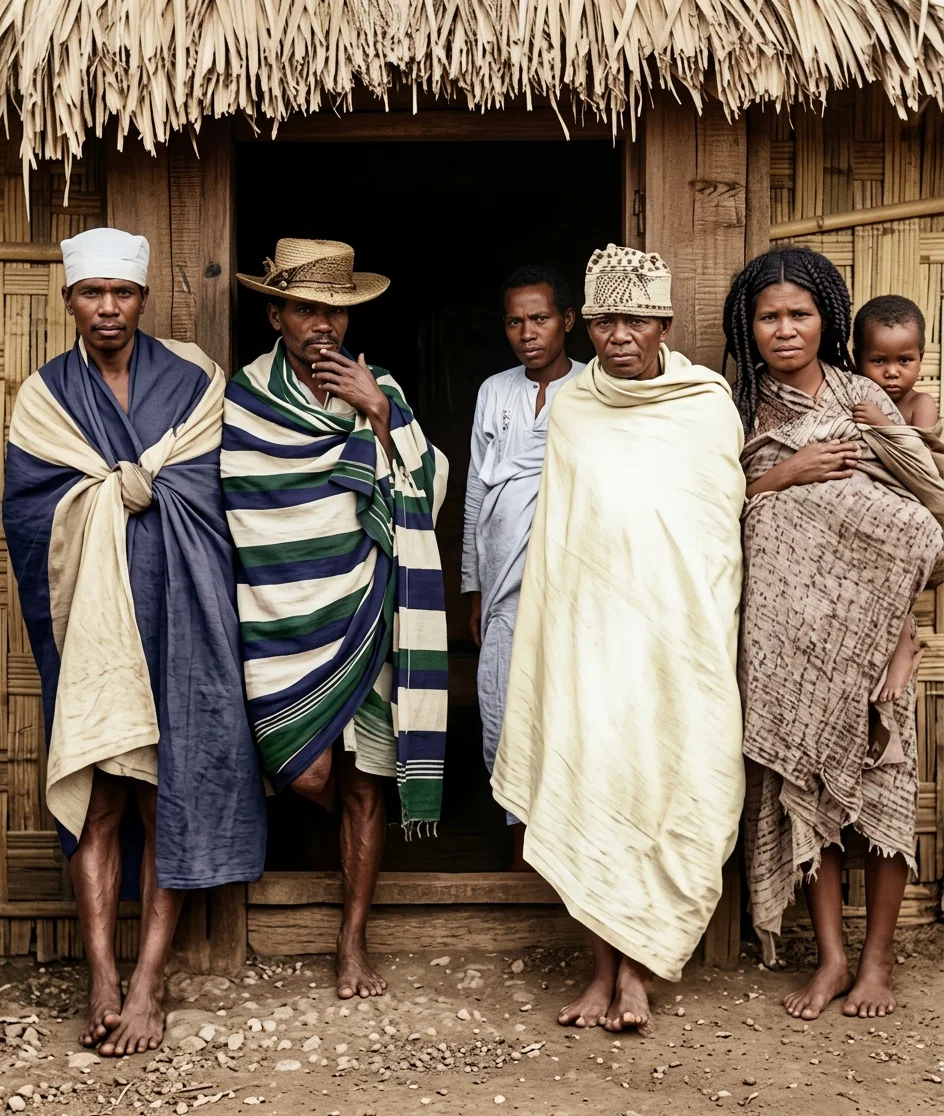
A GROUP OF MALAGASY
A GROUP OF MALAGASY
From the August number of the Bible in All the World we glean the following interesting facts concerning the history of gospel work in Madagascar:—
‘This great African island is almost one thousand miles long, with an average width of two hundred fifty miles, and has an area nearly four times as great as England and Wales. The plains round the coast are often belted with dense forests, and the elevated inland regions rise into mountains nine thousand feet high. Madagascar seems to have been originally peopled from the Malayan and Melanesian archipelagoes, with whose peoples the Malagasy show close affinity, while they have little in common with any African race. The various Malagasy tribes, numbering about two million seven hundred ten thousand, all speak what is practically one language, though great dialectic differences exist. The important Hova tribe, which numbers eight hundred fifty thousand, has its home in the central province of Imerina, and at the end of the eighteenth century had gradually made itself dominant in the island.
‘As early as the year 1820 mission work was begun in Madagascar by the pioneers of the London Missionary Society, who reduced the language to a written form, founded a number of schools, gathered converts, and made a version of the Malagasy Bible, which was published by the aid of our society. From 1828 till 1861, however, a severe persecution took place, in which numbers of Malagasy Christians were martyred, and European teachers and traders excluded. The country was reopened in 1861, and before many years the native rulers accepted Christianity. Other missions took part in evangelizing the people. The Society for the Propagation of the Gospel commenced work in 1864, the Norwegian Lutheran Mission in 1866, and the Friends' Foreign Missionary Association in 1867. In 1885, as a result of hostilities with France, a French resident was installed at the capital. In 1895-96 the French took possession of the island, the queen was dethroned by General Gallieni, and Madagascar was proclaimed a French colony. At that time the Christian population was estimated at four hundred fifty thousand Protestants and fifty thousand Roman Catholics.’
Under French rule missionary effort in Madagascar has suffered many reverses. Aside from the administration of General Gallieni, the governor-general for several years, who regarded with kindly interest, if not favor, the work of the missions, the government has assumed an attitude of antagonism. By forbidding any schools to be carried on any longer in churches, where for many years past almost all primary schools have been taught, about three fourths of the mission schools have been closed, and thus many thousands of children deprived of any education whatever, the few official schools being utterly insufficient for the requirements. The Malagasy Y. M. C. A. has been summarily dissolved. The greatest difficulties are thrown in the way of getting permission to build new churches or to rebuild old ones, the governor-general plainly declaring that there are far too many churches already in Madagascar,—where two thirds of the population are still heathen,—and that he will allow no churches to be built where there is no European to superintend them. This strikes a severe blow at native Christian pastors and teachers, on whom the evangelization of the country must largely depend.
‘Toward the close of 1907 and at the beginning of 1908 the policy of the government was one of suppression; consequently, work was being closed down on every side for any trivial reason, or for no reason at all. Many of the officials in the country districts, knowing that their action would be looked upon with favor at headquarters, systematically opposed all forms of missionary activity; and this spirit of antagonism was immediately caught up by not a few of their obsequious agents. Small wonder can be expressed at the discouraging effect this had upon those who thought that the labor of past years was seriously imperiled. . . . This year has witnessed some change for the better—at least in the central provinces. Although some vexatious restrictions have now been removed, even the few Christian schools permitted by the government are still heavily penalized, and the scholars remain under serious disadvantages as compared with those from the official schools.’
‘Meantime the Bible society has not been idle. For many years past it hassupplied all the Protestant missions at work in Madagascar with all the editions of the Scriptures which they need for their work, on terms which entail no charge whatever on the missions, but involve a heavy loss on the society. In face of the antichristian attitude of the French authorities, it is not surprising to learn that the circulation of the Scriptures in Madagascar has declined from 17,363 copies in 1906 and 15,193 in 1907 to 9,786 in 1908. At the united request of all the Protestant missions on the island, our committee resolved early in 1909 to employ twenty-four native Christian colporteurs in Madagascar, who will sell the Scriptures in the markets and villages under the direction of the missions themselves. One generous friend in England has undertaken to support twelve of these colporteurs.’
Thus the way is being prepared for the last message to go to these people. Some one will be raised up by the Lord to do the work, which ought not to be longer delayed.
Takoma Park, D. C.