JOSEPH E. STEED

7%

Review and Herald Publishing Association · Takoma Park Station, Washington, D. C. · Feb 25, 1909

FromReview and Herald, Vol. 86, No. 8.

Read the full edition

JOSEPH E. STEED

Samoa

JOSEPH E. STEED

The Samoan, or Navigators, Islands are a group of islands in the western Pacific Ocean. They are about five hundred fifty miles north of Tonga, and about four hundred miles northeast of Fiji. The group consists of nine principal islands. All, with the exception of Rose Island, are of volcanic formation, and for the most part are surrounded by coral reefs. They are mountainous, but well wooded. Savaii, Upolu, Tutuila, and Manua are the largest islands.
The town of Apia is the center of political and commercial life in Samoa. At Pago Pago the United States government has installed an extensive naval station.
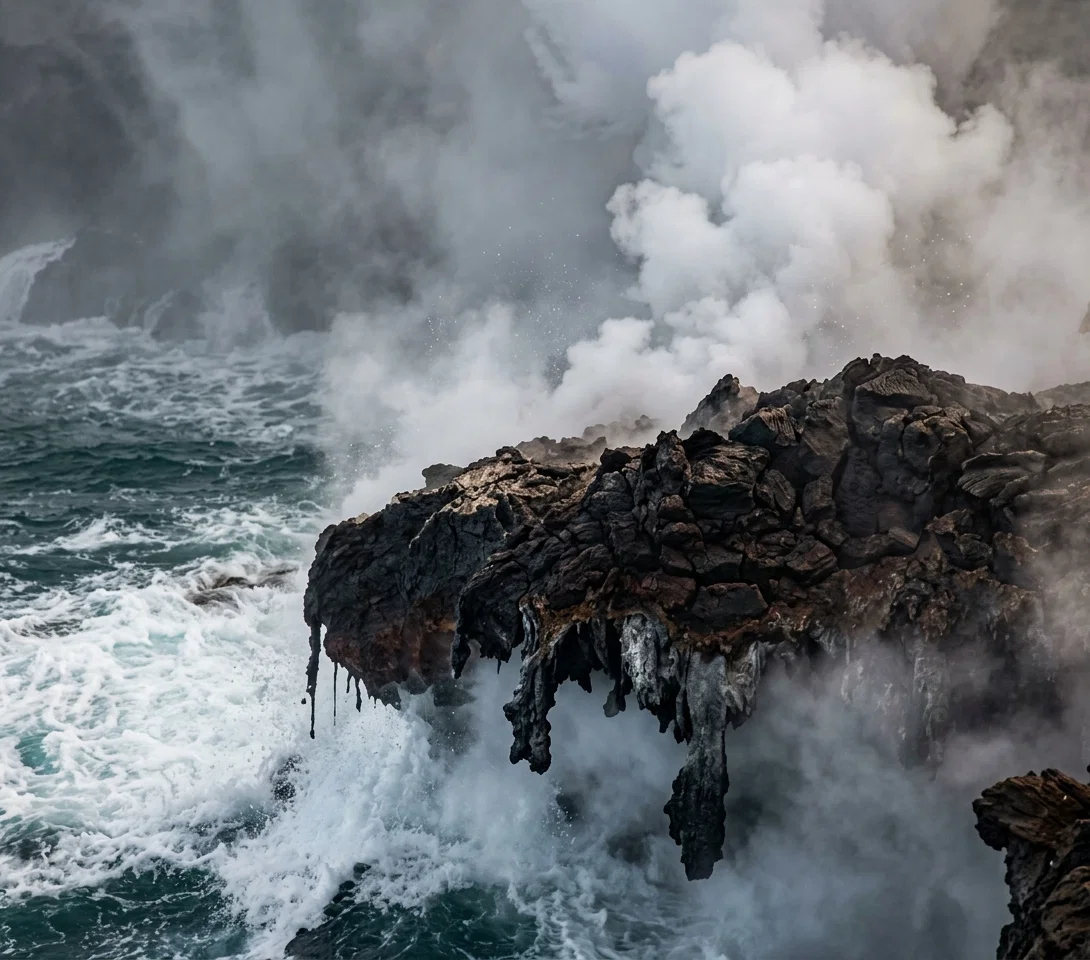
THE SEA BOILING, SAMOAN ISLANDS
Caused by lava from a volcano eight miles distant
THE SEA BOILING, SAMOAN ISLANDS Caused by lava from a volcano eight miles distant
The climate of Samoa is variable and moist. The rainfall for the last five years averaged one hundred twenty-six inches. The most pleasant time of the year is from May to November, when the southeast trade winds prevail. The products of the island are chiefly vegetable. Cocoanut, cocoa, and rubber are the chief articles of production.
The population of the German colony consists of about four hundred whites, five hundred half-castes, and thirty-three thousand natives. In the American colony there are about six thousand natives, one hundred whites, and as many half-castes. The hard labor of German Samoa is performed largely by Chinese coolies, of whom there are about five hundred.
The gospel was first carried to Samoa by Messrs. Williams and Barff, of the London Missionary Society, with some Tahitian teachers, in the year 1830. In 1836 six missionaries from the same society joined them, and for many years they worked hard, and built up what is seen to-day—large training-schools in different islands, preparing workers for the other groups of the Pacific. Their present membership is stated to be 27,004 in all Samoa. They have also twenty-eight churches and schools in the Gilbert and Ellice groups.
In 1835 the Methodist Missionary Society of Australasia began work in these islands, and now has churches and training-schools in different parts of both German and American Samoa, with a membership of about five thousand. The Roman Catholic Church began work in 1845. It has built up schools and churches in many places, and has a membership of five thousand, but many children of other denominations are attending its schools.
Early in 1891 the “Pitcairn” visited Samoa on her first voyage. Five years later, Dr. F. E. Braucht began labor in the medical institution at Malaulu. He afterward went to Apia, where he labored for a number of years. Other workers were added to the mission—Delos Lake, W. E. Floding, Drs. Vollmer and Gibson, and others; but on account of the trying nature of the climate, they had to leave, one after another, until at last Samoa was left without a recognized worker bearing the last message.
At the Australasian Union Conference council of 1907, the writer and his family were asked to reopen the work in Samoa. It was through trust in Him who has called us, that we consented to pick up the fallen threads in Samoa. After bidding good-by to our fellow laborers in Australia, and enjoying a pleasant stay of two months in Fiji, we reached Samoa just a year ago, and found that a few of the little flock were trying to hold up the banner of truth. A church was organized by Brother Parker, who accompanied us to Samoa from Fiji. We found that, as far as the natives were concerned, very little had been done for them. “Christ Our Saviour,” and a few tracts, the supply of which was almost exhausted, was all the literature translated into the Samoan language.
By the help of a young man, now connected with the message, we set to work to prepare literature for the natives. As a result, we have now either printed or in the hands of the printer, “The Sabbath,” “The Coming of Christ,” “The New Testament Sabbath,” “The State of the Dead,” “Immortality,” and “Who Changed the Sabbath?” This will give us some seed to sow. Very little can be done anywhere till we have the truth in the language of the people. During the time we have been here we have scattered considerable reading-matter among the white people. We often have an opportunity to place reading-matter on the small vessels that visit other islands. If any wish to help the work in Samoa, they can do so by sending us literature bearing on the message, either in German or in English. We will promise to use it to the best advantage. If we sow the seed, Israel’s God will bring the increase.
Apia.